


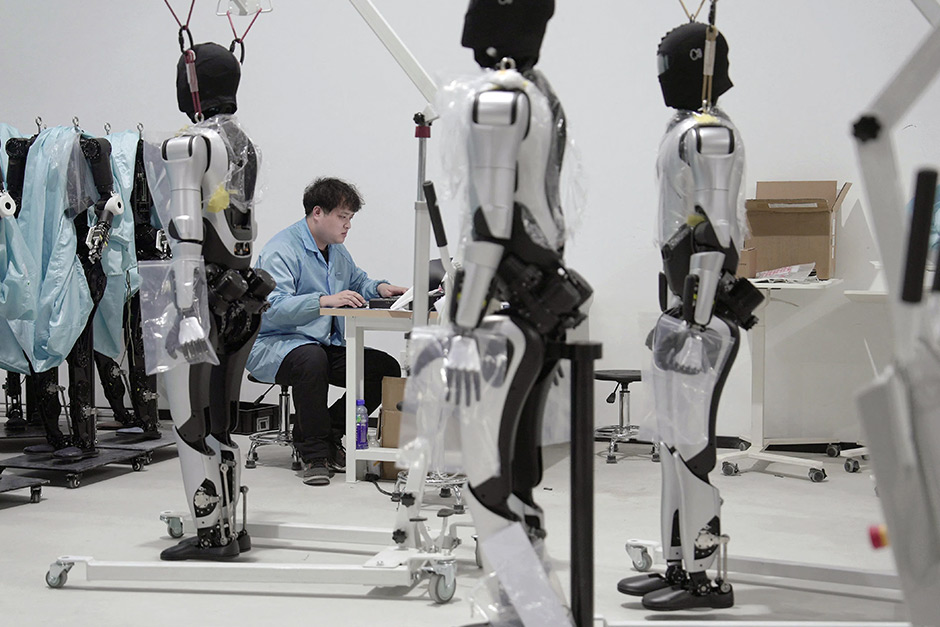
Step into the bustling heart of China’s innovation hubs, often dubbed its “Silicon Valley,” and you’ll witness a tech landscape unlike any other. Here, cutting-edge robotics labs hum with the promise of automating the future, while, in the very same neighborhoods, nimble startups are cashing in on AI-powered fortune-telling apps. It’s a fascinating, sometimes bewildering, blend of the hyper-futuristic and the deeply traditional, all powered by the same relentless technological drive.
The Relentless March of the Machines
On one side of this dynamic coin, you find a formidable commitment to hardware and industrial AI. Factories are becoming increasingly smart, populated by articulate robotic arms and autonomous guided vehicles that streamline production with astonishing efficiency. From advanced manufacturing to logistics, and even the burgeoning field of service robots, China is not just keeping pace but often setting the rhythm. These innovations are designed for tangible impact: boosting productivity, lowering costs, and solidifying the nation’s position as a global leader in next-generation industry. The investment is enormous, the ambition even greater, and the results are palpable in everything from sophisticated electronics to renewable energy solutions. It’s a testament to engineering prowess and a strategic vision for global technological dominance.
The labs churning out these wonders are at the forefront of deep learning, computer vision, and advanced materials science. They’re building machines that can see, learn, and adapt, promising a future where mundane tasks are fully automated, and complex operations are optimized by intelligent systems. The scale and speed of this development are truly breathtaking, reflecting a tech ecosystem that prioritizes practical application and rapid deployment. It’s about tangible, measurable progress, pushing the boundaries of what machines can do for society and industry.
Divining the Digital Future (and Personal Fortunes)
But then, there’s the other side of the coin, equally vibrant and lucrative. Alongside the serious business of industrial automation, China’s tech hubs are also hotbeds for AI-driven fortune-telling and lifestyle apps. These aren’t just novelty items; they’re wildly popular, leveraging sophisticated algorithms to analyze everything from facial features and birth dates to personal habits, offering insights into love, career, and wealth. For a culture deeply rooted in ancient divination practices and a strong belief in fate, these apps provide a modern, accessible gateway to traditional wisdom.
The underlying AI might be complex, but the user experience is typically intuitive and engaging. Users pay for more detailed readings, personalized advice, or even AI-generated lucky numbers. It’s a clever monetization strategy that taps into a universal human desire for guidance and a peek into the unknown. “It’s fascinating,” remarks Dr. Li Wei, a cultural tech analyst. “On one hand, you have labs pushing the boundaries of machine learning for industrial efficiency. On the other, you have the same algorithms applied to ancient practices, meeting a very human need for guidance and entertainment. It really encapsulates the dynamic spirit here.” This juxtaposition highlights a pragmatic approach to innovation: if there’s a market, and a way to apply technology, it will be built, regardless of perceived “seriousness” by Western standards.
A Kaleidoscope of Innovation
What this dual focus reveals is not a contradiction, but rather the immense breadth and pragmatism of China’s technological landscape. It’s a place where ambitious national strategies for industrial upgrades coexist seamlessly with the entrepreneurial drive to cater to everyday cultural curiosities. Both robotics and AI fortune-telling apps are products of the same innovative spirit, the same highly skilled talent pool, and the same robust digital infrastructure.
China’s “Silicon Valley” isn’t just replicating Western models; it’s forging its own unique path, blending global tech trends with local cultural nuances. This results in an ecosystem that is both hyper-efficient and deeply human, producing machines that build the future while also crafting algorithms that interpret our place within it. It’s a powerful reminder that innovation isn’t a single, monolithic pursuit, but a diverse and often surprising journey driven by a myriad of human desires.

