


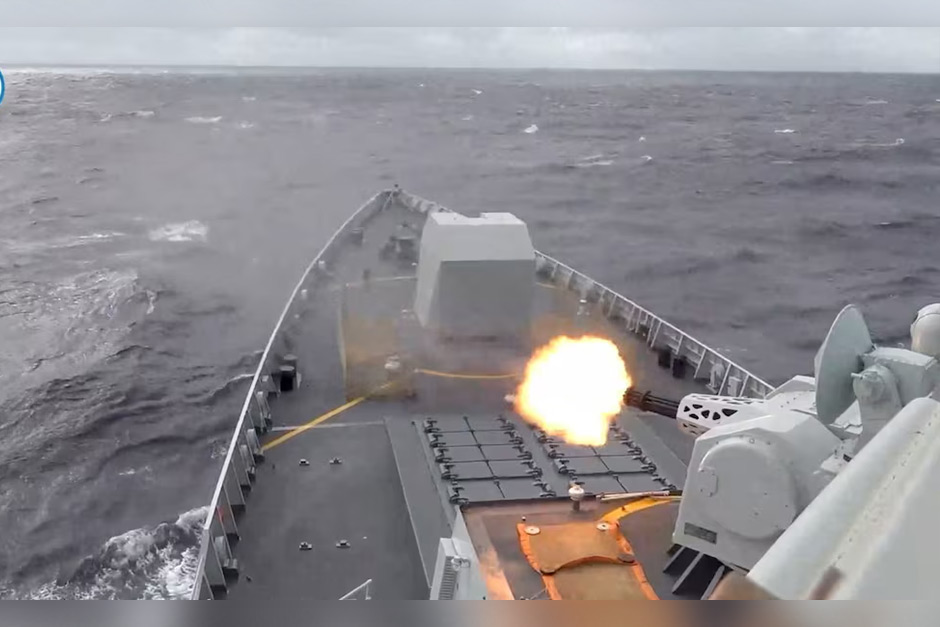
The Indo-Pacific region, a vital artery for global trade and a crucible of geopolitical power, is bracing for another significant display of military might. China’s People’s Liberation Army (PLA) has announced its intention to conduct large-scale live-fire exercises, dubbed ‘Justice Mission 2025’, around Taiwan on December 30. This development signals a heightened state of tension in the Taiwan Strait, prompting a watchful eye from nations worldwide, including India, on the evolving security landscape.
The Taiwan Strait: A Flashpoint in Focus
The impending ‘Justice Mission 2025’ exercises are the latest in a series of assertive manoeuvres by Beijing, underscoring its unwavering claim over Taiwan, which it considers a breakaway province. Taiwan, officially the Republic of China, operates as a self-governing democracy, a status increasingly championed by its international allies, most notably the United States. These exercises, typically involving naval, air force, and missile units, serve multiple purposes for Beijing: a direct warning to Taiwan against any moves towards formal independence, a show of force to deter external interference, and a demonstration of the PLA’s readiness and capability to integrate military operations.
The strategic importance of Taiwan cannot be overstated. Beyond its democratic ideals, Taiwan is a global powerhouse in advanced semiconductor manufacturing, crucial for industries from consumer electronics to artificial intelligence. Any disruption in the Taiwan Strait, therefore, has far-reaching economic implications that could ripple through global supply chains and economies already grappling with various challenges. The frequency and scale of such drills contribute to a complex and fragile security environment, where miscalculations could have severe consequences.
India’s Vigil and Regional Ramifications
From an Indian perspective, these developments in the Taiwan Strait are observed with keen interest and a degree of caution. While India has historically adhered to the “One China” policy, its unofficial engagement with Taiwan, particularly in trade and technology, has seen a quiet but steady increase. More importantly, India’s own protracted border disputes with China along the Line of Actual Control (LAC) make it acutely sensitive to aggressive military posturing and unilateral changes to the status quo in any part of its extended neighbourhood.
The stability of the Indo-Pacific is central to India’s strategic and economic interests. A significant portion of India’s trade traverses the sea lanes of communication that pass close to the Taiwan Strait. Any escalation of tensions or conflict in this region would inevitably impact India’s economic prosperity and its maritime security. India’s commitment to a free, open, and inclusive Indo-Pacific, articulated through platforms like the QUAD, implicitly underscores the importance of maintaining peace and stability in critical waterways.
As Dr. Ananya Sharma, a prominent Indian strategic analyst, recently remarked, “China’s military exercises around Taiwan are not just about Taiwan; they are a broader signal of Beijing’s expanding power projection capabilities and its intent to reshape regional dynamics. For India, this reinforces the need for robust deterrence along its own borders and a continued focus on strengthening partnerships that uphold a rules-based international order. The ripple effects of instability near Taiwan would undoubtedly touch India’s economic and security calculations.” This perspective highlights India’s nuanced approach, balancing its stated policy with its pragmatic security concerns and strategic alignments.
Charting the Future: A Call for Stability
The ‘Justice Mission 2025’ exercises will undoubtedly be a closely watched event globally. They represent a critical moment for international diplomacy and a test for regional stability. While China frames these drills as necessary for national sovereignty and territorial integrity, they are perceived by many as escalatory actions that heighten the risk of conflict in one of the world’s most critical geopolitical hotspots.
For India, the unfolding situation around Taiwan reiterates the complex challenges posed by an increasingly assertive China. It underscores the imperative for New Delhi to continue strengthening its indigenous defence capabilities, diversifying its strategic partnerships, and advocating for peaceful resolutions to disputes in accordance with international law. Maintaining a delicate balance between upholding strategic autonomy and contributing to regional security frameworks will remain a cornerstone of India’s foreign policy as it navigates the evolving geopolitical landscape of the Indo-Pacific.
The world waits to see how ‘Justice Mission 2025’ unfolds and what implications it holds for the fragile peace in the Taiwan Strait, a peace that is intrinsically linked to the broader stability of the Indo-Pacific, and by extension, global prosperity.

