


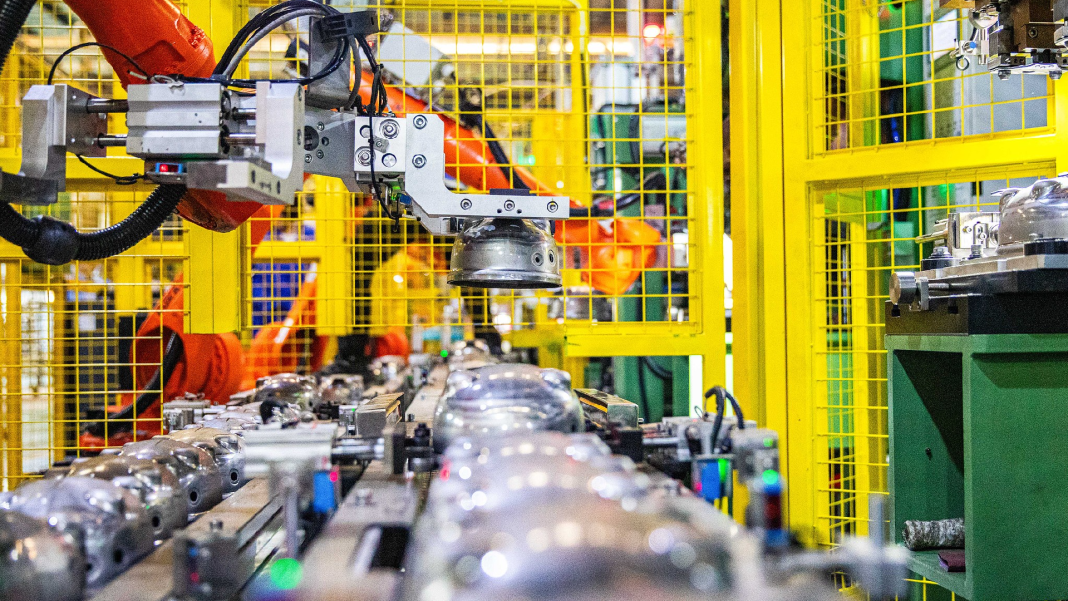
As the global economy continues to navigate a complex tapestry of geopolitical shifts, technological advancements, and evolving consumer demands, all eyes often turn to China, the world’s manufacturing powerhouse. While recent years have seen fluctuating figures, projections for 2025 suggest a landscape of modest profit growth for China’s industrial enterprises. This anticipated stability, rather than rapid expansion, carries significant implications, not just for Beijing’s domestic agenda but for global supply chains and emerging economies like India.
Understanding China’s Industrial Evolution Towards 2025
The forecast of modest profit growth for Chinese industrial enterprises in 2025 reflects a deliberate shift in Beijing’s economic strategy. Gone are the days when sheer volume and breakneck speed were the sole determinants of success. Instead, the focus has sharpened on quality, innovation, sustainability, and domestic consumption. This transition is a natural evolution for a maturing industrial economy grappling with rising labour costs, stringent environmental regulations, and the need to move up the value chain.
Factors contributing to this modest growth trajectory include a moderated global demand for certain categories of goods, ongoing efforts to de-risk and diversify supply chains away from over-reliance on a single nation, and China’s own internal rebalancing act towards a more services-led economy. Furthermore, investments in high-tech manufacturing, advanced materials, and renewable energy sectors are expected to be the primary drivers of profit, while traditional heavy industries might see slower, more controlled expansion. This targeted approach aims to foster resilience and long-term competitiveness rather than chasing unsustainable growth metrics.
Global Ripple Effects and Supply Chain Realignment
A measured pace of profit growth in China’s industrial sector inherently translates into a more predictable, though potentially less volatile, global market. For countries heavily integrated into Chinese supply chains, this means a period of adjustment. Multinational corporations, already exploring a “China plus one” strategy, may intensify efforts to diversify their manufacturing bases. This could lead to increased foreign direct investment (FDI) into alternative manufacturing hubs across Southeast Asia, Latin America, and crucially, India.
The impact will be felt across various sectors. Raw material exporting nations might observe stable, rather than surging, demand from China. Conversely, countries competing in high-value manufacturing might face intensified competition as Chinese enterprises pivot towards more sophisticated, technologically advanced products. This evolution also compels global partners to re-evaluate their engagement, shifting from simple sourcing to more collaborative ventures in R&D and intellectual property.
“China’s move towards more sustainable and quality-driven industrial growth isn’t just an internal recalibration; it’s a structural shift that will reshape global manufacturing for the next decade. For partners and competitors alike, understanding this nuanced pivot is crucial for strategic planning,” comments Dr. Anjali Sharma, an economic analyst specialising in Asian markets.
India’s Strategic Positioning in a Changing Landscape
For India, China’s projected modest industrial profit growth presents both challenges and substantial opportunities. On the one hand, a robust yet controlled Chinese industrial sector remains a formidable competitor in many global markets, particularly in electronics, machinery, and textiles. Indian manufacturers will need to continually enhance their competitiveness, focusing on cost efficiency, quality, and innovation to carve out their niche.
However, the opportunities are arguably more compelling. As global supply chains seek diversification, India’s inherent advantages – a vast domestic market, a young and skilled workforce, democratic stability, and government initiatives like ‘Make in India’ and ‘Production Linked Incentive’ (PLI) schemes – become increasingly attractive. India stands to gain significantly from multinational corporations looking to establish alternative manufacturing bases, particularly in sectors like electronics assembly, automotive components, pharmaceuticals, and renewable energy equipment.
Moreover, a more stable Chinese economy could lead to more predictable demand for Indian exports of raw materials, agricultural products, and IT services. The key for India lies in enhancing its infrastructure, streamlining regulatory processes, and investing in human capital development to fully capitalise on these evolving global economic currents. India’s ability to integrate seamlessly into global value chains, coupled with its growing domestic consumption power, positions it uniquely to benefit from the shifting dynamics of its industrial neighbour.
In conclusion, China’s anticipated modest industrial profit growth in 2025 signifies a deliberate and strategic reorientation of its economic priorities. Far from indicating a slowdown, it reflects a maturation towards sustainable, high-quality development. For India, this evolution is a critical juncture, offering a clear pathway to strengthen its manufacturing prowess, attract foreign investment, and solidify its role as a significant player in the new global economic order. Vigilance, adaptability, and proactive policy-making will be paramount for New Delhi to navigate and thrive in this evolving landscape.

