


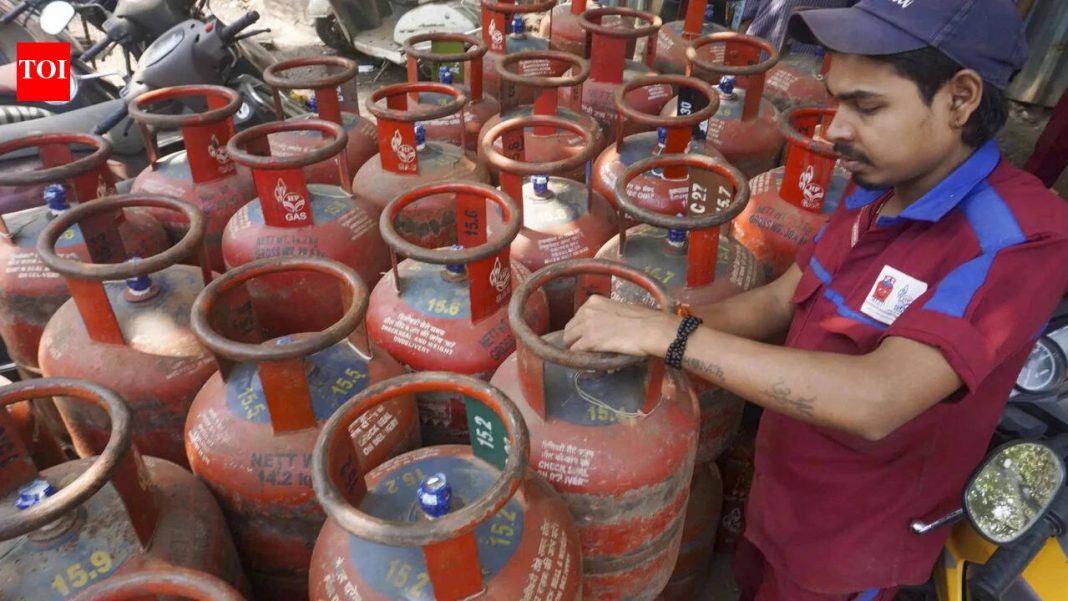
The reliability of cooking gas supply is a critical concern for millions of Indian households, directly impacting daily life and household budgets. In recent times, reports of intermittent availability and supply chain disruptions for Liquefied Petroleum Gas (LPG) have prompted the Union government to take decisive action. Aiming to alleviate consumer concerns and ensure a stable supply, the Centre has announced a two-pronged strategy: establishing a three-member expert panel to address the underlying issues and significantly stepping up domestic LPG production.
Boosting Domestic Output: A 10% Increase
One of the immediate measures undertaken by the government to counter the perceived ‘LPG shortage’ is a substantial boost in domestic production. The Centre has confirmed a 10% increase in indigenous LPG output, a move designed to reduce reliance on imports and stabilize the supply chain within the country. This enhancement is largely expected to come from maximizing the operational capacity of public sector undertakings (PSUs) involved in crude oil refining and gas processing across India.
The decision to ramp up domestic production is a strategic response to both increasing demand and global market volatility. India is a significant importer of LPG, making it susceptible to international price fluctuations and geopolitical dynamics that can disrupt supply lines. By increasing local output, the government aims to create a buffer against these external factors, ensuring a more consistent flow of cooking gas to distributors and, ultimately, to consumers. This scaling up involves optimizing existing refinery capacities, improving logistics for crude oil procurement, and enhancing the efficiency of gas processing units. The increased production is anticipated to reduce the pressure on imports, which in turn could lead to more stable pricing and better availability across all regions.
Industry experts suggest that this 10% increase, while a commendable first step, will need to be part of a broader, sustained effort to match India’s growing energy needs. The success of schemes like the Pradhan Mantri Ujjwala Yojana (PMUY) has significantly expanded the LPG consumer base, highlighting the necessity for robust and uninterrupted supply. The current move demonstrates the government’s commitment to prioritizing domestic energy security and reducing the vulnerability of Indian households to global market shifts.
The Mandate of the Expert Panel
Complementing the production boost, the Centre has constituted a three-member expert panel tasked with a comprehensive review of the LPG supply chain. This high-level committee is mandated to delve deep into the structural and operational challenges contributing to the ‘LPG shortage’ and propose actionable recommendations for long-term solutions. The formation of such a panel underscores the government’s recognition that while immediate production increases are vital, systemic issues also need to be addressed.
The panel’s primary objectives include identifying the root causes of supply disruptions, whether they stem from logistical bottlenecks, demand-supply mismatches, distribution inefficiencies, or other factors. They will likely evaluate the existing infrastructure for LPG bottling, storage, and transportation, suggesting upgrades or reforms where necessary. Furthermore, the committee is expected to analyze regional variations in demand and supply, ensuring equitable distribution across the country, especially in remote and underserved areas.
A senior official from the Ministry of Petroleum and Natural Gas, who wished to remain anonymous, stated, “The goal of this panel is not just to react to immediate concerns but to build a resilient and efficient LPG ecosystem. We believe that a dedicated team focusing on both short-term fixes and strategic, long-term policy adjustments will ensure that every Indian household has reliable access to clean cooking fuel.” This statement highlights the panel’s broad scope, encompassing everything from supply chain optimization to policy recommendations designed to future-proof India’s LPG sector.
The recommendations from this panel are expected to inform future government policies related to energy infrastructure, import strategies, and consumer subsidy mechanisms. Their work will be crucial in balancing the need for affordability with the imperative of consistent supply, a challenge that requires careful consideration of economic realities and social welfare.
Conclusion
The Centre’s dual approach—an immediate 10% surge in domestic LPG production coupled with the formation of a three-member expert panel—marks a significant step towards addressing the recurring ‘LPG shortage’ concerns across India. These measures reflect a proactive stance by the government to stabilize the cooking gas supply, reduce dependency on volatile international markets, and ensure energy security for its citizens. While the increased production aims to provide immediate relief, the expert panel’s mandate to identify and rectify systemic issues promises a more robust and sustainable LPG distribution network for the future. Indian households will be keenly watching the impact of these initiatives, hopeful for a steady and uninterrupted supply of this essential commodity.

