


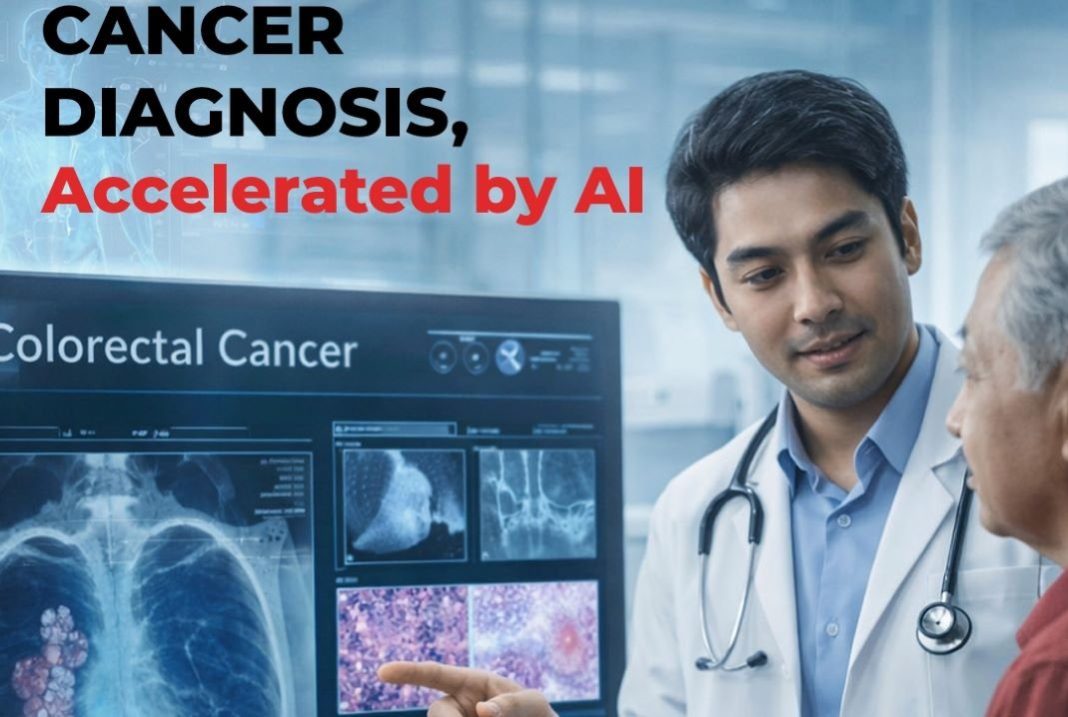
Cancer, a formidable adversary, continues to pose a significant health challenge globally, and particularly in India. The sheer volume of cases, coupled with existing healthcare infrastructure limitations, often leads to delayed diagnoses – a critical factor that can drastically impact treatment outcomes and survival rates. However, a new paradigm is emerging, one where advanced technology offers a beacon of hope: Artificial Intelligence (AI) is rapidly accelerating the process of cancer detection, promising a future of earlier, more accurate, and accessible diagnoses across the nation.
The Urgent Need: Cancer Diagnosis in India
India’s fight against cancer is complex. With an estimated 1.39 million new cases reported in 2020 and projections indicating a significant rise, the burden on the healthcare system is immense. A critical bottleneck lies in diagnosis. Access to skilled pathologists and radiologists, particularly in rural and semi-urban areas, remains a challenge. Diagnostic backlogs are common, leading to anxious waits for patients and, more importantly, a lost window for optimal intervention. Many cancers in India are still diagnosed at advanced stages, making treatment more difficult and less effective.
This scenario underscores the urgent need for scalable, efficient, and accurate diagnostic tools. Traditional methods, while foundational, are often resource-intensive and prone to human variability. This is precisely where AI steps in, offering a transformative solution by augmenting human capabilities and streamlining processes.
AI: A New Lens for Early Detection
Artificial Intelligence, particularly machine learning and deep learning algorithms, is proving to be a game-changer in medical imaging and pathology. These sophisticated systems are trained on vast datasets of medical images – ranging from X-rays, CT scans, and MRIs to microscopic pathology slides. By analyzing millions of data points, AI can identify subtle patterns, anomalies, and markers that might be imperceptible or time-consuming for the human eye to detect.
Consider the laborious process of examining tissue biopsies under a microscope. A pathologist might spend hours scrutinizing slides for cancerous cells. AI algorithms can scan these slides in minutes, highlighting suspicious regions with remarkable precision and speed. Similarly, in radiology, AI can assist in analyzing mammograms for breast cancer, CT scans for lung nodules, or MRI scans for brain tumours, often flagging potential concerns that warrant closer human review. This isn’t about replacing doctors but empowering them with an intelligent assistant that enhances their diagnostic prowess and reduces their workload.
“AI doesn’t just process information faster; it sees patterns that can elude human perception due to volume or subtlety. For a country like India, this means we can potentially democratize high-quality diagnostic insights, reaching patients even in remote corners,” explains Dr. Rohan Mehta, a leading AI in Healthcare researcher based in Bengaluru. “It’s about making precision diagnosis more accessible and timely for everyone.”
Bridging Gaps and Shaping the Future
The implications of AI-accelerated diagnosis for India are profound. Firstly, it promises to bridge the geographical gap in healthcare access. With AI tools integrated into telehealth platforms, expert diagnostic capabilities can be extended to remote clinics, allowing local medical professionals to send images for AI analysis and subsequent remote human review. This can drastically reduce the need for patients to travel long distances for specialized diagnostics.
Secondly, AI can significantly reduce diagnostic turnaround times. Faster identification of cancerous cells means patients can move to treatment plans sooner, potentially improving prognosis and reducing anxiety. This efficiency also helps in managing the overwhelming patient load in urban hospitals.
While the focus is on diagnosis, AI’s role extends to risk assessment, predicting disease progression, and even personalizing treatment strategies by analyzing genetic and molecular data. However, the immediate impact on early and accurate detection stands as its most transformative contribution to cancer care in India. Challenges remain, including data privacy, the need for robust IT infrastructure, and ethical deployment, but the concerted efforts of researchers, clinicians, and policymakers are paving the way for AI to be seamlessly integrated into India’s healthcare fabric.
The dawn of AI in cancer diagnosis represents a pivotal moment for Indian healthcare. By offering speed, accuracy, and improved accessibility, AI is not just a technological advancement; it is a catalyst for hope, ensuring that more Indians receive timely diagnoses, leading to better chances of survival and a higher quality of life. The future of cancer care in India is increasingly looking intelligent, compassionate, and proactive.

