


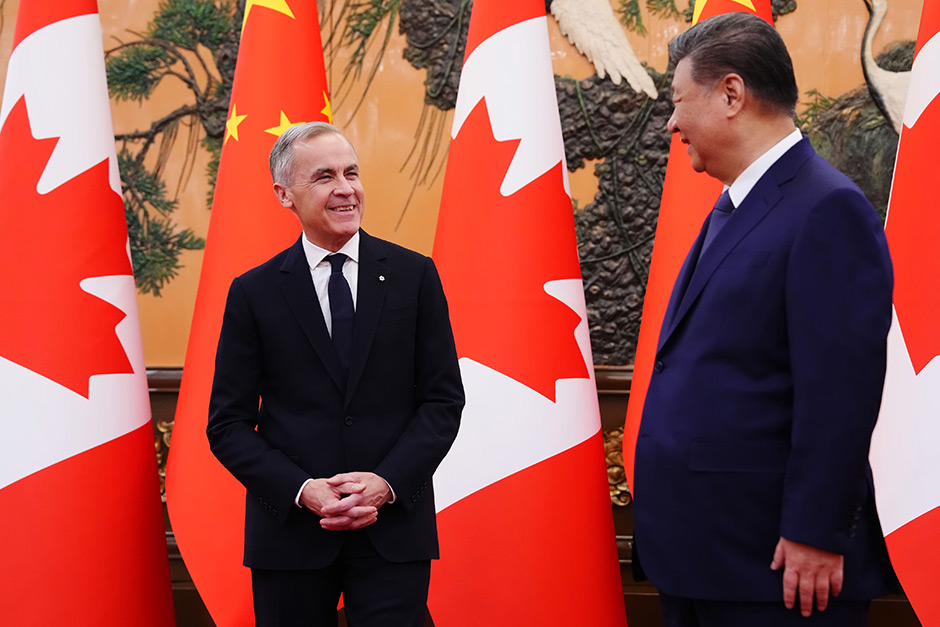
The intricate dance of international diplomacy often sees nations seeking strategic advantage, sometimes in surprising partnerships. For Canada, a perceived pivot towards closer ties with China during a period of strained relations with its southern neighbor, the United States, has drawn significant attention. While some interpret this as a shrewd move to diversify trade and assert independence, a growing chorus suggests that Canada might be heading for a period of profound regret, having potentially prioritized short-term geopolitical signaling over long-term strategic prudence.
The Temptation of a New Horizon (and a Little Defiance)
During a turbulent era of “America First” policies and protectionist rhetoric emanating from the White House, many of Canada’s traditional allies found themselves seeking new avenues for trade and diplomatic leverage. For Canada, a nation whose economy is inextricably linked to the U.S., the allure of the vast Chinese market became particularly potent. Diversifying trade away from an unpredictable American administration seemed like a sensible strategy, a way to mitigate risk and expand economic opportunities. Furthermore, by engaging more deeply with Beijing, Ottawa might have sought to signal its ability to navigate a complex global landscape independently, pushing back against what was sometimes perceived as a unilateral U.S. foreign policy.
This rebalancing act was perhaps less about explicitly “trolling” a specific U.S. president and more about Canada asserting its own foreign policy interests in the face of perceived American disengagement from multilateralism. The hope was likely that closer ties with China would offer not just economic benefits but also a degree of diplomatic influence and strategic flexibility that felt constrained by the shifting sands of U.S. politics. However, the path to economic gain can often be paved with unforeseen geopolitical potholes, especially when dealing with a rising global power like China.
The Looming Shadows of Strategic Vulnerability
The pursuit of closer ties with China, while understandable from an economic diversification standpoint, comes with a formidable list of potential downsides that could lead to considerable regret. The most immediate concern revolves around human rights. Canada, a nation that prides itself on advocating for democratic values and human rights globally, faces a profound ethical dilemma. Deepening economic and diplomatic engagement with a state accused of widespread human rights abuses, including the treatment of Uyghurs in Xinjiang and the crackdown on Hong Kong’s autonomy, risks undermining Canada’s moral standing on the world stage. It poses a difficult question: can economic expediency truly justify overlooking fundamental differences in values?
Beyond ethics, there are significant strategic vulnerabilities. An over-reliance on the Chinese market could expose Canada to economic coercion, where trade becomes a political weapon. Concerns about intellectual property theft, forced technology transfers, and the long-term implications of allowing Chinese state-backed entities significant access to critical infrastructure are also pressing. “While economic opportunity is tempting, the long-term strategic costs of overlooking fundamental differences in values can be crippling,” noted a veteran international trade consultant. “It’s a tightrope walk with very real consequences for Canada’s identity on the global stage.“
Furthermore, this perceived coziness with China has the potential to strain Canada’s relationships with its traditional allies, particularly within the Five Eyes intelligence-sharing alliance. As global tensions rise and democratic nations increasingly seek to counter China’s growing influence, Canada’s position could become complicated. Balancing its values and security interests with the pursuit of economic gains from China is a delicate act, and a misstep could leave Canada isolated or forced into uncomfortable geopolitical choices.
A Future Riddled with Difficult Choices?
Ultimately, Canada’s strategic decision to engage more closely with China, whether intended as a diplomatic counterweight or purely for economic benefit, may prove to be a double-edged sword. While the immediate gains of market access and a perceived assertion of independence might have been appealing, the long-term costs—ethical compromises, economic vulnerabilities, and potential alienation from core allies—could far outweigh them. As the global geopolitical landscape continues to shift, Canada might find itself facing difficult choices, navigating a complex web of commitments and consequences, potentially looking back with regret on a strategy that traded short-term leverage for long-term strategic entanglement.

