


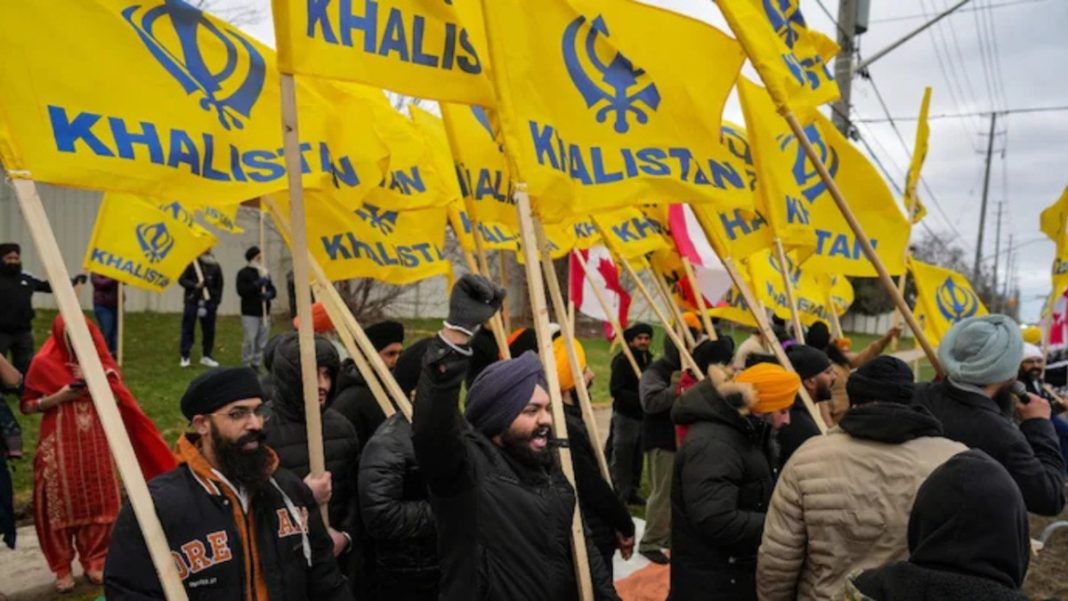
The diplomatic landscape between India and Canada has long been navigated with cautious steps, particularly concerning the activities of certain pro-Khalistan groups within Canadian borders. Recently, a significant shift in Canada’s stance has captured global attention, with Ottawa formally acknowledging Khalistani extremism as a security threat and explicitly linking it to violence in India. This declaration marks a pivotal moment, potentially reshaping bilateral ties and underscoring the complexities of diaspora politics and national security.
Canada’s Evolving Stance: Acknowledging the Threat
For years, India has consistently voiced concerns over the alleged activities of radical elements advocating for an independent Khalistan, a Sikh homeland, from Canadian soil. These concerns often revolved around fundraising, propaganda, and radicalization efforts that New Delhi argued directly impacted its internal security and sovereignty. Canada, historically, had often faced criticism for what was perceived as a lax approach, citing freedom of speech and assembly as protected rights.
However, Canada’s 2023 Public Safety Report, a comprehensive review of the national security landscape, unequivocally lists Khalistani extremism as a threat. The report details how “extremists in Canada” — including ideologically motivated actors and religiously motivated groups — pose a threat to national security. Crucially, it specifically mentions “Khalistani extremism” as a concern, noting its potential to inspire violence and radicalize individuals. While the report generally describes various forms of extremism, the specific mention of Khalistanis, along with their links to alleged violence in India, is a noteworthy escalation in Canada’s official discourse.
This evolving stance is not entirely new; earlier reports had also hinted at growing concerns. Yet, the directness and the explicit link to violence in India underscore a more robust recognition of the problem. It suggests a growing alignment with India’s long-standing warnings about the potential for radical elements within the diaspora to fuel instability abroad.
India’s Persistent Advocacy and Diplomatic Relief
For decades, India has pressed Canada on the issue of Khalistani extremism, citing historical instances of violence and terrorism linked to the movement, most notably the 1985 Air India Flight 182 bombing, which originated in Canada. Indian diplomatic missions have repeatedly presented evidence and sought greater cooperation from Canadian authorities to curb activities perceived as detrimental to India’s national interest.
The Canadian declaration, therefore, brings a degree of validation to India’s persistent advocacy. It signals a potential opening for enhanced cooperation on intelligence sharing, law enforcement, and counter-radicalization efforts. India has always maintained that while peaceful advocacy for any cause is acceptable, the promotion of violence and separatism, especially when it targets another sovereign nation, crosses a red line.
Commenting on the broader implications of such acknowledgements, a veteran Indian diplomat, speaking anonymously due to the sensitivity of ongoing relations, stated, “For too long, the narrative was framed around free speech. This report acknowledges that freedom of expression cannot be a shield for incitement to violence or activities that undermine the territorial integrity of a friendly nation. It’s a crucial step towards building a more constructive framework for bilateral security cooperation.” This perspective highlights India’s hope that the new Canadian position will translate into tangible action on the ground.
Navigating the Complexities: Diaspora and Diplomacy
The Khalistan movement, while having a significant historical presence and some support within certain segments of the Sikh diaspora, particularly in countries like Canada, the UK, and the US, does not represent the views of the vast majority of Sikhs globally. The challenge for governments like Canada’s lies in distinguishing between legitimate political expression and extremist ideologies that advocate for violence.
Canada is home to a large and influential Sikh diaspora, many of whom have contributed immensely to Canadian society. The government’s delicate task is to address the security concerns without alienating the broader community or infringing on fundamental rights. However, the report’s explicit mention of Khalistani extremism indicates that the distinction between legitimate political activism and security threats is becoming clearer in Ottawa’s assessment.
The implications for India-Canada relations are significant. This recognition from Canada could pave the way for a stronger partnership on security matters, fostering trust and collaboration that have, at times, been strained. It also puts pressure on other Western nations with significant Sikh populations to re-evaluate their own stances on similar issues, potentially creating a more unified international front against religiously or ideologically motivated extremism that transcends national borders.
As both nations move forward, the focus will undoubtedly be on how this official declaration translates into policy and enforcement. The rhetoric has shifted; now, the challenge is to build a cooperative framework that effectively addresses security threats while upholding democratic values and safeguarding the diverse communities that call Canada home.
The declaration by Canada represents a critical juncture, offering an opportunity to mend fences and fortify a relationship that is vital for both countries’ strategic interests and regional stability. It underscores the shared understanding that extremism, in any form, poses a universal threat that requires concerted and cooperative international efforts to combat.

