


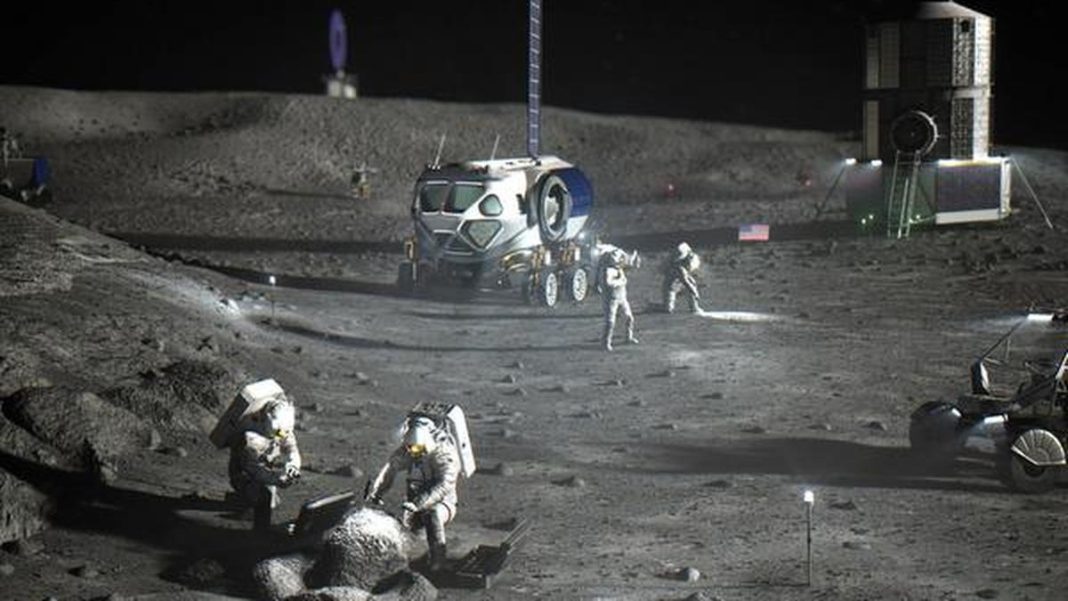
Humanity’s gaze has long been fixed on the stars, and what was once a domain of science fiction is rapidly becoming a tangible reality. With nations and private entities alike envisioning permanent lunar bases, orbital hotels, and asteroid mining operations, the question is no longer if we will establish a permanent presence in space, but when. Yet, as our ambitions expand beyond Earth’s atmosphere, our terrestrial legal frameworks remain firmly anchored to the ground. Among the most pressing challenges is the future of intellectual property, specifically patent law. Can the current international patent regime, designed for a world with distinct borders, effectively manage innovation in the limitless expanse of space?
The Earthbound Nature of Patent Law
At its core, patent law is inherently territorial. A patent granted in India protects an invention only within India’s borders; a separate patent must be sought and granted in the United States, Europe, or any other jurisdiction where protection is desired. This foundational principle creates an immediate dilemma for activities conducted in the vacuum of space. Where does an invention “exist” if it is manufactured on a lunar base, tested on a Mars rover, or deployed from an orbital platform?
Existing international agreements, such as the Paris Convention and the Patent Cooperation Treaty (PCT), facilitate the process of seeking patent protection in multiple countries. However, they do not create a single, unified international patent that extends beyond national territories. These treaties merely streamline national filings. Furthermore, the 1967 Outer Space Treaty, the cornerstone of international space law, famously declares that outer space is “not subject to national appropriation by claim of sovereignty, by means of use or occupation, or by any other means.” While crucial for preventing territorial claims, this principle inadvertently creates a legal void for intellectual property, as the very concept of a patent relies on territorial jurisdiction and exclusive rights.
Imagine an Indian company developing a revolutionary 3D-printing technique for constructing structures on the Moon using local regolith. If this innovation is implemented on a lunar base not under any specific national jurisdiction, which nation’s patent law would apply? And more critically, who would enforce it against an infringing party from another nation? The lack of clear jurisdictional authority and enforcement mechanisms poses a significant hurdle to fostering innovation and investment in space-related industries.
India’s Cosmic Leap and IP Imperatives
India is rapidly emerging as a major player in the global space arena. With the Indian Space Research Organisation (ISRO) pushing boundaries with missions like Chandrayaan and the upcoming Gaganyaan human spaceflight program, and a burgeoning private space sector, the nation’s interest in space exploration and exploitation is intensifying. Indian innovators and companies are investing heavily in technologies critical for a permanent space presence, from advanced propulsion systems and robotics to life support systems and in-situ resource utilization.
For these Indian entities, the absence of a robust international patent framework for space is not a distant, theoretical problem; it’s an immediate business risk. An Indian startup, for instance, might pioneer a unique method for extracting rare earth elements from asteroids. Without clear patent protection applicable in space, their innovation could be freely copied and exploited by competitors from other nations, undermining their competitive edge and deterring future investment. This scenario could stifle the growth of India’s private space industry and discourage entrepreneurial spirit.
Dr. Anjali Sharma, a leading Indian expert in space law, notes, “Without a robust international framework for space IP, Indian innovators risk seeing their groundbreaking work exploited without due recognition or commercial benefit. This isn’t just a legal vacuum; it’s an economic threat. India, with its growing capabilities, must advocate for a system that protects its innovators while fostering global cooperation.” India’s own strong domestic intellectual property laws need a cosmic counterpart to fully support its space ambitions.
Forging a Galactic Framework: Potential Paths Forward
Addressing this complex issue requires proactive international cooperation. Several approaches could be explored. One option involves amending existing international space treaties or drafting new protocols under the Outer Space Treaty specifically addressing intellectual property. This could establish a universal framework for patenting inventions made or used in space, potentially administered by a specialized international body, perhaps under the auspices of the World Intellectual Property Organization (WIPO) or the United Nations Office for Outer Space Affairs (UNOOSA).
Another pathway could involve states asserting jurisdiction over their own spacecraft, space stations, or lunar habitats as if they were extensions of national territory. While this offers some clarity for entities operating under a specific national flag, it risks creating a fragmented patchwork of laws and potential conflicts between jurisdictions. A more comprehensive solution would likely involve a hybrid approach, combining national registration with an overarching international dispute resolution mechanism and a set of commonly agreed-upon principles for space IP.
The challenge extends beyond mere registration. Enforcement mechanisms for IP infringement in space, given the vast distances and the absence of traditional legal infrastructure, would also need innovative solutions. International arbitration or specialized space courts might become necessary to resolve disputes effectively.
Conclusion
The dream of a permanent human presence in space is within reach, but for it to be sustainable and equitable, our legal systems must evolve alongside our technological prowess. The current international patent law, designed for a terrestrial world, is ill-equipped to handle the complexities of extraterrestrial innovation. India, as a nation with significant aspirations in space exploration and a rapidly advancing private space sector, has a vital interest in shaping these future legal frameworks. Proactive engagement in international dialogues, advocating for a clear, fair, and enforceable patent regime for space, will be crucial. This isn’t just about protecting inventions; it’s about fostering an environment where innovation can truly flourish beyond Earth’s confines, ensuring that the benefits of the final frontier are shared responsibly and equitably by all.

