


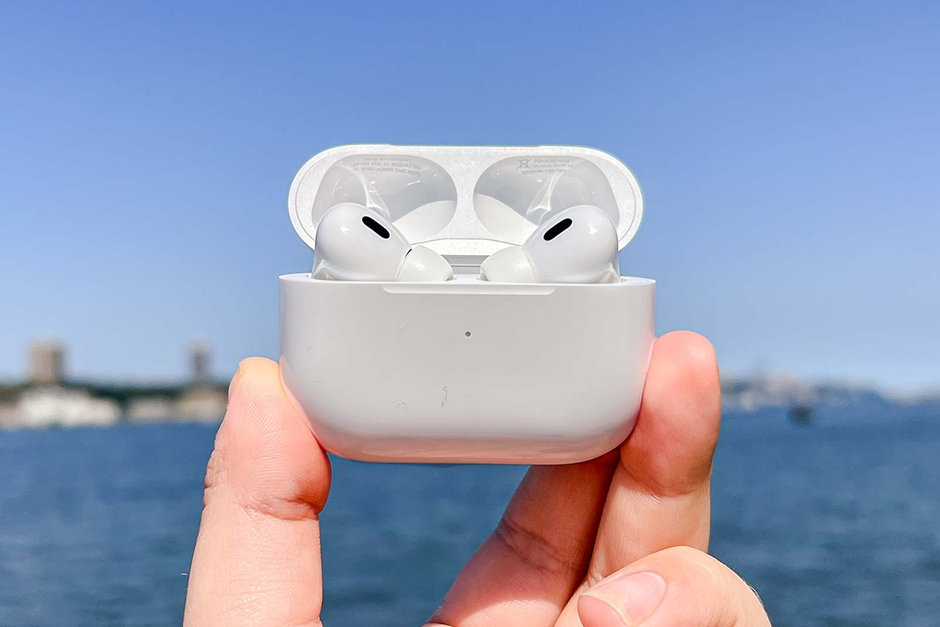
The tech rumor mill is a fascinating beast, constantly churning out whispers, leaks, and predictions that keep us on the edge of our seats. Lately, one particular murmur has grown into a notable hum: the idea of Apple integrating cameras into future AirPods Pro models. At first blush, it sounds almost outlandish, right? Tiny lenses tucked into your ears? But dig a little deeper, and the possibilities – and challenges – begin to emerge. Let’s unpack what this seemingly wild speculation could actually mean for our daily lives and the future of personal tech.
A Glimpse Through the Lens: Potential Use Cases
Let’s not dismiss this as a mere gimmick. Apple rarely adds features without a strategic vision, and cameras in AirPods Pro could be a cornerstone for several evolving tech frontiers. The most immediate connection is to Augmented Reality (AR). Imagine your AirPods acting as subtle environmental sensors, feeding real-time visual data to a connected device – perhaps even the Vision Pro. This could enhance AR overlays, making them more accurate and responsive to your surroundings without you needing to hold up a phone.
Beyond AR, consider the potential for health and wellness monitoring. Cameras could observe subtle changes in skin tone, blood flow, or even ear canal characteristics, providing unprecedented biometric data. This isn’t just about fitness tracking; it could be about early detection of health issues, all passively collected as you go about your day. Accessibility features could also see a massive leap, aiding those with visual impairments to navigate their environment or read signs aloud, much like existing assistive tech but integrated seamlessly into an everyday accessory.
And then there’s the more obvious, yet perhaps less talked about, use for content creation. Capturing hands-free, first-person perspective video or photos with a simple voice command or tap could open up new avenues for everyday vlogging or simply documenting moments without interrupting them. As Dr. Anya Sharma, a futurist specializing in wearable tech, recently put it, “Integrated sensors, especially cameras, could unlock a whole new dimension of contextual computing, allowing our devices to truly see and understand our environment in real-time. It’s a natural progression for ambient intelligence.”
The Hurdles and the “How”: Engineering a Tiny Revolution
While the potential applications paint an exciting picture, the engineering realities are formidable. Integrating even a tiny camera module into an AirPods Pro form factor presents immense challenges. We’re talking about extreme miniaturization, not just of the lens and sensor, but of the processing power needed to handle visual data, all while maintaining Apple’s signature audio quality and spatial audio capabilities. Battery life, already a careful balance for wireless earbuds, would take a significant hit with camera use, demanding innovative power management solutions.
Then there’s the issue of heat dissipation. Image processing generates warmth, and an earbud getting uncomfortably hot inside your ear canal is a non-starter. Apple would need breakthroughs in material science and thermal engineering. And what about the actual perspective? A camera pointing slightly outwards from your ear would capture a unique, perhaps slightly awkward, field of view. The quality wouldn’t be iPhone-level, but would it be “good enough” for its intended AR or health monitoring purposes?
Perhaps the biggest hurdle, however, isn’t technical, but ethical and societal: privacy. The idea of tiny, discreet cameras raises immediate concerns about surveillance and consent. Apple would need to implement extremely robust privacy safeguards, clear visual indicators when cameras are active, and transparent policies to build and maintain user trust. This isn’t just about compliance; it’s about navigating the public perception of always-on wearable cameras.
So, are cameras in the next AirPods Pro a certainty? Probably not in the immediate future, at least not in a consumer-facing photographic sense. But the underlying research and development are almost certainly underway. If Apple were to pull it off, it wouldn’t be just another feature; it would be a fundamental shift in how we interact with our digital and physical worlds. It would transform AirPods from mere audio devices into sophisticated, always-on environmental sensors, blurring the lines between listening, seeing, and experiencing. The prospect is undeniably complex, but for a company that thrives on pushing boundaries, it’s a vision worth considering, and one that could truly redefine personal tech as we know it.

