


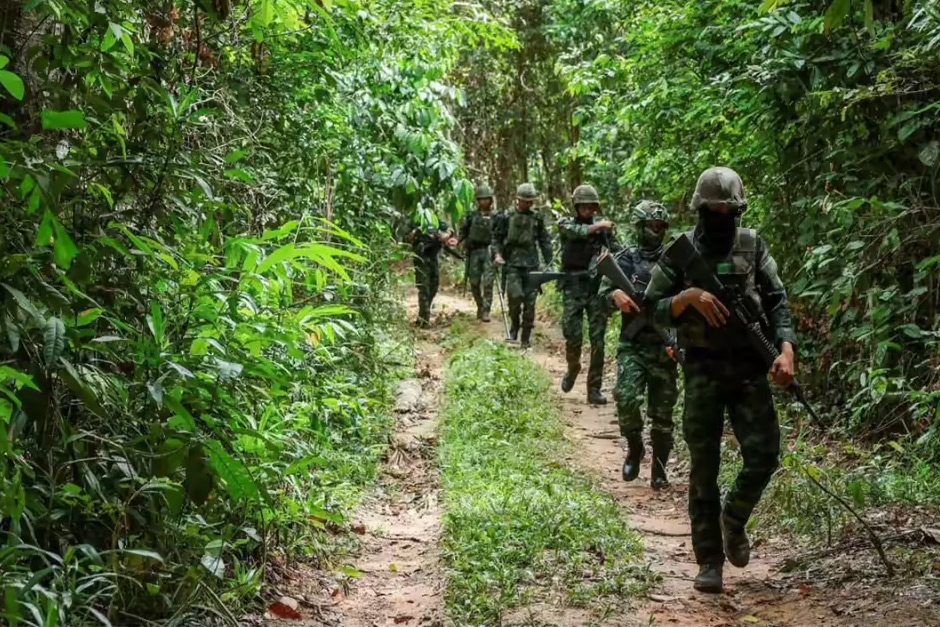
A recent border clash between Thailand and Cambodia has claimed the lives of four Thai soldiers, escalating long-standing tensions along their shared frontier. The incident, tragic in its immediate human cost, has been further complicated by a surprising diplomatic twist: the Thai government’s categorical rejection of claims by former US President Donald Trump that he had successfully brokered a truce between the two nations. This confluence of military engagement and diplomatic confusion underscores the volatile nature of the region’s unresolved territorial disputes, carrying implications that resonate across Southeast Asia and beyond.
Renewed Hostilities Near Preah Vihear
The fatal skirmish occurred in a highly sensitive zone, an area historically contested around the ancient Hindu temple of Preah Vihear. Perched dramatically on a cliff in the Dângrêk Mountains, this UNESCO World Heritage site has been a flashpoint for decades. While the International Court of Justice (ICJ) ruled in 1962 that the temple itself belongs to Cambodia, the surrounding territory, particularly the access routes and land adjacent to the temple, remains fiercely disputed by both nations.
Reports from the Thai military confirmed that four of its personnel were killed during a confrontation with Cambodian forces. Details surrounding the exact cause of the clash remain contested, with both sides often blaming the other for initiating hostilities. Such incidents are not new; the border area has seen intermittent but often deadly exchanges, most notably in 2008 and 2011, which displaced thousands and highlighted the deep-seated historical grievances and nationalist sentiments on both sides. The latest deaths serve as a grim reminder that despite periods of relative calm, the underlying issues are far from resolved, posing a constant threat to regional stability.
Bangkok Dispels Trump’s Truce Claims
Amidst the escalating tension, a surprising development emerged from the United States. Former President Donald Trump claimed to have brokered a successful truce between Thailand and Cambodia, stating via his social media platform, “I was able to get Thailand and Cambodia to cease all fighting and agree to a peace treaty… I did this while playing golf.” This assertion, however, was swiftly and emphatically rejected by Bangkok.
The Thai Ministry of Foreign Affairs issued a statement clarifying that it had no knowledge of any such intervention or agreement. A spokesperson for the Ministry stated, “We have not been contacted by Mr. Trump or his representatives regarding any mediation efforts. There has been no truce brokered by him.” The Cambodian government also remained silent on Trump’s claim, effectively reinforcing Thailand’s denial through omission. This diplomatic disconnect raises questions about the basis of Trump’s claim, whether it stemmed from a misunderstanding, a miscommunication, or perhaps an attempt at taking credit for perceived de-escalation that was unrelated to his actions. Regardless, the public rejection by a sovereign nation of an external party’s claim of mediation underscores the sensitivity of international diplomacy and the potential for such pronouncements to complicate delicate situations.
Regional Stability and India’s Stake
The renewed friction between Thailand and Cambodia reverberates across Southeast Asia, impacting the Association of Southeast Asian Nations (ASEAN), of which both are members. ASEAN prides itself on fostering regional peace and cooperation, and persistent internal disputes among its members can undermine its collective strength and credibility on the global stage. Stability in this region is paramount not only for its immediate neighbours but also for distant partners like India.
India, with its ‘Act East’ policy, places significant strategic and economic importance on its ties with Southeast Asian nations. A peaceful and stable Southeast Asia is crucial for India’s trade routes, energy security, and broader geopolitical influence. India advocates for peaceful resolution of disputes through dialogue and adherence to international law. The prolonged instability on the Thai-Cambodian border, while geographically distant, serves as a reminder of the fragility of peace in a region vital to India’s long-term interests. As Dr. Rina Singh, a Delhi-based geopolitical analyst specializing in Southeast Asian affairs, commented, “Any escalation in border tensions among ASEAN members is a concern for India. It highlights the need for robust diplomatic frameworks and adherence to multilateral mechanisms to prevent disputes from spiralling into larger conflicts.” This perspective underscores India’s consistent call for de-escalation and constructive engagement.
The tragic loss of four Thai soldiers and the ensuing diplomatic clarification regarding a purported truce highlight the enduring complexities of border disputes and international relations. While Thailand and Cambodia grapple with the immediate aftermath and the path forward, the incident serves as a stark reminder of the global interconnectedness of peace and stability. For nations like India, monitoring such developments is not merely an academic exercise but a critical component of safeguarding its strategic regional interests and promoting a rules-based international order.
Ultimately, sustained dialogue and a commitment to international legal frameworks remain the only viable path to achieving lasting peace along the Thai-Cambodian frontier, ensuring that ancient heritage sites do not continue to be flashpoints for modern-day conflict.

