


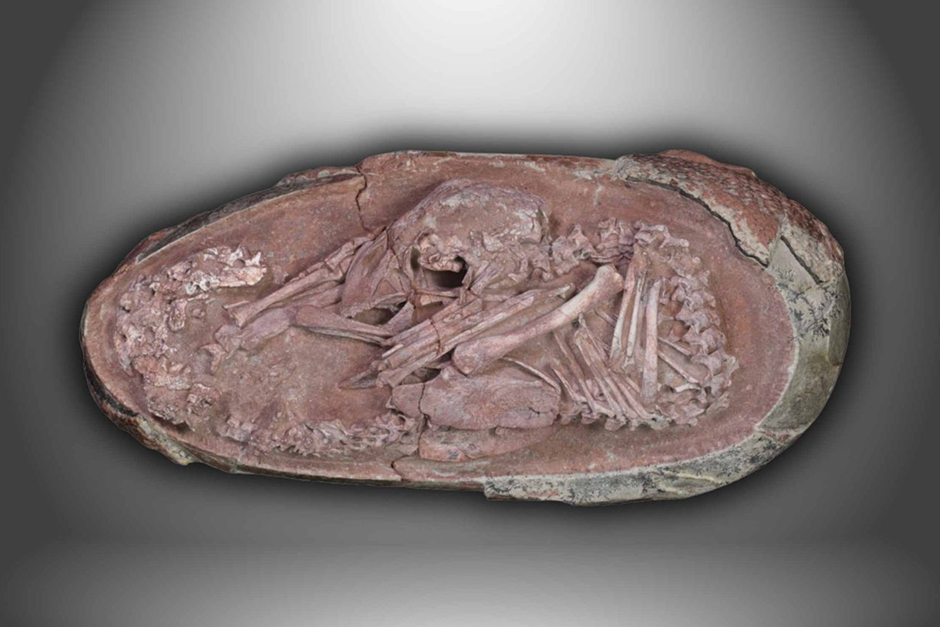
A groundbreaking discovery from the ancient lands of India is sending ripples through the global palaeontological community, offering an unprecedented look into the reproductive biology of dinosaurs. Scientists have unearthed a fossilized dinosaur egg, approximately 68 million years old, with another egg astonishingly preserved inside it. This find, a first of its kind for a dinosaur, provides compelling evidence of shared evolutionary traits between dinosaurs and modern birds, reinforcing India’s significant role in unravelling the mysteries of prehistoric life.
This extraordinary specimen, belonging to a titanosaurid dinosaur, was uncovered in the Bagh region of Madhya Pradesh, an area renowned for its rich palaeontological heritage. The discovery site, part of the Lameta Formation, is a treasure trove of dinosaur fossils, particularly eggs, dating back to the Late Cretaceous period. While instances of ‘egg-in-egg’ pathology, scientifically known as ‘ovum-in-ovo,’ are known in modern birds, this marks the first recorded instance in a non-avian dinosaur. Its implications are profound, suggesting that reproductive conditions previously thought exclusive to birds might have deep evolutionary roots stretching back to their dinosaurian ancestors.
A Fossilized Rarity: The Discovery Unpacked
The fossil, identified as part of the Titanosaurus indicus lineage, represents a truly unique case. The outer egg, complete with its shell, encased a smaller, yet perfectly formed, inner egg. Researchers from the University of Delhi, IIT Roorkee, and the Geological Survey of India meticulously studied the specimen, using advanced techniques to confirm its authenticity and internal structure. The preservation quality is remarkable, allowing scientists to observe the intricate details of both the eggs.
This phenomenon, where one egg develops inside another, occurs in modern birds due to a malfunction in the oviduct. Typically, an egg moves through the oviduct, where it gets its shell, and is then laid. If, for some reason, the egg is pushed back up the oviduct and re-enters the egg-forming process, another shell can be laid around it. The discovery of this same pathology in a dinosaur egg suggests a remarkably similar reproductive system and physiological responses to stress or abnormality in dinosaurs as seen in birds today. It paints a more vivid picture of how complex and sometimes imperfect biological processes can be, even across millions of years and vastly different species.
Decoding the Anomaly: A Glimpse into Dinosaur Reproduction
The presence of ovum-in-ovo in a titanosaurid egg is a scientific game-changer. Titanosaurids were a group of long-necked, plant-eating sauropod dinosaurs, among the largest land animals to have ever lived. Their reproductive strategies have long been a subject of fascination and study. This specific find not only highlights a shared pathology but also deepens our understanding of the evolutionary link between birds and dinosaurs, offering a tangible piece of evidence for shared reproductive biology.
According to Dr. Guntupalli V. R. Prasad, a professor at the University of Delhi and one of the lead researchers, “This exceptional discovery not only provides unprecedented insights into the reproductive biology of sauropod dinosaurs but also offers a rare opportunity to bridge the evolutionary gap between dinosaur and avian reproduction. It demonstrates that the reproductive physiology of sauropods was remarkably similar to that of modern birds.” This quote underscores the immense scientific value of the discovery, moving beyond mere curiosity to fundamentally alter existing hypotheses about dinosaur physiology. The intricate details observed in the fossil further suggest that these colossal creatures faced similar biological challenges and variations in their reproductive cycles as do their modern avian descendants.
India’s Rich Palaeontological Tapestry
India’s geological formations, particularly the Lameta Formation that stretches across parts of Madhya Pradesh, Gujarat, and Maharashtra, have consistently yielded significant dinosaur fossils, making the subcontinent a crucial hub for palaeontological research. Discoveries ranging from sauropod bones to diverse dinosaur eggs and nests have established India as a vital contributor to understanding the Late Cretaceous period, just before the mass extinction event that wiped out non-avian dinosaurs.
This latest find adds another illustrious chapter to India’s palaeontological narrative. It not only showcases the exceptional preservation conditions found in the region but also underlines the potential for future discoveries that could further refine our understanding of Earth’s ancient past. Such finds often ignite public interest in science, inspiring a new generation of researchers to explore the rich history buried beneath our feet, connecting the modern world with the incredible giants that once roamed these very landscapes. The collaborative efforts of Indian scientists in unearthing and analysing such unique fossils are cementing the nation’s reputation as a global leader in dinosaur research.
The discovery of a dinosaur egg within another egg is more than just a scientific curiosity; it’s a window into the deep past, revealing the intricate biological processes that governed life millions of years ago. It strengthens the evolutionary bridge between ancient reptiles and modern birds, demonstrating shared biological mechanisms that have persisted through immense spans of geological time. As scientists continue to explore India’s fossil-rich landscapes, each new find promises to add another piece to the complex, awe-inspiring puzzle of life on Earth.

