


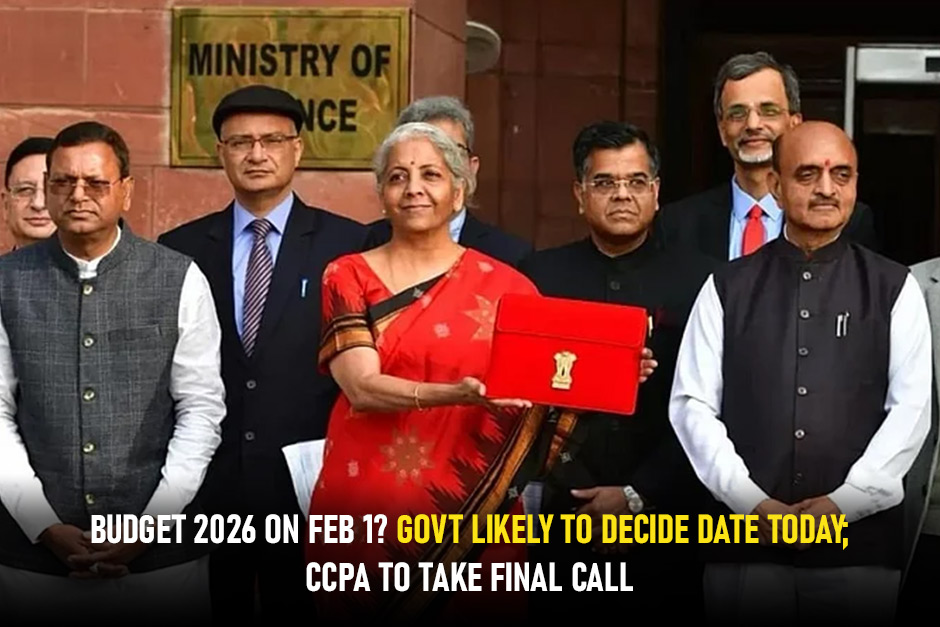
The annual unveiling of the Union Budget is a pivotal moment for India, shaping economic trajectories, policy directions, and investor sentiment for the fiscal year ahead. As preparations for Budget 2026 gather momentum, a significant question has emerged regarding its presentation date: will it continue the recent tradition of being presented on February 1st? Speculation is rife that the government is poised to make a definitive decision on this matter today, with the powerful Cabinet Committee on Political Affairs (CCPA) expected to make the final call.
This anticipated announcement isn’t merely a matter of parliamentary scheduling; it carries considerable weight for economic planning, legislative efficiency, and the operational readiness of government ministries. The shift to an earlier budget presentation, a practice introduced a few years ago, was a conscious strategic move designed to provide ministries with ample time to implement new schemes and allocate funds effectively from the start of the new financial year on April 1st.
The Evolution of India’s Budget Calendar
Historically, India’s Union Budget was presented on the last working day of February. This timeline often left a tight window for parliamentary approval and subsequent fund disbursement, frequently pushing the actual allocation of resources well into the first quarter of the new fiscal year. This delay could hamper timely project initiation and slow down economic activity, as ministries awaited formal budgetary approvals.
The decision to advance the budget presentation to February 1st marked a significant procedural reform. The primary objective was to ensure that the entire budget process – including its passage by both Houses of Parliament – could be completed before March 31st. This allows government departments to have approved budgets and allocated funds ready for utilisation from April 1st, aligning seamlessly with the start of the new financial year. Proponents of this early presentation argue that it streamlines governance, enhances expenditure efficiency, and injects certainty into economic planning right from the outset.
Why February 1st Remains Crucial for Budget 2026
The continuation of the February 1st tradition for Budget 2026 is seen as beneficial for several reasons. For one, it provides ministries with nearly two months to operationalise the financial allocations and policy directives announced in the budget. This early start can significantly impact the pace of infrastructure projects, social welfare schemes, and defence procurements, among other critical areas. Furthermore, an earlier budget allows businesses and investors to gain clarity on taxation policies, sectoral incentives, and economic forecasts well in advance, aiding their own strategic planning.
“The early presentation of the budget has proven instrumental in accelerating policy implementation,” observes Dr. Priya Sharma, a Delhi-based economic analyst. “It minimizes the period of uncertainty that once plagued the first quarter of the fiscal year, allowing for a more stable and predictable environment for both public expenditure and private investment. Maintaining this schedule for Budget 2026 would signal a continued commitment to efficiency and proactive governance.”
For the financial markets, an early budget date means that key announcements that could sway market sentiment are known sooner, enabling a quicker adjustment and potentially reducing volatility associated with prolonged speculation. It also gives rating agencies and international investors an earlier insight into India’s fiscal health and policy direction, contributing to a more transparent economic outlook.
CCPA to Deliver the Final Word
The ultimate decision on the exact date for the presentation of Budget 2026 rests with the Cabinet Committee on Political Affairs (CCPA). The CCPA is a high-level committee within the Union Cabinet, responsible for dealing with policy matters related to foreign affairs, defence, and home affairs, as well as crucial parliamentary business. Its remit includes finalising the schedule for parliamentary sessions and other important government business. Given the political and economic significance of the Union Budget, its presentation date falls squarely within the CCPA’s purview.
The process typically involves internal consultations within the Ministry of Finance and the Ministry of Parliamentary Affairs, followed by a proposal presented to the CCPA. Headed by the Prime Minister, the CCPA comprises senior ministers whose collective decision carries the government’s official stamp. Today’s meeting, if it indeed takes place to finalise this date, will be closely watched across political corridors, economic think tanks, and market bourses.
While the February 1st date has gained strong traction and precedent, the CCPA’s final deliberation would consider various factors, including the overall parliamentary calendar, state assembly election schedules (if any are coinciding), and other pressing legislative priorities. However, the compelling logistical and economic advantages of an early budget presentation suggest that the government is likely to continue with the established practice.
As the nation awaits the official word, the government’s decision on the presentation date of Budget 2026 will set the stage for one of the most anticipated annual economic events. It will not only dictate the parliamentary calendar but also lay down the foundational timeline for India’s economic operations in the fiscal year ahead, underscoring the government’s commitment to strategic and timely financial governance.

