


The cosmos continues to surprise us, sending enigmatic messengers from beyond our solar system. Following the fleeting visit of ‘Oumuamua and the cometary spectacle of 2I/Borisov, astronomers have turned their gaze towards yet another remarkable interstellar visitor: 3I/ATLAS. This celestial wanderer, charting a course through our cosmic neighbourhood, has become the focus of intense scrutiny, particularly by the Breakthrough Listen initiative. Its presence ignites not just scientific curiosity, but also fuels the age-old human quest: are we alone?
A Glimpse of the Interstellar Traveller: 3I/ATLAS
The identification of an object originating from outside our solar system is a rare and thrilling event. While 1I/’Oumuamua was a stony, cigar-shaped enigma and 2I/Borisov a more familiar comet, 3I/ATLAS presents scientists with a fresh dataset to understand the diverse nature of interstellar objects. Its trajectory indicates a clear path from beyond the Sun’s gravitational influence, carrying with it secrets from another star system, potentially billions of kilometres away. These celestial nomads offer invaluable opportunities to study pristine material from distant stellar nurseries, providing clues about planet formation and the chemical compositions prevalent in other galactic regions. Each such discovery refines our understanding of how common or uncommon such interstellar traffic might be, reshaping our cosmological models.
For astronomers in India and worldwide, observing 3I/ATLAS is a chance to leverage advanced telescopic capabilities to gather crucial data. India’s growing prowess in space science, evident from missions like Chandrayaan and Mangalyaan, positions its scientific community to actively participate in and contribute to these global observational campaigns. The challenge lies not just in detection, but in rapid characterisation before these fleeting visitors vanish back into the interstellar void.
Breakthrough Listen’s Vigil: Scanning for Technosignatures
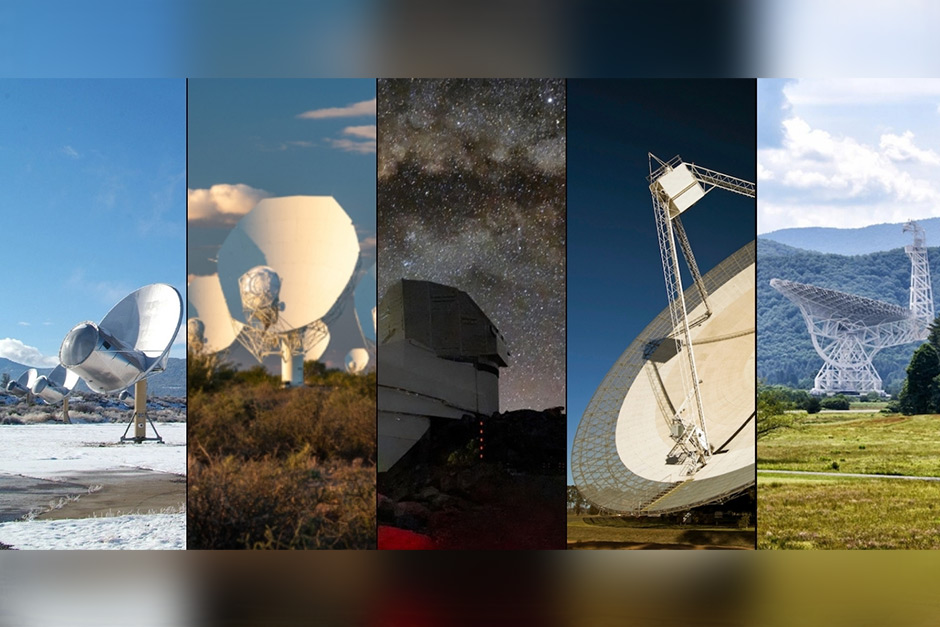
The presence of an interstellar object naturally piques the interest of projects dedicated to the search for extraterrestrial intelligence (SETI). Among these, the Breakthrough Listen initiative stands out. Funded by Russian entrepreneur Yuri Milner and spearheaded by astrophysicist Stephen Hawking during its inception, Breakthrough Listen is the most comprehensive scientific programme ever launched to search for technosignatures – any sign of technology developed by extraterrestrial intelligence. With access to powerful telescopes like the Green Bank Telescope in the United States and the Parkes Telescope in Australia, the project systematically scans millions of stellar systems and increasingly, interstellar objects.
When 3I/ATLAS was confirmed as an interstellar interloper, Breakthrough Listen scientists wasted no time in pointing their instruments towards it. The rationale is compelling: if an advanced civilization were to send a probe across vast cosmic distances, an interstellar object – whether natural or engineered – would be a prime candidate for carrying such a device. The observations involve meticulously sifting through radio frequencies, searching for any unusual patterns, narrowband signals, or pulsed emissions that deviate from known natural astrophysical phenomena. While the odds are astronomically low, the potential reward of discovering a technosignature is immeasurable.
As Dr. Anjali Sharma, a theoretical astrophysicist at the Indian Institute of Astrophysics, Bengaluru, aptly puts it, “The search for extraterrestrial intelligence is not just about finding aliens, but about understanding our place in the universe. Each new interstellar object offers a fresh perspective on the vastness and mystery beyond our solar system, pushing the boundaries of what we consider possible.”
Global Collaboration and India’s Role in Cosmic Exploration
The study of interstellar objects like 3I/ATLAS underscores the profoundly collaborative nature of modern astronomy. No single nation or observatory possesses all the resources needed to comprehensively track and analyse such rare phenomena. From the initial detection by ground-based telescopes to follow-up observations by space-based instruments and dedicated SETI projects, it’s a symphony of international effort. Indian astronomers, with access to facilities like the Giant Metrewave Radio Telescope (GMRT) near Pune, are integral to this global scientific tapestry. While GMRT’s primary focus is on pulsar research and cosmological studies, its capabilities make it a potential asset for follow-up observations of transient astronomical events, including interstellar objects, as part of broader international collaborations.
Beyond observational astronomy, India’s scientific community contributes significantly through theoretical astrophysics, data analysis, and developing innovative instrumentation. Participation in such high-profile international endeavours not only elevates India’s standing in global science but also inspires a new generation of scientists and engineers. It highlights that the pursuit of knowledge about our universe is a shared human endeavour, transcending geographical and political boundaries. The data collected from Breakthrough Listen’s observations of 3I/ATLAS, regardless of whether a technosignature is found, will contribute to a public domain of knowledge, accessible to researchers worldwide, including those in India, to further refine our understanding of interstellar space and the potential for life beyond Earth.
The journey of 3I/ATLAS through our solar system, and the diligent observations by Breakthrough Listen, represent humanity’s enduring quest to comprehend its cosmic surroundings. While the search for extraterrestrial technosignatures continues, the very act of observing these interstellar visitors enriches our scientific understanding of the universe’s mechanics and its deep history. Whether 3I/ATLAS yields a groundbreaking discovery or simply confirms the vast, silent emptiness of interstellar space, its fleeting presence serves as a powerful reminder of the endless wonders awaiting discovery beyond our planetary home. The scientific community, including India’s vibrant astronomical researchers, remains vigilant, ever ready to decode the messages carried by these silent travellers from the stars.

