


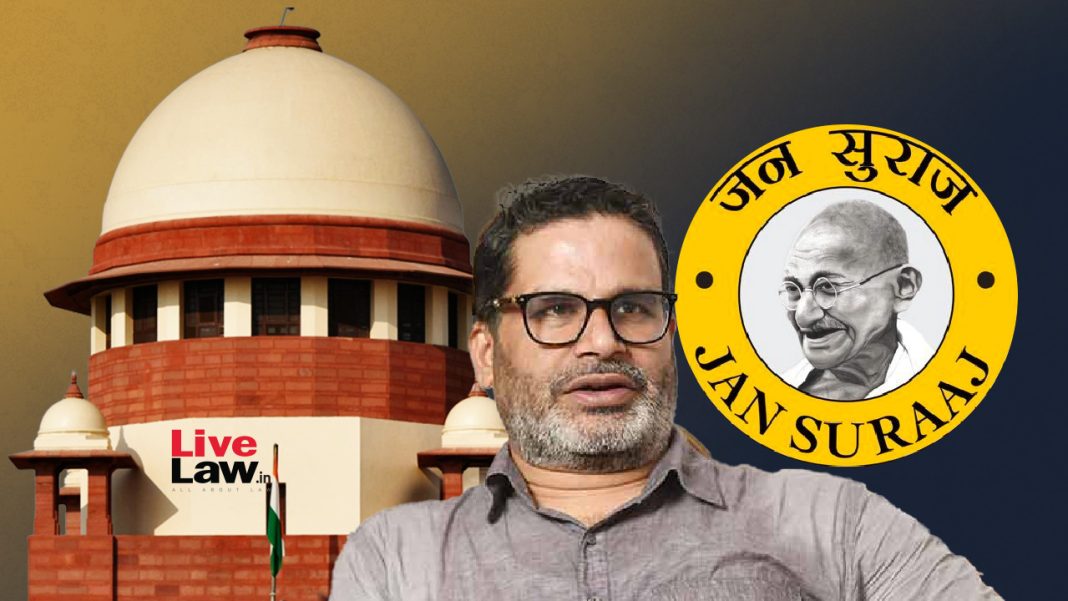
BREAKING NEWS: The political landscape in Bihar has taken a dramatic turn, with the Jan Suraaj Party (JSP) filing a petition in the Supreme Court of India. The party is challenging the recent Bihar elections, specifically raising serious questions about the direct transfer of Rs 10,000 to women beneficiaries, alleging it constituted an electoral inducement. This move brings the contentious debate around ‘electoral freebies’ and the integrity of the electoral process squarely before the nation’s highest judicial authority.
The petition, filed by the Jan Suraaj Party, led by political strategist Prashant Kishor, contends that the financial transfers made by the state government to women shortly before or during the election cycle violated the spirit of fair elections and the Model Code of Conduct (MCC). This development has sent ripples through political circles, with observers keenly watching how the Supreme Court will address these fundamental concerns regarding electoral integrity and the demarcation between legitimate welfare schemes and vote-buying tactics.
The Jan Suraaj Petition: Grounds for Challenge
The core of the Jan Suraaj Party’s challenge lies in its assertion that the direct transfer of Rs 10,000 to a significant number of women beneficiaries in Bihar amounted to a direct inducement aimed at influencing voter behaviour. The party argues that such large-scale financial disbursements, particularly when timed in close proximity to elections, undermine the democratic process by creating an uneven playing field. Their legal counsel is expected to argue that this practice falls afoul of Section 123(1) of the Representation of the People Act, 1951, which deals with bribery, and other provisions designed to ensure free and fair elections.
The JSP’s petition highlights the timing of these transfers, suggesting they were not merely routine welfare disbursements but rather a calculated move with electoral implications. While state governments often implement welfare schemes, the timing and quantum of benefits distributed just before or during an election are frequently scrutinised. The petition asks the Supreme Court to examine whether such actions, even if couched as welfare initiatives, cross the line into illicit electoral practices, thereby necessitating judicial intervention to uphold the sanctity of the ballot.
Electoral Freebies and Judicial Scrutiny
The Supreme Court’s engagement with this petition marks another critical chapter in India’s ongoing struggle with the concept of ‘electoral freebies’ or ‘revadi culture’. For years, there has been a robust debate among political parties, economists, and legal experts about the ethics and legality of promising and delivering extensive financial or material benefits ahead of elections. Critics argue that such practices burden state exchequers, distort market dynamics, and, most importantly, compromise the rationality of voter choice. Proponents, however, defend them as essential welfare measures aimed at alleviating poverty and inequality.
The Supreme Court itself has, on multiple occasions, expressed concerns over electoral freebies. In recent years, it has heard petitions seeking guidelines to regulate such promises, acknowledging the fine line between legitimate welfare and inducements. This particular case from Bihar could provide the Court with an opportunity to issue more definitive pronouncements on what constitutes permissible state action versus impermissible electoral bribery, especially concerning direct benefit transfers. The potential for such a ruling to set a precedent for future elections across the country is immense, impacting how political parties craft their manifestos and how governments implement schemes.
Prashant Kishor, the architect of Jan Suraaj, has often voiced his opposition to what he terms “short-term electoral tactics” that compromise long-term governance. Speaking on the broader issue, a legal representative for the Jan Suraaj Party stated, “Our petition is not against welfare. It is against the misuse of state machinery and public funds to influence elections. The essence of democracy lies in informed choice, not induced decisions. We believe the Supreme Court will uphold this fundamental principle.”
Potential Ramifications for Bihar and Indian Politics
The Supreme Court’s decision on the Jan Suraaj petition could have profound implications. For the Bihar government, an adverse ruling could call into question the legitimacy of election outcomes or at least cast a shadow over its electoral strategies. For the Election Commission of India (ECI), the ruling might necessitate a review and strengthening of the Model Code of Conduct concerning direct benefit transfers and other welfare schemes implemented close to elections.
More broadly, this case could redefine the boundaries of what is considered acceptable electoral campaigning in India. If the Supreme Court takes a strong stance against direct cash transfers as inducements, it could force political parties nationwide to re-evaluate their electoral promises and the timing of their welfare initiatives. This could lead to a more level playing field, where elections are fought more on substantive policy debates and governance records rather than last-minute financial incentives. As the nation watches, the Jan Suraaj Party’s challenge underscores the enduring quest for genuinely free and fair elections in India’s vibrant, yet complex, democracy.
The path forward for the petition is long, involving legal arguments, counter-arguments, and careful deliberation by the apex court. However, its mere filing has ignited a crucial conversation about the integrity of India’s electoral system, promising to be a landmark case in the ongoing evolution of Indian jurisprudence and political ethics.

