


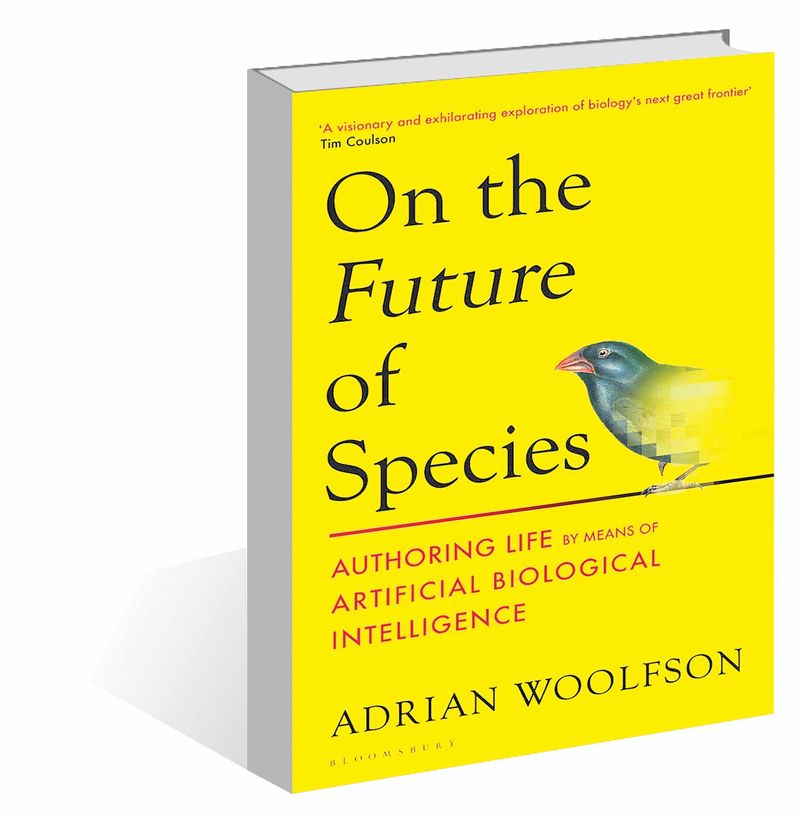
In an era where technological advancements redefine the boundaries of human understanding, a new frontier in biology is emerging, promising to fundamentally alter our relationship with life itself. Adrian Woolfson’s compelling book, ‘On the Future of Species: Reimagining life through artificial biology’, invites readers into this revolutionary landscape. Published at a time when synthetic biology is rapidly advancing from laboratories to potential real-world applications, Woolfson’s work serves as a crucial intellectual compass, navigating the profound implications of designing and manipulating life at its most fundamental level.
The Genesis of Artificial Life: A New Scientific Paradigm
Woolfson positions artificial biology not merely as an extension of genetic engineering but as a distinct scientific paradigm – one that shifts our focus from merely understanding existing life to actively designing and creating novel biological systems. This burgeoning field, often referred to as synthetic biology, involves applying engineering principles to biology. Researchers are now constructing new enzymes, designing custom genetic circuits, and even aiming to create entire organisms with tailored functions, moving beyond the simple modification of existing species.
The implications are staggering. From developing new forms of sustainable energy and biodegradable materials to revolutionising medicine with bespoke cellular therapies and diagnostics, artificial biology holds immense promise. However, it also raises complex questions about our role as creators. As nations like India significantly expand their investment and expertise in biotechnology, nurturing a vibrant ecosystem of startups and research institutions, the discussions Woolfson initiates become particularly pertinent. India’s scientific community, already at the forefront of pharmaceutical and IT innovation, is increasingly grappling with the ethical and practical dimensions of this powerful new science.
Redefining Existence: Species, Ethics, and Our Place
At the heart of Woolfson’s exploration lies a profound inquiry into what constitutes “life” and “species” in an age where life can be engineered rather than solely evolved. The book challenges traditional biological definitions, pushing readers to consider how our perception of natural selection, biodiversity, and even human identity will shift when we possess the tools to generate life forms with specific, pre-determined characteristics. This isn’t just about tweaking existing species; it’s about the potential to create entirely new ones, blurring the lines between the natural and the artificial.
Woolfson deftly articulates the ethical minefield that accompanies such unprecedented power. Who decides which life forms are created, and for what purpose? What are the ecological ramifications of introducing synthetic organisms into existing ecosystems? These aren’t hypothetical scenarios for a distant future; they are pressing concerns that demand immediate consideration from scientists, policymakers, and society at large. “The true revolution isn’t merely understanding life,” Woolfson observes, “but gaining the power to design it, prompting a profound re-evaluation of what ‘life’ itself truly signifies.” This sentiment encapsulates the book’s core message: humanity stands at a pivotal juncture, where our capacity for creation far outstrips our collective wisdom on how to responsibly wield it.
A Call for Informed Dialogue
‘On the Future of Species’ is not a speculative fiction novel but a deeply researched and thought-provoking analysis that urges an informed and proactive global dialogue. Woolfson argues that ignoring the rapid advancements in artificial biology is no longer an option. Instead, he advocates for a balanced approach that embraces the potential benefits while rigorously addressing the ethical, societal, and existential challenges. The book highlights the urgent need for robust regulatory frameworks, public engagement, and international cooperation to guide this transformative technology responsibly.
For readers in India and across the globe, Woolfson’s work provides an indispensable guide to understanding one of the 21st century’s most defining scientific movements. It’s a reminder that as we push the boundaries of biological possibility, we must also deepen our philosophical and ethical introspection. ‘On the Future of Species’ compels us to reflect not just on what we can do, but what we should do, ensuring that our reimagining of life leads to a future that is both innovative and equitable.

