


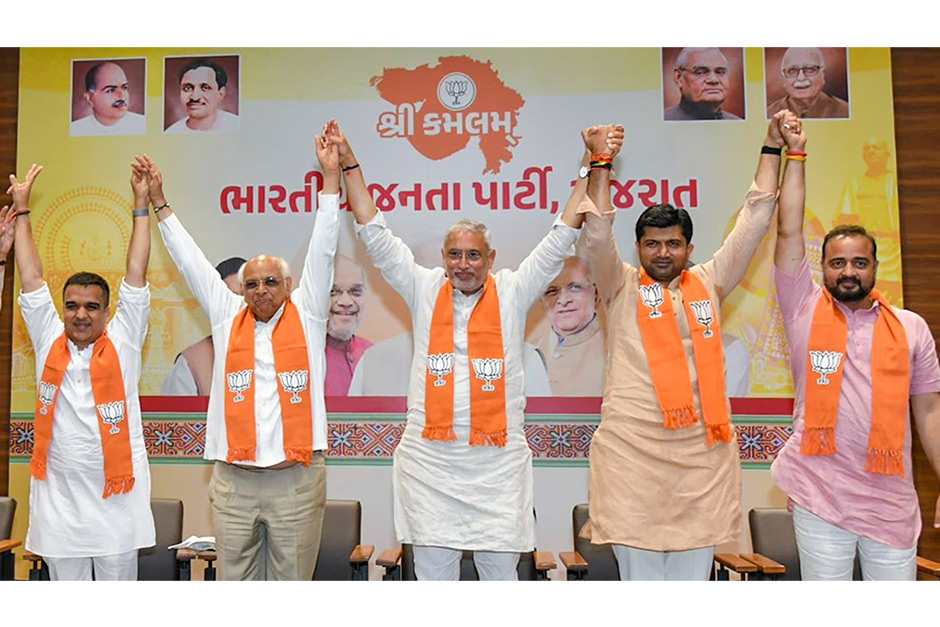
In a significant political development reaffirming its stronghold in Gujarat, the Bharatiya Janata Party (BJP) has achieved a sweeping victory in the state’s municipal corporation elections. The results, declared recently, saw the saffron party secure a dominant mandate, successfully gaining control of all 15 municipal corporations across Gujarat. This emphatic performance not only underscores the BJP’s enduring appeal in the state but also sends a clear message about the current political landscape at the grassroots level.
The elections for these crucial urban local bodies, which govern the development and administration of major cities and towns, were keenly watched. The BJP’s triumph in every single corporation – including prominent urban centers like Ahmedabad, Surat, Vadodara, Rajkot, Jamnagar, and Bhavnagar – is a testament to its robust organizational machinery and consistent voter trust in the state, often considered a laboratory for the party’s governance model. The scale of this victory provides the BJP with complete administrative control over Gujarat’s urban infrastructure and development agenda for the foreseeable future.
A Resounding Mandate Across Urban Gujarat
The outcome of the municipal polls has cemented the BJP’s position as the undisputed force in Gujarat’s urban electoral landscape. The party’s strategy, focusing on development initiatives, local governance, and leveraging the popularity of Prime Minister Narendra Modi, seems to have resonated strongly with the electorate. Voters have overwhelmingly endorsed the BJP’s vision for urban management, providing them with a clear mandate to continue their policies and projects without significant opposition challenges within these civic bodies.
The comprehensive nature of the victory is particularly noteworthy. While Gujarat has traditionally been a BJP bastion, securing all 15 corporations is an extraordinary feat. This level of dominance suggests a broad-based acceptance across various demographics within the urban centers. From infrastructural improvements to public services, the party’s narrative of progress and stability appears to have swayed voters, who chose continuity over change. This result is not merely about winning seats; it’s about consolidating political power and influence at the very heart of Gujarat’s most populous and economically vital regions.
Factors Behind the Saffron Surge and Opposition’s Challenge
Several factors contributed to the BJP’s landslide victory. A strong and well-oiled party organization, capable of mobilizing voters effectively, played a crucial role. The ‘Modi factor,’ given his strong roots in Gujarat and continued national popularity, undoubtedly provided a significant boost. Furthermore, the party’s consistent emphasis on welfare schemes, perceived good governance, and a steady hand in administration resonated with urban dwellers seeking stability and development.
In stark contrast, the opposition, primarily the Indian National Congress, faced another disheartening defeat. Despite efforts to highlight local issues and administrative shortcomings, the Congress failed to gain traction, indicating a continuing struggle to connect with urban voters and present a credible alternative. The results are a severe blow to the party’s aspirations in Gujarat, raising questions about its organizational strength and leadership strategy in the state. The nascent efforts of parties like the Aam Aadmi Party (AAP) to make inroads, particularly in cities like Surat, while showing initial sparks, ultimately couldn’t dislodge the BJP’s entrenched position across the corporations.
A political analyst, preferring anonymity, commented on the results: “This sweep is not just a win; it’s a reaffirmation of trust in the BJP’s brand of governance in Gujarat. Voters are clearly prioritizing stability and the promise of development over any perceived discontent. The opposition needs a fundamental rethink of its strategy and message if it hopes to challenge this dominance in the future.”
Implications for the Road Ahead
The outcome of the Gujarat municipal polls carries significant implications, both for the state’s internal politics and for the national political discourse. For the BJP, this victory serves as a massive morale booster, reinforcing its confidence ahead of the upcoming state assembly elections in 2022. It provides the party with a strong platform to continue its policies and further solidify its base without significant internal resistance from local bodies.
For the opposition, especially the Congress, the results necessitate a period of deep introspection and strategic recalibration. The consistent electoral setbacks in a crucial state like Gujarat underscore the urgent need to rejuvenate the party’s grassroots presence, articulate a compelling alternative vision, and build credible local leadership. The absence of a strong opposition narrative at the municipal level also highlights the challenges faced by national opposition parties in countering the BJP’s well-established machinery and popular appeal in its strongholds.
In essence, the BJP’s sweeping victory in Gujarat’s municipal corporations is a clear signal of the party’s continued electoral might and the enduring trust it enjoys among the state’s urban electorate. As Gujarat looks towards future electoral battles, this mandate will undoubtedly shape political strategies and narratives for all parties involved.

