


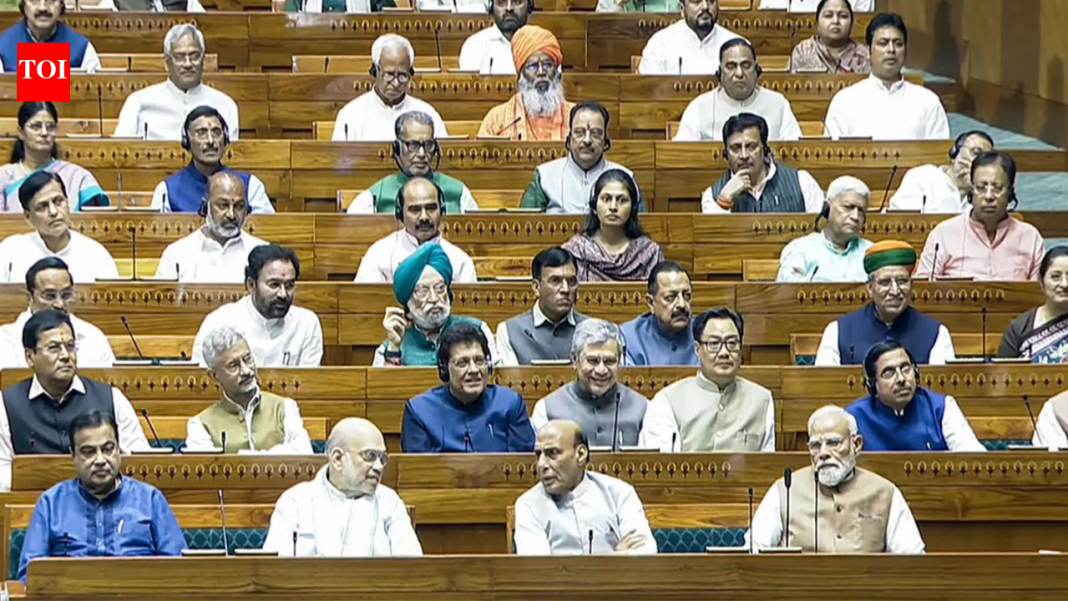
New Delhi – The Bharatiya Janata Party (BJP) has issued a stringent whip, mandating the full attendance of all its Members of Parliament (MPs) for a special parliamentary session scheduled from April 16th to 18th. The directive, communicated across party ranks, underscores the critical importance the ruling party attaches to the upcoming three-day gathering. While the specific agenda remains officially undisclosed, the issuance of such a forceful whip has immediately sparked intense speculation within political circles and among the public, hinting at significant legislative or policy decisions on the horizon.
The Imperative of a Party Whip
A party whip in the Indian parliamentary system is a powerful directive, essentially an order issued by a political party to its members in the legislature. It serves as a tool to ensure party discipline and cohesion, compelling MPs to vote or act in a specific manner on particular issues. Failure to adhere to a whip can lead to severe consequences, including disqualification from Parliament under the anti-defection law, underscoring the gravity of the BJP’s current directive.
The issuance of a whip for a special session, especially one convened with such short notice, signifies that the party anticipates dealing with matters of national importance, where unanimous support and a strong show of strength are crucial. Such sessions are typically convened to address urgent legislative business, constitutional amendments, or major policy announcements that require immediate parliamentary deliberation and approval. The BJP’s move signals its intent to present a united front and push through its agenda effectively during this brief, focused period.
Unpacking the Agenda: Speculation Abounds
With the agenda tightly under wraps, political observers and media outlets are rife with theories regarding the purpose of this sudden special session. One prominent speculation revolves around the possibility of significant legislative reforms. Given the government’s long-standing commitments, discussions could potentially include advancements on the Uniform Civil Code (UCC), which has been a contentious but core promise of the BJP. Any movement on this front would undoubtedly ignite extensive debate.
Another area of conjecture points towards major policy announcements, possibly related to economic reforms or a strategic national initiative. With India navigating a dynamic global landscape, the government might be preparing to unveil measures aimed at bolstering the economy, enhancing national security, or addressing critical social issues. The timing of such a high-stakes session suggests a matter that cannot await the regular parliamentary calendar.
Furthermore, some analysts suggest the session could be a strategic move to galvanize the party and present a united front ahead of significant political milestones. It could be an opportunity for the leadership to convey crucial directives, consolidate positions, or even address internal party matters that require the collective presence of its MPs. “The BJP’s decision to call a special session with a whip is a clear indicator that something substantial is being prepared,” remarks Dr. Ramesh Gupta, a prominent political analyst based in Delhi. “Whether it’s a critical bill, a policy unveiling, or a strategic political maneuver, the message is clear: the party requires absolute unity and strength from its ranks.”
Political Implications and the Road Ahead
The call for full attendance by BJP MPs for the April 16-18 special Parliament session carries significant political weight. It not only demonstrates the party’s firm control over its legislative wing but also highlights its readiness to undertake decisive actions. For the opposition, this unexpected session will likely serve as a period of heightened vigilance, as they will undoubtedly scrutinize every move and potential legislative proposal. The government’s ability to maintain decorum and achieve its objectives within this compressed timeframe will be a key test of its parliamentary management skills.
As the dates draw closer, the nation watches with bated breath, anticipating the unfolding of events within the hallowed halls of Parliament. The outcome of this special session could potentially shape critical aspects of India’s legislative landscape and policy direction for the foreseeable future.
—

