


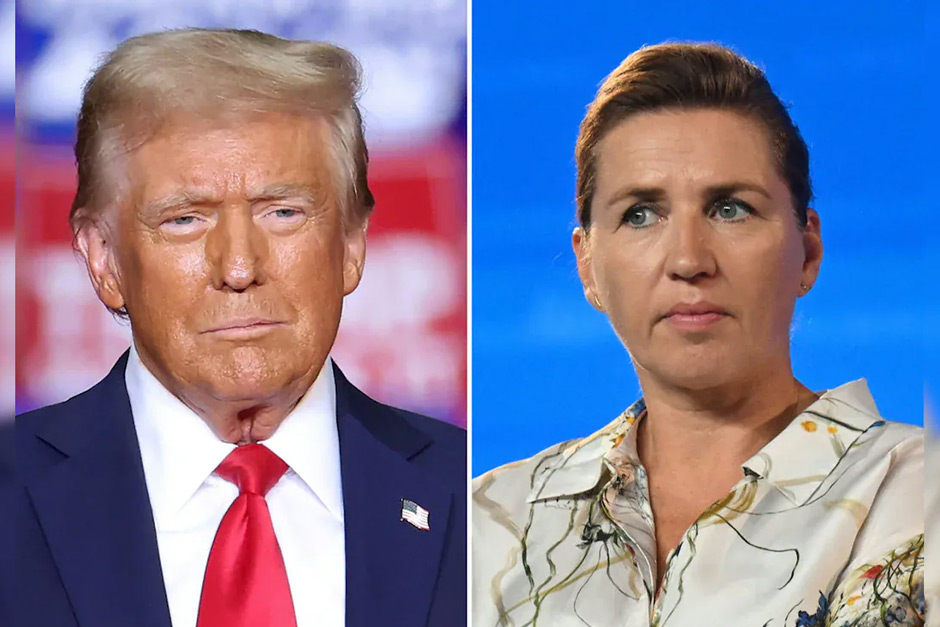
The geopolitical landscape often throws up unexpected flashpoints, and few are as intriguing as the Arctic. A recent development involving former US President Donald Trump and Greenland’s Prime Minister, Múte B. Egede, has reignited a dormant controversy, bringing the remote, ice-covered island nation into the spotlight once more. Trump’s latest remarks, interpreted as a threat following Egede’s reaffirmation of Greenland’s choice to remain with Denmark, have sent ripples across international diplomacy, prompting observers worldwide, including in India, to consider the implications of such strong-arm tactics in an increasingly strategic region.
The Greenland Gambit: A History of Desire and Rejection
The saga began in 2019 when then-President Donald Trump publicly expressed interest in purchasing Greenland from Denmark, describing it as a “large real estate deal.” His rationale reportedly stemmed from the island’s strategic location, vast natural resources, and potential for military positioning. The proposition, however, was met with incredulity and outright rejection by both Greenland and Denmark. Kim Kielsen, then Prime Minister of Greenland, stated unequivocally, “Greenland is not for sale.” Danish Prime Minister Mette Frederiksen dismissed the idea as “absurd,” leading to Trump abruptly cancelling a state visit to Denmark.
Greenland, an autonomous territory within the Kingdom of Denmark, possesses significant self-governance over internal affairs, while Denmark maintains control over foreign policy, defence, and monetary matters. This intricate relationship means that any significant shift, such as a sale, would require the consent of both Greenlandic and Danish authorities – a consent that has been firmly denied. The ‘we choose Denmark’ remark attributed to current Greenlandic Prime Minister Múte B. Egede is a reiteration of this fundamental stance, emphasizing sovereignty and the democratic will of its people over external commercial or strategic propositions. It’s a declaration of autonomy within their existing framework, not an open invitation for external pressure.
Trump’s Threat and Global Geopolitics
The recent controversy erupted after a CNN interview where Múte B. Egede reiterated Greenland’s position within the Danish Commonwealth. Reacting to Egede’s firm stance, Donald Trump, in a subsequent Fox News interview, remarked that Egede’s comments, particularly about not being for sale and choosing Denmark, could pose “a big problem for him.” This veiled threat, coming from a former US President who has not ruled out another White House bid, carries significant weight. It suggests potential economic or diplomatic consequences for a leader who asserts national sovereignty in a manner contrary to American interests, or at least, contrary to Trump’s personal ambitions.
Such rhetoric from a major global power leader, even a former one, concerning a smaller, autonomous region, raises serious questions about international norms, sovereignty, and the conduct of diplomacy. For many nations, especially those navigating complex power dynamics, this incident serves as a stark reminder of the pressures that can be exerted by larger states. The implications extend beyond just Greenland and Denmark, touching upon how global powers interact with smaller entities and the sanctity of national self-determination. The Arctic, increasingly vital for new shipping routes and resource extraction due to climate change, has become a strategic chessboard for global powers, with Greenland holding a crucial position within this evolving landscape.
An Indian Lens on Sovereignty and Self-Determination
From an Indian perspective, such incidents resonate deeply. India, a nation that fiercely guards its sovereignty and advocates for the self-determination of nations, views external pressures on smaller states with concern. India’s foreign policy is built on principles of non-interference and respect for territorial integrity. While India enjoys robust strategic partnerships with the United States and has burgeoning ties with Nordic countries, the principle demonstrated by Greenland’s leadership in asserting its right to choose its future is one that aligns with India’s own historical struggles and diplomatic ethos.
Furthermore, India is an observer state in the Arctic Council and has a growing scientific and strategic interest in the Arctic region. New Delhi operates research stations there and understands the geopolitical significance of territories like Greenland. The Arctic region’s stability and adherence to international law are crucial for India’s long-term interests, particularly concerning climate change, shipping, and resource access. Therefore, any rhetoric that destabilizes the region or challenges the sovereignty of its constituent parts is closely watched. The notion of a powerful nation threatening an autonomous region for asserting its democratic choice, as implied by Trump’s remark, highlights the delicate balance of power that India, as a rising global player, carefully navigates and seeks to influence towards a more equitable world order.
The ‘Greenland Gambit’ saga, reinvigorated by Trump’s recent comments, is more than just a quirky news item. It underscores the continuous tension between national sovereignty and the strategic ambitions of global powers. For Greenland, it is a reaffirmation of its identity and its bond with Denmark. For the international community, and particularly for nations like India, it is a salient reminder of the persistent challenges to self-determination and the importance of upholding international norms in an increasingly interconnected and contested world.

