


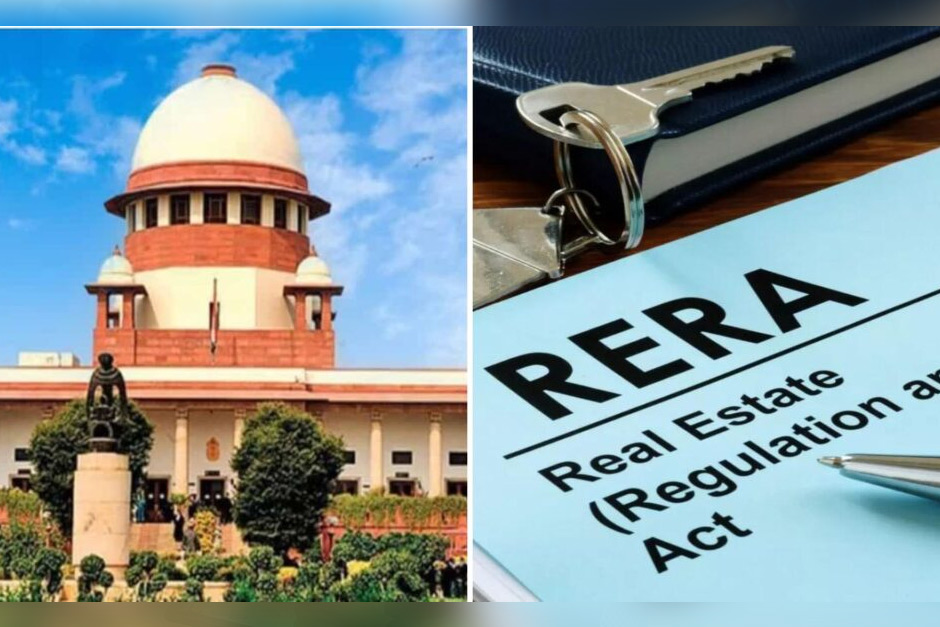
The regulatory landscape of India’s real estate sector has been rocked by a recent, stark observation from the Supreme Court. In a comment that sent ripples through legal and industry circles, the apex court remarked, “Better to abolish RERA, it only helps builders.” This powerful statement challenges the very foundation of the Real Estate (Regulation and Development) Act, 2016, an legislation enacted with the grand vision of bringing transparency, accountability, and fair play to a historically unregulated industry. While RERA was heralded as a game-changer for homebuyers, the Supreme Court’s sentiment reflects a growing disillusionment with its on-ground implementation and perceived efficacy.
RERA’s Mandate and Its Perceived Failings
The Real Estate (Regulation and Development) Act, 2016 (RERA) was a landmark reform, designed to safeguard the interests of homebuyers and boost investment in the real estate sector. Its core objectives included ensuring timely project completion, mandating escrow accounts (where 70% of funds collected from buyers must be deposited for construction), promoting transparency through public disclosure of project details, and establishing a robust grievance redressal mechanism through RERA authorities and appellate tribunals. For years, homebuyers had grappled with project delays, diversion of funds, and a significant power imbalance with developers, making RERA a beacon of hope.
However, the Supreme Court’s recent observation suggests that this beacon might be dimming, or perhaps shining primarily on one side. The remark implies a critical failure in RERA’s ability to live up to its promise of protecting the consumer. While the specific context of the observation often arises in cases of prolonged project delays or builders failing to comply with RERA orders, the overarching sentiment points to systemic issues. Critics argue that despite the Act, builders often find loopholes, and the enforcement mechanisms vary widely across states, leading to inconsistent application of the law. The complexities and delays in the RERA tribunal processes themselves can deter homebuyers, who might be already financially stressed by delayed projects.
The Homebuyer’s Dilemma: A Ground Reality Check
For the average Indian homebuyer, the journey to owning a home is often fraught with anxieties. RERA was meant to alleviate these, but the reality on the ground frequently paints a different picture. Many homebuyers still face the agony of delayed possession, even after paying significant sums. Builders, despite RERA’s stringent provisions, sometimes manage to secure extensions or navigate legal challenges, leaving buyers in limbo. The cumbersome process of filing complaints, attending hearings, and then ensuring the enforcement of RERA orders can be daunting for individuals up against large corporate entities.
Take, for instance, a common scenario where a project is stalled. While RERA mandates depositing funds in an escrow account, the monitoring of this fund utilization can be lax in some states. Homebuyers often find themselves trapped, paying EMIs on home loans for properties that are far from completion, while simultaneously paying rent. The compensation awarded by RERA authorities, while a relief, often comes after significant delays and may not fully cover the financial and emotional distress endured. As
“While RERA introduced much-needed legal recourse, the real challenge lies in its inconsistent and often slow implementation across states. For many homebuyers, securing a favourable order is just half the battle; ensuring its execution by builders remains a colossal task, often necessitating further legal action,”
observes Advocate Rohan Mehta, a real estate law expert. This sentiment resonates with countless homebuyers who feel that the scales of justice, despite RERA, still tip in favour of powerful developers.
The Path Forward: Reform or Abolition?
The Supreme Court’s provocative comment raises a fundamental question: Is RERA truly beyond redemption, or does it require significant overhaha? Outright abolition of RERA would likely plunge the real estate sector back into pre-2016 chaos, eradicating the legal framework that, however flawed, does provide some recourse for consumers. This would be a catastrophic step backwards, dismantling the only established mechanism for accountability.
Instead, the Supreme Court’s observation should serve as a powerful catalyst for urgent and comprehensive reforms. The focus needs to shift from mere legislation to robust enforcement. This includes strengthening RERA authorities with greater powers, ensuring uniform implementation of the Act across all states, and setting up faster dispute resolution mechanisms. There’s a critical need to scrutinise how the 70% escrow account rule is monitored and enforced, preventing diversion of funds. Furthermore, holding builders personally accountable, not just their corporate entities, might instil greater discipline. Simplifying the grievance redressal process and ensuring timely execution of orders are paramount to restoring public faith in the system. The underlying principle must remain: to empower the homebuyer, not to provide an additional layer of bureaucratic hurdles.
The Supreme Court’s sharp critique of RERA is a crucial wake-up call for policymakers and regulators. While the Act was conceived with noble intentions, its perceived failure to adequately protect homebuyers, as highlighted by the apex court, demands immediate attention. Abolishing RERA is not the solution; rather, a concerted effort to identify and rectify its operational shortcomings is essential. For India’s burgeoning real estate market to thrive on trust and fairness, RERA must evolve into a truly effective guardian of homebuyer interests, ensuring that the dream of homeownership does not turn into an endless nightmare for millions.

