


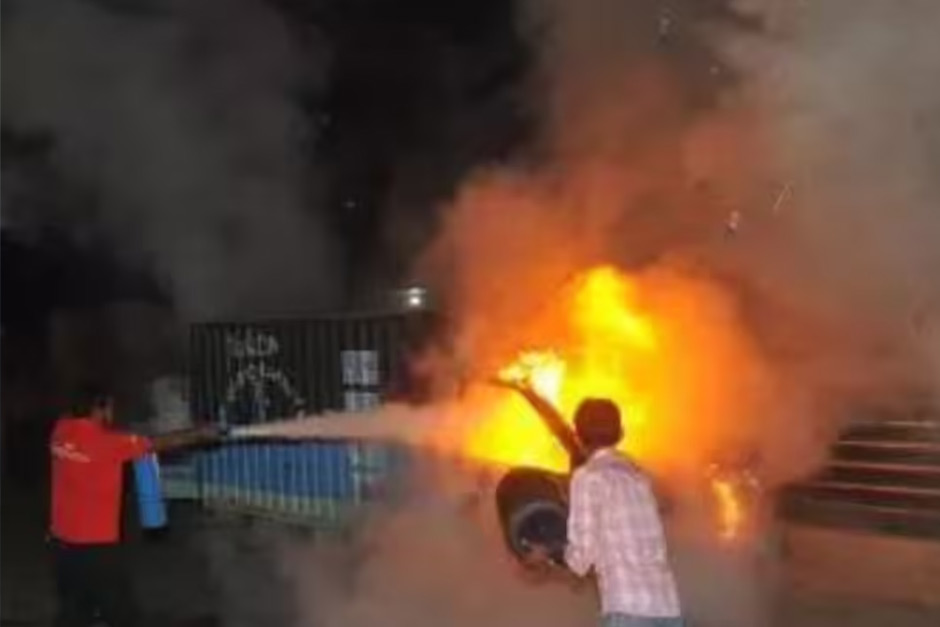
The political landscape in Bangladesh has once again flared into a volatile state, marked by escalating tensions ahead of the nation’s upcoming general elections. In a stark display of the deepening unrest, a mob reportedly torched the house of a senior Bangladesh Nationalist Party (BNP) leader, highlighting a worrying trend of political violence that threatens to destabilize the South Asian nation. This incident, which saw seven individuals reportedly apprehended in connection with the widespread agitation, serves as a grim reminder of the fierce rivalry and mistrust defining Bangladeshi politics.
For India, a close neighbour with deep historical and strategic ties, the developments in Bangladesh are a matter of significant concern. The stability of Bangladesh is intrinsically linked to India’s own regional security and economic interests, making the current surge in political violence a critical point of observation from New Delhi.
Escalating Confrontations and the Attack on a BNP Leader’s Residence
The incident involving the torching of a senior BNP leader’s residence occurred amidst a nationwide series of strikes and blockades called by the opposition BNP and its allies. These protests are a response to what the opposition perceives as an increasingly authoritarian government and an unfair electoral process. The specific attack on the leader’s home underscores the personalized and often violent nature of political clashes in Bangladesh, moving beyond mere rallies to direct acts of aggression.
While details surrounding the specific leader and the exact circumstances of the attack remain under investigation, reports indicate that a mob, allegedly comprising rival political activists, was responsible for the arson. This act of violence, coupled with the apprehension of seven individuals, signals a dangerous escalation in the political confrontation. Such incidents not only damage property but also fuel a climate of fear and retribution, making a peaceful resolution even more challenging. The targeted nature of the attack suggests a deliberate attempt to intimidate and incapacitate opposition figures, further eroding the democratic space.
Bangladesh’s Deep-Seated Political Rivalry and Electoral Demands
At the heart of Bangladesh’s current unrest lies a bitter and long-standing rivalry between the ruling Awami League (AL), led by Prime Minister Sheikh Hasina, and the opposition Bangladesh Nationalist Party (BNP), historically led by Khaleda Zia. The BNP and its allies are demanding the establishment of a non-partisan caretaker government to oversee the upcoming general elections, arguing that free and fair polls are impossible under the current Awami League administration. They accuse the government of suppressing dissent, misusing state machinery, and manipulating electoral processes, a charge the Awami League vehemently denies.
The Awami League, conversely, maintains that a caretaker government system is unconstitutional, having been abolished by the Supreme Court, and insists that elections will be held under the existing political government as per the constitution. This fundamental disagreement over the electoral framework has created an intractable political deadlock, leading to widespread protests, general strikes (hartals), and violent clashes that disrupt daily life and cripple the economy. The current spate of unrest is a familiar cycle in Bangladeshi politics, with previous election cycles also marred by significant violence and disputed outcomes, leaving a legacy of mistrust and political polarization.
Regional Implications and India’s Strategic Interests
The deteriorating political situation in Bangladesh carries significant implications for regional stability, particularly for India. Bangladesh is a crucial partner for India, sharing a long land border and playing a vital role in India’s ‘Act East’ policy. Political instability and violence across the border can have direct repercussions for India, including potential influxes of refugees, cross-border infiltration, and the exploitation of the unstable environment by extremist elements. Furthermore, ongoing unrest disrupts crucial bilateral trade, connectivity projects, and cultural exchanges that are vital for both nations’ prosperity.
India traditionally maintains a policy of non-interference in the domestic politics of its neighbours but always prefers a stable, democratic, and friendly government in Dhaka. The current turmoil raises concerns in New Delhi about the long-term democratic health of Bangladesh and its potential impact on regional security dynamics. “The current political climate in Bangladesh is fraught with deep mistrust between the two major parties,” observes Dr. Arindam Mukherjee, a South Asian affairs analyst based in Delhi. “Such incidents of violence not only destabilize the domestic situation but also send worrying signals across the region, particularly for neighbours like India who have significant stakes in Bangladesh’s peace and prosperity.” India will likely continue to advocate for dialogue and a peaceful resolution to the political crisis, emphasizing the importance of constitutional processes and democratic norms.
As Bangladesh inches closer to its general elections, the onus is on all political stakeholders to de-escalate tensions, engage in constructive dialogue, and prioritize the welfare of their citizens over partisan interests. A peaceful and democratic resolution is paramount not only for Bangladesh’s own future but also for the stability and prosperity of the wider South Asian region.

