


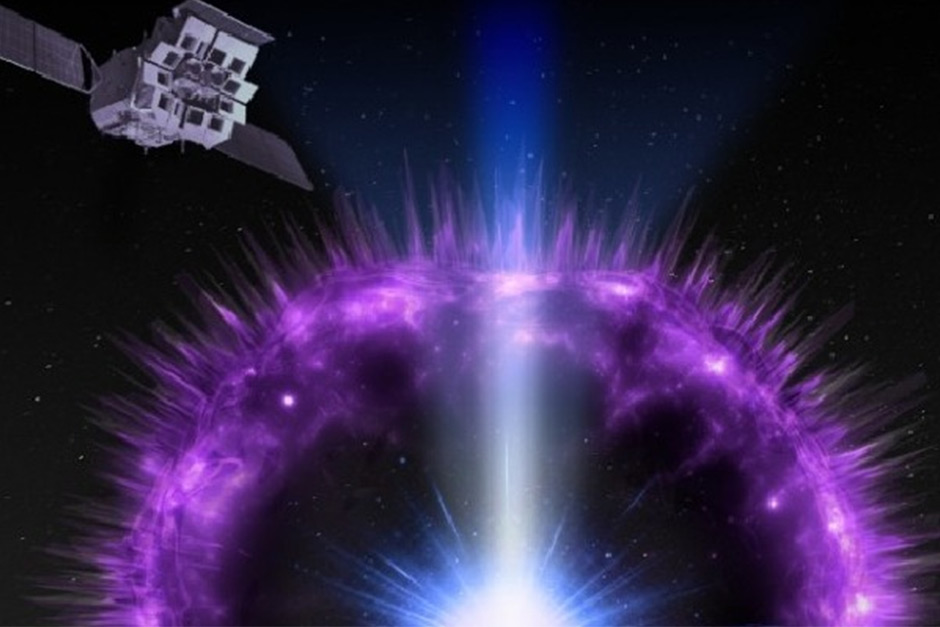
The cosmos, a boundless canvas of wonder, perpetually unveils mysteries that challenge and expand our understanding of the universe. From the birth of stars in swirling nebulae to the dramatic demise of cosmic giants, each celestial event offers a glimpse into processes far grander than our earthly comprehension. Recently, Australian scientists have added a fascinating new chapter to this cosmic saga, announcing compelling evidence for a rare and extreme form of exploding star – one that concludes its existence not with the birth of a black hole, but with a spectacular, complete disintegration. This discovery not only validates long-held theoretical models but also deepens the enigma of these “missing black holes.”
The Enigma of the Pair-Instability Supernova
For decades, astrophysicists have theorised about the existence of Pair-Instability Supernovae (PISNe), a class of stellar explosions so powerful they leave behind no compact remnant – neither a neutron star nor a black hole. These are not your everyday supernovae. While most massive stars end their lives in a supernova explosion, collapsing their cores into incredibly dense neutron stars or black holes, PISNe are a different breed entirely. They originate from extremely massive stars, typically ranging from 130 to 250 times the mass of our Sun.
The mechanism behind a PISN is truly extraordinary. In these colossal stars, the core reaches such immense temperatures and pressures that gamma-ray photons, usually responsible for maintaining the star’s outward pressure, begin to spontaneously convert into electron-positron pairs. This process, known as “pair production,” dramatically reduces the core’s internal pressure. Without this outward push, the star’s immense gravitational force takes over, causing a rapid and catastrophic collapse. Instead of forming a dense core that could become a black hole, the collapse triggers a runaway thermonuclear explosion so violent that it completely obliterates the star, scattering its material across space and leaving nothing behind.
The observational evidence for such events has been elusive. However, an international team led by Australian scientists, examining the supernova SN2016jca – a dazzling cosmic spectacle that appeared in the distant universe – found precisely the kind of signatures predicted for a PISN. This particular supernova, observed across multiple wavelengths, exhibited an unprecedented brightness and a specific light curve (how its luminosity changed over time) that aligned perfectly with the theoretical models of a star undergoing complete annihilation.
Decoding the Cosmic Aftermath: Evidence of Absence
The key to identifying SN2016jca as a potential PISN wasn’t just its brilliance, but the subtle clues encoded in its light. Scientists analysed the supernova’s unique light curve and spectral data – the different wavelengths of light emitted. These observations revealed a pattern consistent with a star so massive that its core produced electron-positron pairs, leading to the self-destruction phenomenon. Crucially, the data suggested an absence of any signature that would indicate the formation of a compact remnant, such as a black hole or neutron star, thus confirming the “missing black hole” scenario.
This indirect evidence is powerful. Much like inferring the presence of an invisible planet by its gravitational tug on a visible star, scientists have inferred the complete disintegration of a star by the precise characteristics of its light and the lack of a post-explosion remnant. This finding represents a significant validation for theoretical astrophysicists who have modelled these extreme events for decades.
Dr. Anjali Sharma, an astrophysicist at the Indian Institute of Astrophysics, commenting on the global implications of such discoveries, stated, This observation isn’t just about a single star; it’s a window into the most extreme stellar deaths imaginable, challenging our fundamental understanding of gravity and stellar evolution. It pushes the boundaries of our cosmic knowledge, reminding us how much more there is to learn about the universe’s most colossal objects.
Her words resonate with the scientific community worldwide, highlighting the profound impact of such findings.
Implications for Stellar Evolution and India’s Cosmic Quest
The confirmation of Pair-Instability Supernovae holds immense significance for our understanding of the universe, particularly the early cosmos. These incredibly massive stars were far more common in the early universe, before heavier elements were widely forged in subsequent generations of stars. Studying PISNe helps astronomers piece together the conditions and processes that shaped the nascent universe, including the formation of the very first stars and galaxies.
Moreover, these super-energetic explosions play a crucial role in enriching the cosmos with heavy elements. While typical supernovae disperse elements, PISNe are believed to be prodigious factories of elements like gold and platinum, scattering them across vast distances, which eventually become the building blocks for new stars, planets, and even life itself.
For India, a nation with a vibrant and rapidly growing presence in space science and astronomy, this discovery holds particular relevance. India’s scientific community, through institutions like the Indian Space Research Organisation (ISRO), the Tata Institute of Fundamental Research (TIFR), and various observatories, actively contributes to global astrophysical research. Indian astronomers collaborate internationally, utilising data from telescopes across the globe, and contribute their own observations from facilities like the ASTROSAT multi-wavelength space telescope. Discoveries like the PISN not only fuel further research but also inspire a new generation of scientists and engineers to look upwards, fostering a deeper engagement with the mysteries of the universe and solidifying India’s position as a significant player in the global scientific landscape.
As scientists continue to scan the vast cosmic expanse, each new discovery reiterates the dynamic and often violent nature of stellar evolution. The finding of a rare exploding star leaving behind a “missing black hole” is a testament to the relentless pursuit of knowledge, offering profound insights into the extreme physics governing the universe and broadening our understanding of where we come from and what lies beyond.
*

