


Imagine thinking you know your neighborhood pretty well, every street, every cul-de-sac. Then, one day, you look out past the familiar boundaries, beyond the last known house, and discover… a bustling new district, thriving and full of unexpected activity. That’s a bit like what astronomers are experiencing right now, but on a cosmic scale that boggles the mind.
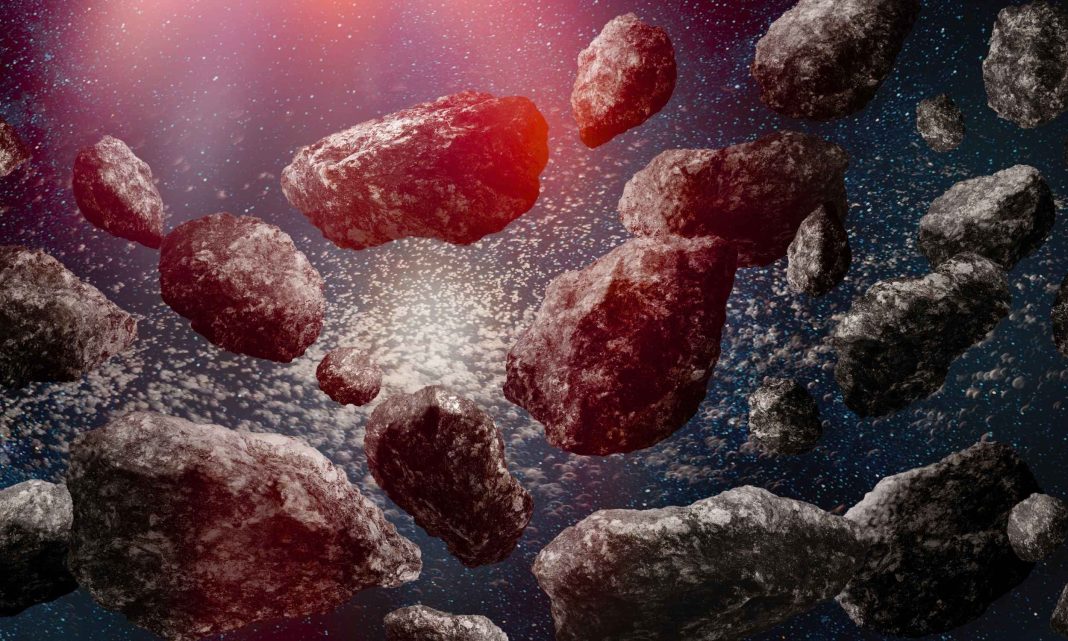
Recent observations have revealed a truly astonishing secret hiding in plain sight: a surprising, dense cluster of objects situated right at the very edge of our solar system. For decades, we’ve sketched out the cosmic map of our home, charting planets, the Kuiper Belt, and the vast, icy Oort Cloud. This new discovery isn’t just a new dot on that map; it’s a vibrant, unexpected metropolis.
Beyond the Cosmic Fringe: What Exactly Did They Find?
When we talk about the “edge” of our solar system, we’re venturing into truly immense distances, far beyond Neptune, past Pluto’s orbit, and well into the realm of icy comets and scattered debris. This region is typically imagined as a vast, sparsely populated void, a frozen frontier where the sun’s influence wanes to a gentle whisper.
That’s why the discovery of a “dense cluster” there is so genuinely mind-bending. This isn’t just another lonely dwarf planet or a rogue comet. Early data suggests it’s a significant concentration of mass, a collection of objects far more numerous and packed together than anything we expected to find in such a desolate expanse. Think of it as finding a mountain range where you only anticipated a flat plain. It challenges our fundamental assumptions about how our solar system formed and what might still be lurking in its furthest reaches.
Reshaping Our Cosmic Address
This remarkable finding forces us to reconsider the very definition of “our” solar system and its boundaries. For so long, our models have depicted a gradual tapering off of matter, becoming thinner and more dispersed the further out you go. This cluster throws a wrench into that tidy picture. It implies there could be gravitational forces at play, or even primordial conditions, that allowed such a significant grouping of material to coalesce and persist in an area we thought was largely empty.
The implications are profound. Could this cluster be a remnant from the solar system’s turbulent birth, flung outwards but somehow managing to hold together? Or is it something entirely different, perhaps an interstellar visitor captured and held in place by our Sun’s weakening gravity? Dr. Aris Thorne, a researcher involved in the observations, captured the sentiment perfectly: “It’s like finding an entire ecosystem thriving deep in the ocean where we thought only barren rock existed. This cluster isn’t just adding a footnote to our understanding; it’s opening a whole new chapter we didn’t even know was missing.”
This isn’t just a win for astronomers; it’s a win for human curiosity. It reminds us that even in our own cosmic backyard, there are still breathtaking secrets waiting to be unveiled. The universe, it seems, always has another surprise up its sleeve.
What Comes Next? The Thrill of the Unknown
This discovery marks just the beginning. The next steps involve intensive follow-up observations, using more powerful telescopes and innovative techniques to peer deeper into this enigmatic cluster. Scientists will be working to determine its exact composition, the size and number of objects within it, and its precise orbital dynamics. Is it stable? Is it moving towards us or away? What are its gravitational interactions with the rest of our solar system?
Each answer will undoubtedly lead to more questions, propelling us further into the exhilarating unknown. This dense cluster at the edge of our solar system isn’t just a new astronomical object; it’s a beacon of endless possibility, a testament to the fact that our understanding of the universe is always evolving, always expanding, and always ready to astound us.
So, the next time you look up at the night sky, remember that beyond the familiar twinkle of stars and planets, our own solar system is still a realm of incredible mysteries, patiently waiting for us to discover them.

