


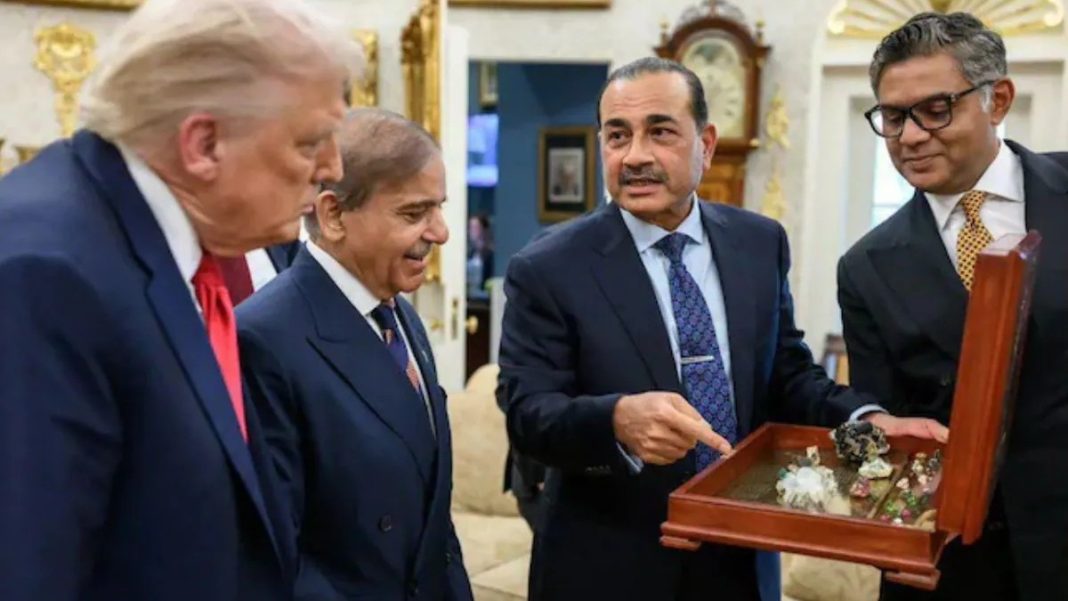
The geopolitical landscape is a theatre of constant flux, where nations often find themselves caught between competing global interests and severe domestic pressures. For Pakistan’s Chief of Army Staff (COAS), General Asim Munir, this intricate dance might be leading to his most defining challenge yet. Amidst escalating tensions in the Middle East, a hypothetical scenario, reportedly gaining traction in international corridors, suggests former US President Donald Trump might leverage his influence to push Pakistan into deploying troops to Gaza. While the specifics remain speculative, the mere notion presents a monumental test for Munir and Pakistan, with profound implications for its foreign policy, regional stability, and internal cohesion. From India’s vantage point, this development merits close scrutiny, underscoring the delicate balance of power in South Asia and beyond.
The Tightrope Walk: Pakistan’s Geopolitical Conundrum
Should such a request materialise, it would place General Munir in an unenviable position. Pakistan, a nation grappling with its worst economic crisis, persistent political instability, and a resurgence of militancy, has historically sought to balance its alliances. Its relationship with the United States has been transactional, often oscillating between strategic partnership and wary distance. A direct military intervention in Gaza, a region fraught with deep religious and geopolitical sensitivities, would represent a dramatic departure from Pakistan’s traditional stance of diplomatic support for Palestine.
The domestic ramifications for Munir would be immense. Pakistani public sentiment is overwhelmingly sympathetic to the Palestinian cause, fueled by strong religious and humanitarian convictions. Deploying troops to a conflict that is largely perceived as an occupation against Palestinians would likely ignite a firestorm of dissent within Pakistan, potentially undermining the military’s already strained public image and exacerbating internal divisions. This could empower religious extremist groups and destabilise the nation further. Moreover, such a move could strain Pakistan’s relationships with other Muslim-majority nations, many of whom have adopted a more cautious or critical approach to the conflict.
“This isn’t merely a strategic decision; it’s an existential one for Pakistan, caught between powerful geopolitical currents and deeply held public sentiment,” observes Dr. Sameer Khan, a geopolitical analyst based in Islamabad. “General Munir faces the impossible task of satisfying an external patron without alienating his own populace or compromising the nation’s long-term interests.”
India’s Watchful Eye: Regional Stability Concerns
For India, a potential Pakistani military deployment to Gaza is a development fraught with regional security implications. Delhi has consistently advocated for a two-state solution to the Israeli-Palestinian conflict, maintaining diplomatic ties with both Israel and various Arab nations. A Pakistani military involvement would inject a new, unpredictable variable into an already volatile region. India would be particularly concerned about the potential for increased radicalisation within South Asia, should Pakistan immerse itself directly in the Middle East conflict. Any destabilisation of West Asia has direct economic and security repercussions for India, given its extensive diaspora, energy imports, and trade routes passing through the region.
Furthermore, an externally driven Pakistani foreign policy shift of this magnitude would be scrutinised in New Delhi through the prism of India-Pakistan relations. While both nations have long-standing diplomatic differences, any move that could enhance Pakistan’s strategic leverage or entangle it further in global power plays would be carefully assessed. India’s own strategic calculations in the Indian Ocean Region and its broader foreign policy objectives would be influenced by the outcome of such a decision. The possibility of Pakistan seeking substantial financial incentives for such a deployment, potentially leading to further debt traps or dependence, would also be a matter of concern for regional stability.
Munir’s Defining Moment: Navigating an Impossible Choice
General Asim Munir’s leadership is currently defined by efforts to steer Pakistan through its current multidimensional crises. The prospect of deploying troops to Gaza presents a test unlike any other. The decision would not merely be about military logistics but about defining Pakistan’s identity and its place in a rapidly evolving global order. Refusal could risk alienating a powerful potential future US administration, with consequences for Pakistan’s access to vital international financial institutions. Acceptance, on the other hand, risks internal implosion, severe regional backlash, and entanglement in a protracted, unwinnable conflict.
The path ahead for Munir is a delicate tightrope walk. Diplomatic manoeuvring, leveraging Pakistan’s traditional role in Islamic diplomacy, and focusing on humanitarian aid could be alternative strategies to project influence without direct military involvement. However, the pressure of a hypothetical “push” from a figure like Trump, known for his transactional approach to foreign policy, would be immense. Munir’s ultimate choice will not only shape Pakistan’s immediate future but also cement his legacy as a leader who either succumbed to external pressure or charted an independent, albeit challenging, course for his nation.
The world, and particularly India, will watch keenly as General Munir faces this unprecedented test, the outcome of which will reverberate far beyond Pakistan’s borders.

