


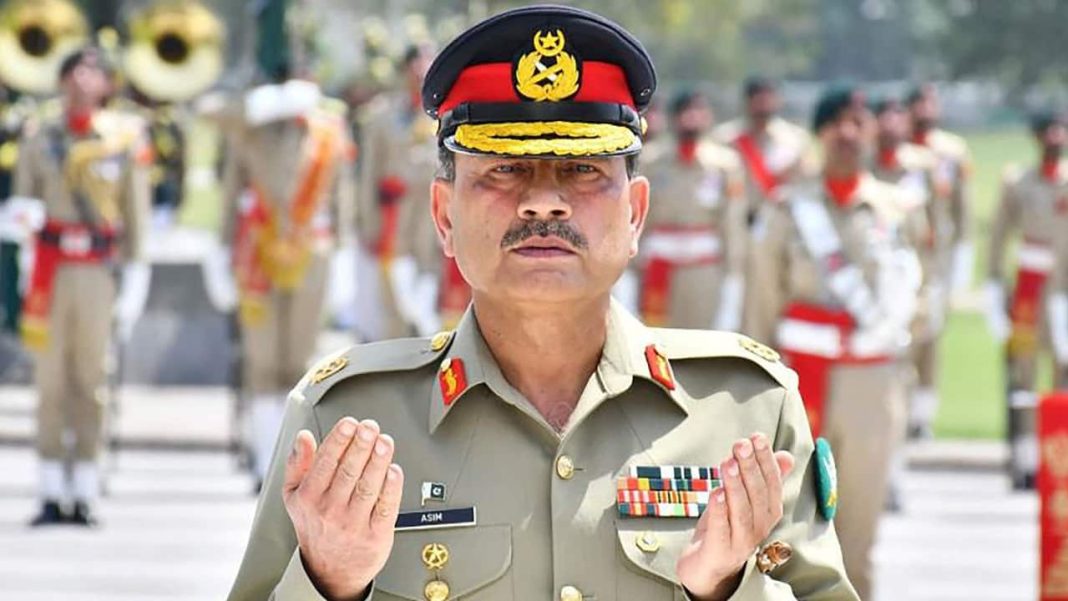
In a significant overhaul of Pakistan’s defence establishment, General Asim Munir has been elevated to the newly created and formidable position of Chief of Defence Forces (CDF). This appointment marks a pivotal moment in Pakistan’s military history, making him arguably the most powerful general the country has ever seen. The move centralises military authority to an unprecedented degree, shifting the landscape of Pakistan’s strategic decision-making and holding considerable implications for regional dynamics, including India.
General Munir, who previously served as the Chief of Army Staff (COAS), now assumes a role designed to provide single-point military advice to the civilian leadership and oversee the command of all three armed services – Army, Navy, and Air Force. This structural change positions him as the ultimate arbiter of defence policy and inter-service coordination, a development that warrants close observation from an Indian perspective.
The Genesis of Pakistan’s New Military Apex
The creation of the Chief of Defence Forces (CDF) role signifies a conscious effort by Pakistan to streamline its military command structure, drawing parallels with similar positions in other major global powers, including India’s own Chief of Defence Staff (CDS). Historically, the COAS has been the undisputed power centre within Pakistan’s military. While the COAS remains a potent position, focused on the operational command of the army, the CDF now sits atop the entire military hierarchy, responsible for strategic direction, defence procurement, and fostering jointness among the forces.
This move is particularly impactful in a nation where the military has historically wielded immense political and economic influence. By unifying command under a single CDF, Pakistan aims for greater efficiency and synergy in its defence apparatus. However, it also concentrates extraordinary power in one individual, potentially cementing the military’s grip on various facets of state policy. The CDF is expected to lead the Joint Chiefs of Staff Committee (JCSC), ensuring integrated planning and execution across all services, a departure from the previous system where individual service chiefs reported more independently.
General Munir’s Mandate and Challenges Ahead
General Asim Munir’s ascent to this apex position is notable. Known for his intelligence background, having briefly headed the Inter-Services Intelligence (ISI) agency, and his tenure as Quartermaster General, he is perceived as a professional and disciplined officer. His previous role as COAS was relatively short-lived before this elevation, indicating a rapid consolidation of trust and power. Munir now faces a complex array of challenges, both internal and external, that will test his leadership.
Domestically, Pakistan grapples with severe economic instability, a deeply polarised political landscape, and a resurgence of internal security threats, particularly from the Tehrik-i-Taliban Pakistan (TTP). Managing the civil-military relationship will be paramount, especially given the military’s traditional assertiveness in governance. Regionally, Munir will navigate strained relations with Afghanistan, an increasingly volatile situation along the Durand Line, and the enduring strategic competition with India.
His mandate is not merely operational; it is inherently strategic and political. The CDF will be instrumental in shaping Pakistan’s foreign policy, especially concerning its neighbours and key international partners. His decisions will undoubtedly reflect on Pakistan’s stance on critical issues such as terrorism, Kashmir, and regional stability.
Implications for India and Regional Dynamics
From India’s perspective, the elevation of a CDF in Pakistan is a development that demands careful analysis. While the exact contours of the CDF’s operational role are still emerging, the centralisation of military decision-making potentially offers a more unified and coherent, albeit perhaps more formidable, strategic front. India has always maintained a close watch on changes within Pakistan’s military leadership, recognising its profound impact on cross-border relations, security, and diplomatic engagements.
A unified command structure might lead to more decisive policy implementation from Pakistan’s defence establishment, whether concerning border management, counter-terrorism operations, or strategic posturing. This development underscores the need for India to maintain its vigilance and adapt its own strategic thinking to account for a more integrated Pakistani military leadership.
“This centralisation of power in Pakistan’s military command will be closely watched in New Delhi. While it promises more coherent decision-making for Islamabad, its impact on regional security dynamics, particularly concerning India, remains a key concern,” observes Dr. Karan Singh, a prominent Indian strategic analyst. “A single point of command means greater accountability, but also potentially a faster aggregation of military might behind a unified policy.”
As General Asim Munir settles into his unprecedented role as Pakistan’s first Chief of Defence Forces, the world, especially India, will be observing closely. His tenure will not only define the future trajectory of Pakistan’s military but also significantly influence the delicate balance of power and stability in an already complex South Asian region.
The creation of the CDF position is a structural shift that reshapes Pakistan’s power matrix. How General Munir wields this immense authority, and its long-term effects on Pakistan’s internal stability and external relations, particularly with its eastern neighbour, remains a crucial narrative for the coming years.

