


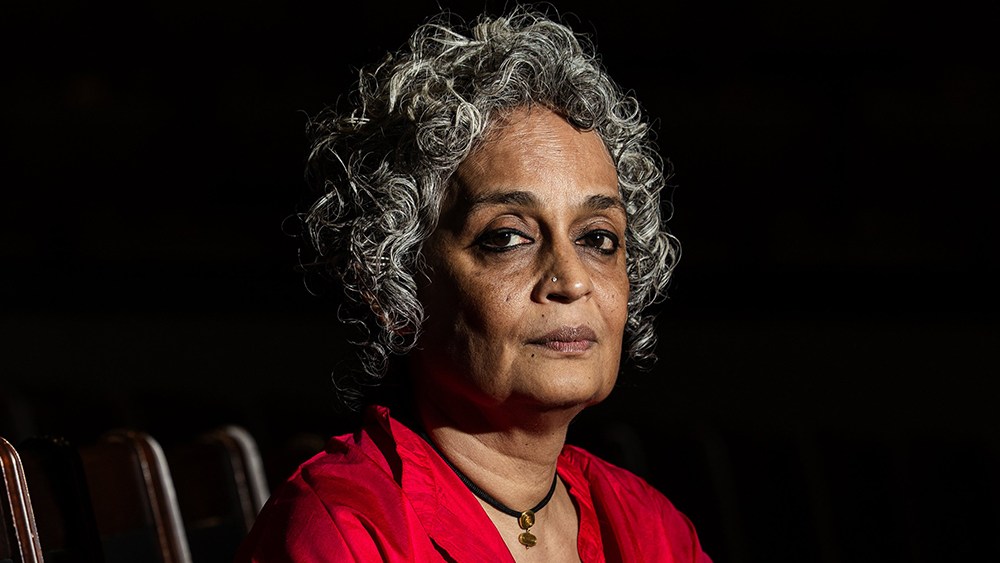
New Delhi, India – In a significant development reverberating through global cultural circles, celebrated Indian author and activist Arundhati Roy has announced her withdrawal from the international jury of the prestigious Berlin International Film Festival (Berlinale). Roy’s decision, confirmed by sources close to the author, stems from her discomfort with what she perceives as the “political statements” made by other members of the jury during the festival. This unexpected move has ignited a fresh debate on the delicate balance between artistic neutrality and political expression within international cultural platforms.
The Principle of Impartiality: Roy’s Stance
Arundhati Roy, known globally for her Booker Prize-winning novel The God of Small Things and her outspoken political essays, was slated to be a prominent voice on the nine-member jury responsible for awarding the Golden and Silver Bear prizes. Her withdrawal, just days before the festival’s conclusion, has cast a spotlight on the inherent tensions when art, politics, and global events converge.
According to reports, Roy expressed concern that certain statements and stances adopted by her fellow jury members during the festival veered beyond the artistic evaluation of films into overt political commentary. While Roy herself is a vocal critic of various global and domestic policies, her reported objection centered on the principle of an impartial jury. Her position, as articulated through intermediaries, suggests a belief that a jury’s role should strictly adhere to artistic meritocracy, allowing the films themselves to convey messages without the jury’s collective voice adding extraneous political endorsements or criticisms.
This perspective underlines a crucial distinction for Roy: her personal activism as an author and public intellectual does not, in her view, translate to an endorsement of partisan political statements from a film festival jury. She reportedly felt that the integrity of the judging process, and the festival’s purported focus on cinema, was being compromised by these external declarations.
Berlinale’s History of Engagement and Artistic Freedom
The Berlin International Film Festival, one of the ‘Big Three’ alongside Cannes and Venice, has historically been lauded for its politically conscious programming and its readiness to address social issues. Often seen as more overtly political than its counterparts, Berlinale has a legacy rooted in Cold War-era Berlin, and its platform has frequently been used to highlight human rights, freedom of expression, and global inequalities.
This tradition, however, also presents a perpetual challenge: where does artistic reflection end, and overt political advocacy begin for the festival itself or its jury? In recent years, as global events become increasingly polarized, cultural institutions like Berlinale find themselves under intense scrutiny regarding their stances. The festival management, in response to queries regarding Roy’s withdrawal, issued a statement acknowledging her decision and reiterating its commitment to artistic freedom and dialogue. They maintained that the festival provides a platform for diverse voices and perspectives, and that individual jury members are free to express their views, though the awards themselves reflect cinematic achievement.
The incident highlights the growing difficulty for international cultural events to navigate a world where art and politics are increasingly intertwined. As Professor Meena Desai, a prominent Indian cultural critic, observed, “In an era where every major global event is instantaneously politicized, the demand for artistic purity without any political resonance becomes a near-impossible tightrope walk for festivals and their juries alike. The lines are not just blurred; they are often deliberately erased by artists and audiences.”
Implications for Cultural Diplomacy and Discourse
Arundhati Roy’s withdrawal from Berlinale is more than just a personal decision; it is a significant moment that could shape future discussions around the role of juries in major film festivals. It compels us to consider whether a jury, by its very nature, can ever be truly neutral, especially when evaluating films that often carry profound social and political messages. While many artists and institutions argue for the inherent political nature of art, Roy’s stance advocates for a procedural neutrality within the judging framework.
In the Indian context, Roy’s actions often spark widespread debate. Her strong opinions on various issues have earned her both fervent admirers and staunch critics. Her withdrawal from Berlinale, perceived by some as upholding the sanctity of artistic judgment, and by others as an overly sensitive reaction, is likely to further fuel these discussions across the country’s diverse intellectual and media landscape. This event underscores the complexities faced by artists and institutions alike in an interconnected world where cultural platforms are increasingly expected to take stands, even as the call for impartiality from adjudicating bodies grows stronger.
The Berlinale will continue, and the prizes will be awarded, but Arundhati Roy’s principled exit will undoubtedly leave an indelible mark, prompting deeper reflection on the evolving relationship between art, advocacy, and integrity on the global stage.

