


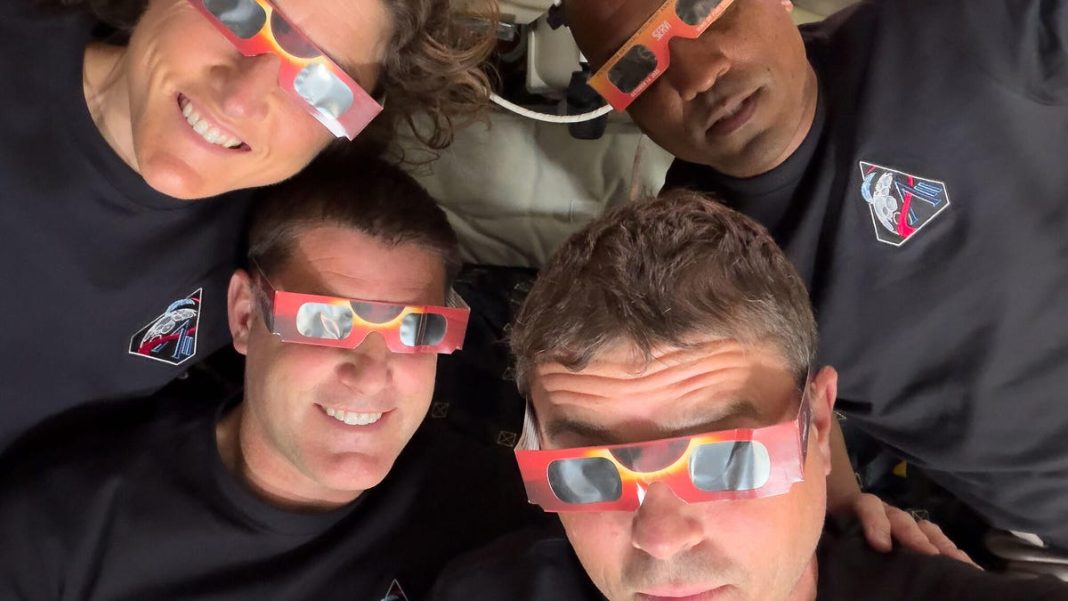
The vast expanse of space, once the exclusive domain of highly specialised, multi-million dollar equipment, is increasingly being explored and documented by technology that fits into our pockets. As humanity gears up for its historic return to the Moon with NASA’s Artemis II mission, a surprising yet fascinating detail has emerged: astronauts will be utilising commercially available iPhones to capture stunning images and videos of their journey. This strategic choice not only underscores the remarkable advancements in consumer technology but also opens a new window for public engagement, bringing the cosmos closer to home for millions, including a burgeoning space-faring nation like India.
From Pocket to Orbit: Why iPhones Made the Cut
For decades, space photography was synonymous with bulky Hasselblad cameras, specially modified to withstand the harsh vacuum and radiation of space. These were cutting-edge for their time but required extensive customisation and training. The shift towards readily available consumer electronics, specifically iPhones, for critical documentation on missions like Artemis II, signifies a paradigm shift in how space agencies approach equipment selection.
The rationale behind this choice is multi-faceted. Modern iPhones, particularly the Pro series, boast incredibly sophisticated camera systems that are a culmination of advanced optics, larger sensors, and powerful computational photography engines. Features like Deep Fusion, ProRAW, and Cinematic Mode allow for capturing high-resolution images and cinematic-quality videos even in challenging lighting conditions, which are prevalent in space. Beyond raw photographic capability, iPhones offer an intuitive user interface, reducing the training burden on astronauts who already have a packed schedule of scientific experiments and operational tasks.
Furthermore, their relatively robust build quality and the ability to integrate seamlessly with other digital ecosystems make them practical. While the devices used in space are often ruggedised and radiation-hardened to some extent, the core technology remains that of a commercial off-the-shelf (COTS) product. This COTS approach significantly reduces development costs and timelines compared to designing bespoke cameras from scratch, a crucial consideration for budget-conscious missions. The ability to easily transfer and process data on board or back on Earth also streamlines the documentation process, ensuring that the incredible visuals captured reach the public and scientific community swiftly.
Capturing the Cosmos: A New Era of Space Documentation
The decision to equip Artemis II astronauts with iPhones is not merely about cost-saving; it’s a strategic move to democratise space imagery and enhance public connection with human spaceflight. Imagine seeing breathtaking vistas of Earthrise over the lunar horizon, or the intricate details of the spacecraft, all captured with a device familiar to billions. These high-quality, relatable visuals serve multiple purposes:
- Public Engagement: The familiarity of the iPhone brand makes space exploration feel more accessible and personal. It allows people to envision themselves capturing such moments, fostering a deeper connection with the mission.
- Scientific Documentation: While dedicated scientific instruments gather precise data, the visual context provided by high-quality photographs and videos is invaluable for mission analysis, geological studies of the Moon, and documenting astronaut activities.
- Astronaut Experience: For the astronauts themselves, the iPhone becomes a personal window to document their extraordinary journey, offering a familiar tool to capture memories and share their unique perspective with loved ones and the world.
This strategy aligns with NASA’s increasing efforts to leverage social media and digital platforms to bring space exploration directly to global audiences. “The integration of consumer technology like the iPhone into our rigorous space missions isn’t just a testament to their reliability; it’s a strategic move to make space exploration more relatable and visually compelling for audiences worldwide,” shares Dr. Anisha Sharma, a space technology analyst based in Bengaluru. “It bridges the gap between everyday life and the extraordinary frontier of space.” This perspective resonates strongly in India, where space ambitions are soaring, and the public’s appetite for space-related content is immense.
Implications for India’s Growing Space Ambitions
India’s own space programme, spearheaded by ISRO, has demonstrated remarkable capabilities with missions like Chandrayaan and the impending Gaganyaan human spaceflight mission. The use of COTS technology in critical applications, as demonstrated by Artemis II, offers valuable lessons and potential pathways for nations like India. While ISRO has its own stringent qualification processes for space hardware, the trend towards leveraging robust commercial products could inform future strategies for instrument design and mission planning, potentially reducing costs and accelerating development cycles for subsequent human missions or advanced robotic probes.
For Indian space enthusiasts and the burgeoning tech industry, the fact that a common smartphone can withstand and perform in space is a powerful inspiration. It highlights that innovation isn’t always about building from scratch but often about adapting and optimising existing, proven technologies for new frontiers. This approach fosters a culture of ingenuity and resourcefulness that is vital for sustainable space exploration, allowing more players – from government agencies to private start-ups – to contribute to humanity’s reach beyond Earth.
As the Artemis II crew prepares to embark on their lunar flyby, the images they capture with their iPhones will not just be mere photographs; they will be testaments to human ingenuity, technological convergence, and a shared dream of exploring the cosmos. These stunning visuals will undoubtedly inspire a new generation, showcasing that the tools of everyday life can indeed take us to the stars, making space exploration feel more connected, more personal, and truly global.

