


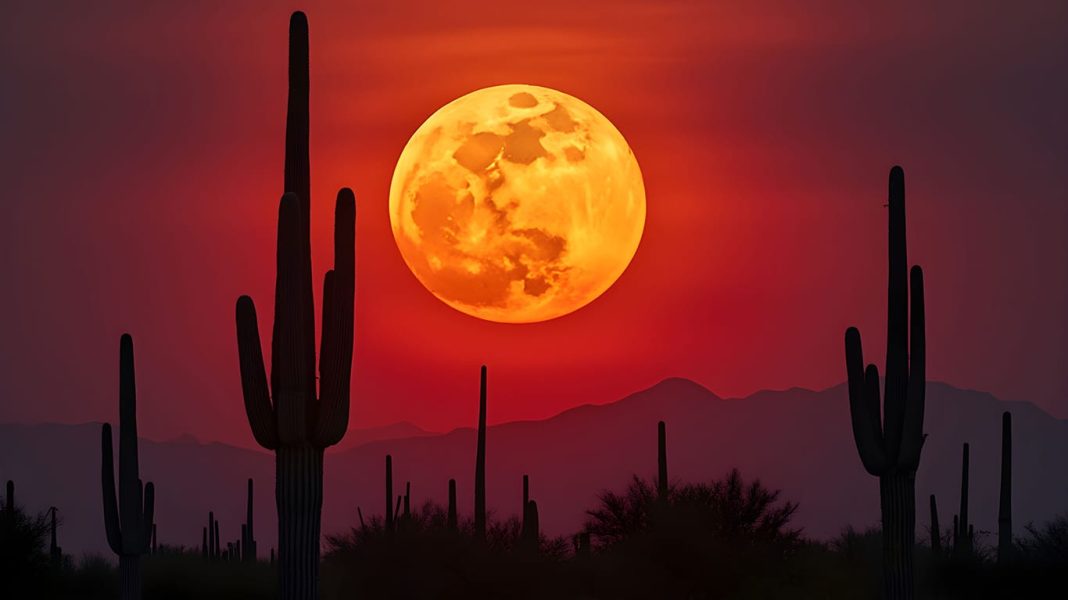
The night sky holds an undeniable allure, a canvas of wonder that has captivated humanity for millennia. When a celestial event like a supermoon graces our heavens, finding the perfect vantage point becomes a quest for many. So, when data reveals that Arizona ranked second in the entire U.S. for viewing the magnificent December Cold Moon Supermoon, it’s a testament to the Grand Canyon State’s unparalleled relationship with the cosmos. While coming in second might imply a slight edge for another location, Arizona’s consistent excellence in providing breathtaking stargazing opportunities solidifies its status as a premier destination for celestial observations.
The Desert’s Celestial Advantage
What makes Arizona such a prime location for witnessing cosmic spectacles? It’s a powerful combination of geography, climate, and a dedicated effort to preserve natural darkness. The state boasts an abundance of high-altitude desert landscapes, which naturally rise above much of the atmospheric haze that plagues lower elevations. Coupled with an arid climate, this means fewer clouds, less humidity, and exceptionally clear nights for a significant portion of the year.
Furthermore, Arizona is a national leader in dark sky preservation. Organizations and local communities actively work to minimize light pollution, creating vast swaths of pristine darkness, particularly in its northern regions and around its national parks and monuments. These efforts aren’t just for astronomers; they enhance the viewing experience for everyone, turning supermoons into truly immersive events. The sheer scale of the landscape also plays a role, offering expansive, unobstructed horizons that allow the Cold Moon Supermoon, appearing larger and brighter than usual due to its closer proximity to Earth, to truly dominate the night sky.
More Than Just a View: The Arizona Experience
Viewing a supermoon in Arizona isn’t merely about ticking off a celestial event; it’s an experience interwoven with the state’s unique character. Imagine standing amidst ancient saguaros, their silhouettes stark against an impossibly bright lunar glow, or witnessing the supermoon rise over the crimson cliffs of Sedona. These are moments that transcend simple observation, becoming indelible memories. The Cold Moon, specifically, carries with it the crisp, clear air of winter, adding another layer to the sensory experience.
The fact that Arizona is so highly ranked, despite vast and beautiful dark sky locations across the country, speaks volumes about its consistent quality. While the top spot might have boasted slightly less atmospheric disturbance on that specific night, Arizona’s performance is a testament to its reliability as a world-class viewing locale. “There’s something uniquely magical about watching the moon rise over the desert landscape,” explains Sarah Jenkins, an avid stargazer from Flagstaff. “The clarity, the vastness – it truly feels like you’re getting a personal show from the universe. Second place just means someone else had a slightly less cloudy night, perhaps!” Her sentiment perfectly captures the spirit of celestial viewing in Arizona: a blend of scientific marvel and profound natural beauty.
Embracing the Celestial Crown
Arizona’s consistent placement among the nation’s elite stargazing destinations is a point of pride and a significant draw for astro-tourism. Being second for the Cold Moon Supermoon simply reinforces what many already know: this state offers an exceptional opportunity to connect with the universe. It encourages us to look up, to appreciate the delicate balance of conditions that allow such stunning visuals, and to recognize the importance of preserving these dark skies for future generations.
Whether you’re a seasoned astronomer or simply someone who appreciates the grandeur of the night sky, Arizona consistently delivers. The Cold Moon Supermoon was just one example of its stellar performance, reminding us that some of the most spectacular shows happen far above, and Arizona offers a front-row seat.
*

