


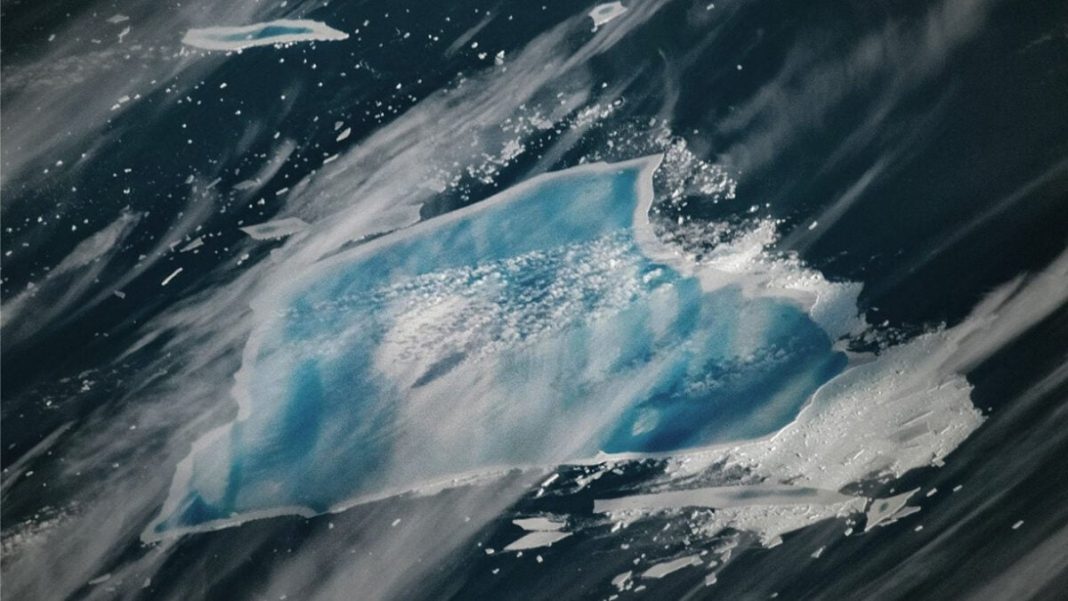
Imagine seeing an iceberg, not just a pristine, blinding white, but a profound, almost jewel-like blue. This isn’t a scene from a fantasy novel; it’s the reality for one of Antarctica’s most famous titans. What was once recognized as the continent’s oldest and largest free-floating iceberg is now turning a worrying shade of sapphire, signaling a dramatic shift that goes far beyond a mere color change.
The Deep Blue Meaning Behind the Shift
For most of us, icebergs are simply white. So, what makes an iceberg blush blue? It’s a fascinating phenomenon rooted in physics and time. Freshly fallen snow and young ice are full of tiny air bubbles that scatter all wavelengths of light equally, giving them their characteristic white appearance. However, when ice is compressed under immense pressure over centuries or even millennia, these air bubbles are squeezed out.
What remains is incredibly dense, crystalline ice. When sunlight hits this ancient ice, the red, yellow, and green wavelengths of light are absorbed, while the blue light penetrates deeper and is scattered back to our eyes. This gives the ice its stunning, iridescent blue hue. While undeniably beautiful, this transformation in a colossal iceberg means something significant: its outer layers are melting away, exposing the ancient, compressed core that lay hidden beneath.
A Giant Unraveling: Why This Iceberg Matters
This particular iceberg, a behemoth that once measured thousands of square kilometers, held the title of one of the largest and oldest ever observed. Its journey has been closely watched, from its dramatic calving to its slow drift across the Southern Ocean. For it to now reveal its blue heart is not just a scientific curiosity; it’s a potent visual indicator of profound change.
The exposure of such vast quantities of ancient blue ice signifies substantial melt. This melting isn’t just about water returning to the ocean; it’s about the intricate balance of the marine ecosystem. As it sheds freshwater, it can alter ocean salinity, temperature, and nutrient distribution in its wake. “When an iceberg of this stature begins to reveal its ancient blue heart, it’s not just a beautiful spectacle,” Dr. Lena Hansen, a glaciologist observing Antarctic trends, noted recently. “It’s a stark visual cue that profound changes are underway beneath the surface, impacting everything from microscopic plankton to global ocean currents.”
More Than Just a Shade of Blue: The Bigger Picture
The turning of this monumental iceberg from white to a deep, intense blue is more than just an aesthetic marvel; it’s a powerful symbol. It underscores the dynamic, ever-changing nature of our polar regions and the undeniable impact of a warming planet. The loss of ice on such a grand scale, revealing layers laid down over epochs, tells a story of accelerated change.
While icebergs naturally calve and melt, the scale and speed at which we are witnessing such transformations are what truly concern scientists. This magnificent blue giant serves as a compelling, if sobering, reminder that the Earth’s most remote places are far from isolated from the broader trends affecting our world. Its evolving color is a silent, yet urgent, message from the frozen frontier, urging us to look closer and understand the immense shifts occurring within our global climate system.
The beauty of this ancient ice is undeniable, but the story it tells is one that demands our attention. It’s a vibrant, living testament to the powerful forces at play, reminding us that even the greatest titans of the ice realm are not immune to change.

