


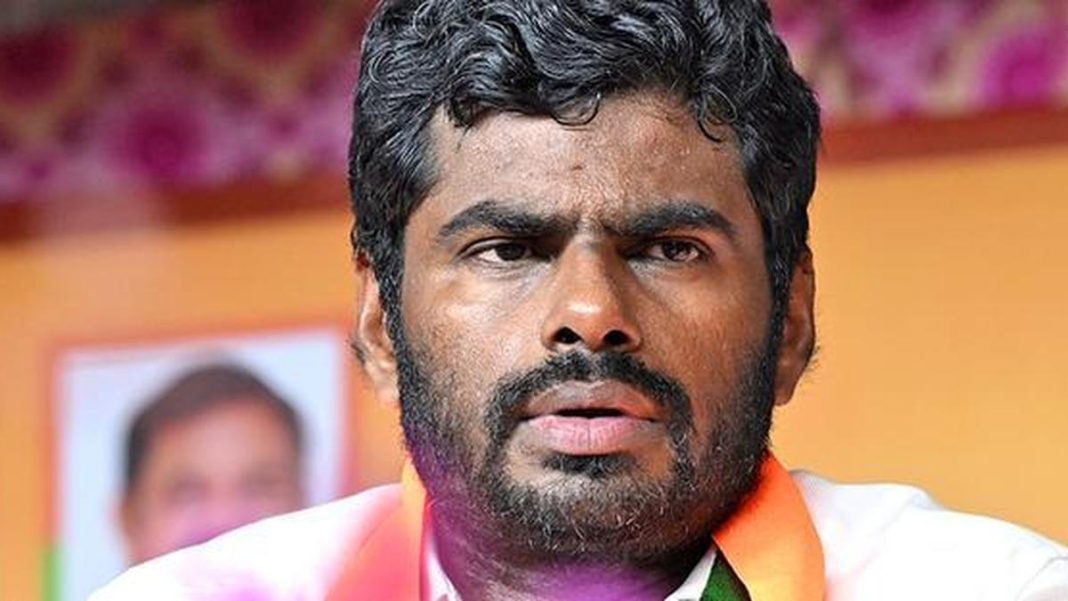
The political landscape in Tamil Nadu is currently a hive of activity, with alliance negotiations and seat-sharing discussions reaching a critical juncture ahead of the upcoming Lok Sabha elections. At the heart of these intricate parleys lies the crucial alliance between the All India Anna Dravida Munnetra Kazhagam (AIADMK) and the Bharatiya Janata Party (BJP). Recent reports suggest a palpable sense of discontent within the BJP’s state unit, particularly voiced by its assertive president, K. Annamalai, regarding the constituencies proposed for allocation by the AIADMK. This apparent friction underscores the inherent complexities of balancing regional dominance with national aspirations within a coalition framework.
The Contention Over Key Seats
The core of the disagreement reportedly stems from the nature and winnability of the constituencies offered to the BJP. As the senior partner in Tamil Nadu, the AIADMK traditionally holds sway over a larger number of seats, often offering its allies those where their historical presence or electoral strength might be less pronounced. However, under Annamalai’s leadership, the BJP in Tamil Nadu has embarked on an ambitious drive to expand its footprint beyond its traditional urban strongholds and a few southern pockets. The party leadership is keen to contest seats where they believe their concentrated efforts, coupled with the national party’s appeal, could yield positive results.
Sources close to the negotiations indicate that the BJP is pushing for a larger share of seats, and more importantly, for specific constituencies where it perceives a genuine chance of victory, rather than merely symbolic representation. These include constituencies with a significant presence of forward-looking youth, professional segments, or regions where the BJP’s national narratives resonate strongly. Annamalai himself has been vocal about the BJP’s growing influence, often asserting the party is no longer content with being a junior partner. This assertiveness is translating into firm demands at the negotiating table, creating a challenging dynamic for the AIADMK, which must balance its own electoral ambitions with the need to accommodate its national ally. Securing ‘winnable’ seats is crucial for the BJP’s long-term strategy of establishing itself as a significant political force in Tamil Nadu.
A senior political analyst observing the developments, speaking anonymously, remarked, “The BJP’s aspirations in Tamil Nadu are at an all-time high, driven by Annamalai’s aggressive campaigning. They seek not just participation, but tangible victories to justify their growing influence. The AIADMK needs to acknowledge this shift while also protecting its own core interests.”
Alliance Dynamics and BJP’s Assertive Strategy
The current impasse highlights the evolving power dynamics within the National Democratic Alliance (NDA) in Tamil Nadu. Historically, regional parties like the AIADMK have often dictated terms to national parties in alliances within their respective states, given their deep-rooted cadre networks and established vote banks. However, the BJP’s national leadership, under Prime Minister Narendra Modi, has a clear mandate to expand its presence in regions where it has traditionally been weaker, particularly the South. This strategic imperative empowers state leaders like Annamalai to negotiate from a stronger position, aiming for more favourable terms than in previous election cycles.
Annamalai’s leadership style, characterized by direct engagement and a willingness to challenge established narratives, further complicates the negotiations. His public statements often reflect confidence in the BJP’s independent growth, which, while boosting cadre morale, can also put pressure on alliance partners. The AIADMK, on its part, is navigating its own challenges, including consolidating leadership post-J. Jayalalithaa and presenting a united front against the dominant Dravida Munnetra Kazhagam (DMK). The balancing act involves not just seat numbers but also the optics of the alliance. The BJP’s push for a more equitable share is a clear signal of its ambition to shed the image of a junior partner and assert its identity as a substantial political force in Tamil Nadu.
As the deadline for finalizing alliances draws nearer, both the AIADMK and BJP face the delicate task of resolving these reported differences. A swift and mutually agreeable resolution is crucial for the alliance to present a united and formidable front against their political adversaries. The outcome of these negotiations will not only determine the electoral prospects of the NDA in Tamil Nadu but also set a precedent for future power-sharing agreements in the state. For the BJP, securing a favourable seat allocation is vital for its strategic expansion; for the AIADMK, maintaining the alliance is key to rallying anti-DMK votes. The coming days will reveal whether strategic compromise or assertive posturing will ultimately prevail in shaping the NDA’s electoral strategy in Tamil Nadu.

