


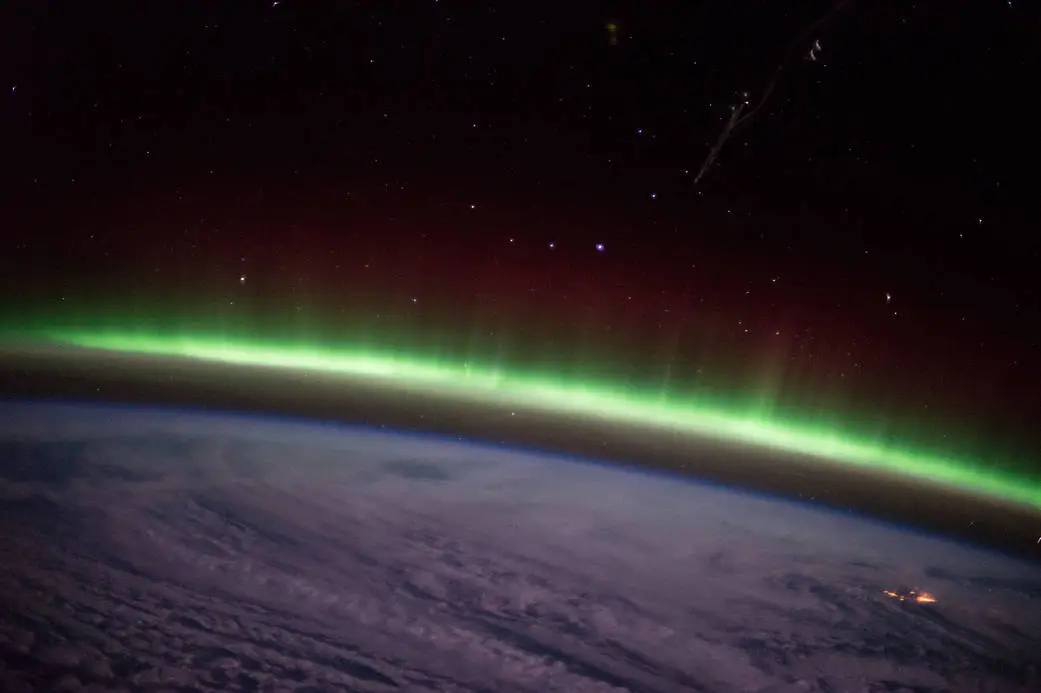
The night skies, especially in Earth’s polar regions, occasionally burst into a breathtaking ballet of light – the aurora borealis and aurora australis. These ethereal glow-in-the-dark spectacles, often dancing in vibrant greens, reds, and purples, have captivated humanity for millennia, inspiring myths and wonder. While scientists have long understood that these celestial light shows are a result of charged particles from the Sun interacting with Earth’s atmosphere, the precise mechanism by which these particles gain the immense energy needed to create such brilliant displays has remained one of space physics’ most enduring mysteries.
Now, a groundbreaking discovery by an international team of researchers has finally pinpointed the elusive power source, unraveling how electrons are accelerated to extreme energies, causing the atmosphere to light up. This revelation marks a significant leap in our understanding of fundamental space physics and has far-reaching implications, particularly for countries like India with ambitious space programs and a growing scientific footprint.
The Celestial Dance: Unraveling a Long-Standing Mystery
For decades, scientists knew that the Sun’s solar wind, a stream of charged particles, collides with Earth’s magnetosphere. Some of these particles, primarily electrons, are channeled towards the magnetic poles. When these high-energy electrons plunge into the upper atmosphere, they excite atoms and molecules of gases like oxygen and nitrogen. As these excited particles return to their normal state, they emit photons, creating the characteristic auroral glow. The challenge, however, wasn’t just knowing that this happens, but how the electrons acquire such incredible bursts of speed and energy in the first place.
Previous theories suggested various acceleration mechanisms, from magnetic reconnection to electromagnetic waves. However, conclusive observational evidence linking a specific mechanism directly to the most powerful auroral displays – the discrete aurora, characterized by bright, shimmering curtains – had been elusive. Advanced satellite missions have provided tantalizing clues, but piecing together the complete picture required unprecedented precision in measurement and sophisticated theoretical models.
Decoding the Power Source: Alfvén Waves in Action
The international research team, utilizing data from multiple advanced spacecraft missions orbiting Earth, has now confirmed that a specific type of electromagnetic wave, known as kinetic Alfvén waves, is the primary driver behind the acceleration of electrons responsible for the most brilliant auroras. These waves, which propagate along magnetic field lines, essentially ‘kick’ the electrons, energizing them to speeds that allow them to penetrate deep into Earth’s atmosphere.
The breakthrough involved highly sensitive instruments measuring electric and magnetic fields, as well as electron distributions, with incredible detail. By combining observations taken simultaneously from multiple points in space, the scientists were able to definitively show a direct correlation between the presence of these Alfvén waves and the sudden, dramatic acceleration of electrons just before they impact the atmosphere. It’s akin to catching the exact moment a surfer is propelled by a powerful wave.
A leading researcher involved in the study commented on the significance:
“This discovery closes a critical gap in our understanding of space weather. For years, we observed the stunning auroras, but the ‘how’ of their energy source remained an enigma. Pinpointing kinetic Alfvén waves as the primary accelerator is a monumental step, revealing the elegant physics at play in our planet’s cosmic neighborhood.”
This confirmation is a testament to years of dedicated international collaboration and the power of advanced space technologies.
Implications for Space Weather and Beyond
The implications of this discovery extend far beyond merely appreciating the beauty of auroras. A deeper understanding of electron acceleration mechanisms is crucial for improving our forecasts of space weather events. Solar storms, which can lead to intense auroral displays, also pose significant threats to our technologically dependent society. Geomagnetic storms can disrupt satellite communications, damage power grids, interfere with GPS systems, and expose astronauts to harmful radiation.
For a nation like India, with its ambitious space agency ISRO launching an increasing number of satellites and planning manned missions, understanding space weather is paramount for safeguarding its assets and personnel. This new insight can contribute to more accurate predictive models, allowing for timely protective measures. Furthermore, the principles of plasma physics elucidated by this research on Earth’s magnetosphere could offer insights into similar energy transfer processes occurring in other astrophysical phenomena across the universe, from distant stars to galactic interactions.
This remarkable scientific achievement underscores humanity’s relentless quest to comprehend the universe around us. By peeling back another layer of cosmic mystery, an international team has not only illuminated the intricate dance of auroras but also paved the way for a safer, more predictable future in our ever-expanding journey into space. The science behind the celestial spectacle continues to inspire, reminding us that even the most beautiful phenomena hold profound scientific truths waiting to be discovered.
*

