


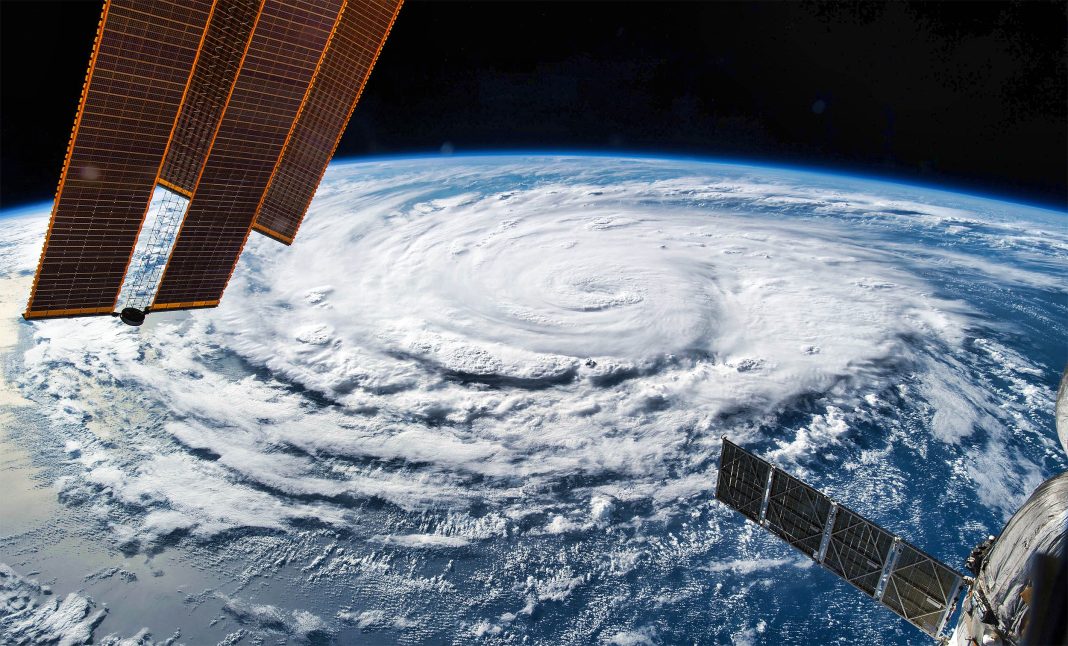
The vast expanse above Earth is a realm we continually explore, often yielding surprises even in regions we consider relatively well-understood. Recently, an intriguing observation has captured the attention of researchers: an instrument aboard the International Space Station (ISS) detected something unidentified approximately 55 miles (about 90 kilometers) above our planet’s surface.
This isn’t a headline designed to spark panic or wild speculation, but rather to highlight the ongoing process of scientific discovery. When we say “unknown,” it signifies an event or object that doesn’t immediately fit into our established categories of atmospheric phenomena, orbital debris, or astronomical bodies. It’s an anomaly that warrants closer inspection and provides a fascinating glimpse into the dynamic environment surrounding Earth.
The Observation from Orbit
Perched high above us, the International Space Station serves as a unique platform for a myriad of scientific instruments. These tools are designed to monitor everything from Earth’s climate and oceans to solar activity and the space environment itself. In this instance, one such instrument, capable of detailed observation, registered a fleeting presence at a significant altitude.
The exact nature of what was spotted remains under analysis. Initial reports indicate it was a transient event, meaning it appeared and disappeared within the observation window, unlike a persistent satellite or a distant star. Scientists are meticulously reviewing the data, looking for patterns, characteristics, and any clues that might shed light on its origin or composition. This process involves cross-referencing with existing catalogs of space objects and atmospheric models, a painstaking effort to rule out known phenomena before concluding it’s truly novel.
Why 55 Miles Matters
The altitude of roughly 55 miles places this observation in a particularly interesting region. This zone, often considered the very edge of Earth’s atmosphere and the gateway to space, is a complex environment. It’s too high for conventional aircraft or even most high-altitude balloons, which typically operate much lower. Yet, it’s also generally too low for most satellites to maintain a stable, long-term orbit without significant atmospheric drag causing them to quickly fall back to Earth.
This region is home to phenomena like noctilucent clouds, meteors burning up upon atmospheric entry, and the occasional re-entry of man-made space debris. However, each of these has specific signatures that instruments are typically designed to recognize. An “unknown” observation here suggests something that deviates from these expected signatures. Could it be a particularly unusual atmospheric event? A previously uncataloged piece of fast-moving, decaying space junk? Or something else entirely?
As one researcher, eager to delve into the data, put it, “Every time an instrument records something unexpected, it’s not a mystery to fear, but an opportunity to learn. It means our understanding isn’t complete, and that’s precisely where science thrives.”
What Comes Next?
Discoveries like this underscore the importance of continuous monitoring of our near-Earth environment. While the term “unknown” might conjure images of science fiction, in the scientific community, it’s a call to action. It initiates a rigorous process of data validation, peer review, and often, follow-up observations using other instruments or techniques.
The ultimate goal is to identify what was observed, thereby expanding our knowledge of the intricate layers surrounding our planet. Whether it turns out to be a peculiar atmospheric phenomenon, a new type of space debris, or something completely unforeseen, each piece of the puzzle helps us build a more complete picture of our cosmic neighborhood. The universe, it seems, always has new secrets to reveal, even just a stone’s throw away from Earth.

