


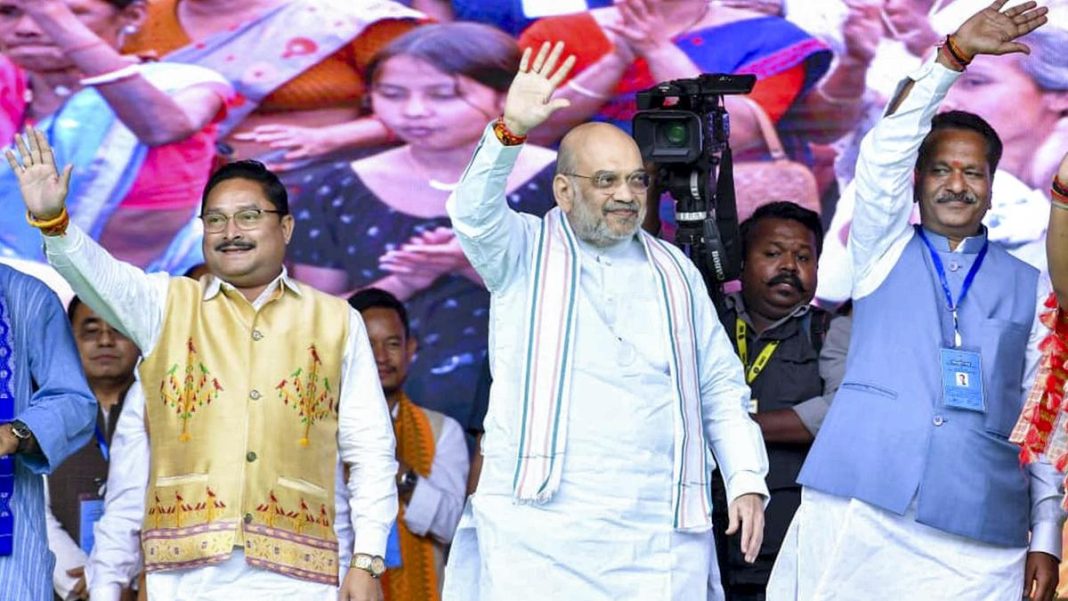
Union Home Minister Amit Shah’s recent declaration regarding the implementation of a Uniform Civil Code (UCC) in Assam has ignited significant discourse across the state and the nation. Speaking at a public event, Shah reiterated the Bharatiya Janata Party’s (BJP) long-standing commitment to the UCC, signalling a potential legislative push in the Northeastern state. This promise brings to the forefront a complex issue deeply embedded in India’s constitutional framework and societal diversity.
The UCC Promise: A Core BJP Agenda
During a public address in Assam, Union Home Minister Amit Shah underscored the BJP’s resolve to introduce a Uniform Civil Code, stating, “The BJP has always been in favour of the UCC. The states have the right to pass it. We are committed to bringing the UCC.” This statement aligns with the party’s foundational ideology, which views the UCC as a vital step towards national integration and gender justice. The concept of a UCC, enshrined in Article 44 of the Indian Constitution as a Directive Principle of State Policy, advocates for a common set of laws governing personal matters such as marriage, divorce, inheritance, and adoption, applicable to all citizens irrespective of their religion.
For decades, India has operated under a system of diverse personal laws – Hindu Personal Law, Muslim Personal Law, Christian Personal Law, and others – each derived from religious scriptures and traditions. Proponents of the UCC argue that this fragmentation leads to inconsistencies, particularly impacting women’s rights and hindering the nation’s secular fabric. The BJP’s emphasis on UCC has gained renewed momentum following the recent implementation of the code in Uttarakhand, which has served as a blueprint for other states considering similar legislative actions.
Assam’s Unique Challenges and Diverse Demographics
Implementing a UCC in Assam presents a unique set of challenges due to the state’s incredibly diverse demographic landscape. Assam is home to numerous ethnic groups, indigenous tribes, and religious communities, each with their own distinct customary laws and traditions. Many tribal communities, particularly those in areas protected under the Sixth Schedule of the Constitution, enjoy certain autonomies, including the right to govern their personal affairs according to their traditional customs.
The state’s demographic composition includes large populations of Bodos, Misings, Karbis, Dimasas, and other tribes, alongside significant Hindu and Muslim populations. A key concern among these communities is that a blanket UCC might override their ancestral customary laws, which are integral to their cultural identity and social structure. For instance, traditional tribal laws often dictate inheritance patterns, land rights, and marital customs that differ significantly from the proposed common code. Any legislative attempt to introduce UCC in Assam would necessitate extensive consultations with these diverse groups to address their apprehensions and ensure their unique cultural heritage is respected and protected.
Navigating Societal Dialogue and Constitutional Principles
The debate surrounding the UCC is multifaceted, touching upon fundamental rights, religious freedom, and the aspiration for a truly equitable society. While proponents, including many women’s rights activists, argue that a UCC is essential for ensuring gender equality and ending discriminatory practices embedded in various personal laws, critics express concerns about its potential to homogenise diverse cultural practices and infringe upon the religious freedom of minorities.
Union Home Minister Amit Shah, in his remarks, often highlights the BJP’s commitment to “one nation, one law,” believing it to be a pathway to greater national cohesion. “A Uniform Civil Code is not just about bringing legal uniformity; it is about ensuring justice and equality for all citizens, especially women, across every community,” Shah has reiterated on multiple occasions, reflecting the party’s steadfast position.
The path to implementing a UCC in Assam will undoubtedly involve intricate legal scrutiny and extensive public dialogue. Striking a balance between the constitutional directive for a uniform code and the constitutional guarantees of religious freedom and cultural diversity will be paramount. The outcome in Assam could set a significant precedent for other states grappling with similar legislative considerations, further shaping the national discourse on this enduring issue.
As the BJP government in Assam weighs its options, the promise of UCC implementation remains a potent political statement, signalling a potentially transformative legislative agenda in the region. The coming months will likely see increased discussions, stakeholder engagements, and possibly, concrete steps towards fulfilling this long-held ideological objective.

