


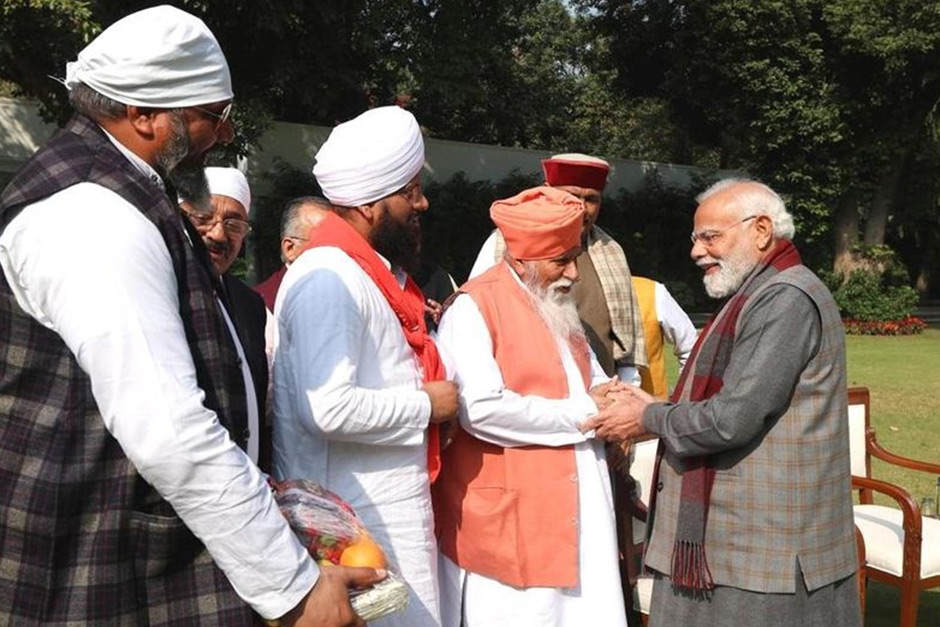
In a politically charged atmosphere marked by persistent threat emails from pro-Khalistani elements and the looming shadow of poll projections, Prime Minister Narendra Modi’s recent visit to Ballan dera in Punjab’s Jalandhar district has drawn significant attention. This wasn’t merely a routine engagement; it was a carefully orchestrated move into the heart of Punjab’s Dalit spiritual landscape, underscoring a multi-pronged strategy by the Bharatiya Janata Party (BJP) to deepen its roots in a state where it has historically struggled to gain a dominant foothold. The visit signifies a complex interplay of spiritual respect, electoral ambition, and a defiant stance against disruptive forces.
Ballan Dera: A Beacon in the Dalit Heartland
Ballan dera, officially known as Dera Sachkhand Ballan, holds immense spiritual and social significance for the Ravidassia community, a prominent Dalit sect in Punjab. Situated in the Doaba region, often considered the Dalit heartland of the state, the dera is a pivotal centre for followers of Guru Ravidass, a 15th-century Indian mystic and social reformer. The Ravidassia community, with its distinct identity and cultural practices, constitutes a substantial portion of Punjab’s population, making their support crucial for any political party aspiring to power.
The Doaba region alone has a significant concentration of Dalit voters, and deras like Ballan serve not just as religious institutions but also as powerful social and political mobilisers. A visit by the Prime Minister to such a revered site is a clear acknowledgment of its influence and an attempt to connect directly with a demographic that has often felt marginalized or inadequately represented. It symbolises an outreach that transcends traditional political alliances, aiming for a direct emotional and spiritual bond.
The BJP’s Strategic Inroads into Punjab’s Dalit Vote Bank
Punjab presents a unique electoral challenge for the BJP. Despite its national dominance, the party has struggled to build an independent base in the state, often relying on alliances, most notably with the Shiromani Akali Dal (SAD). The farmers’ protests, which saw a significant backlash against the BJP, further strained its relations with a large segment of the state’s populace. With Punjab having the highest percentage of Scheduled Caste population in India (nearly 32%), the Dalit vote bank is not just significant; it’s a potential game-changer.
PM Modi’s visit to Ballan dera, therefore, aligns perfectly with the BJP’s broader national strategy of expanding its social coalition and consolidating support among diverse communities. By directly engaging with the Ravidassia community, the BJP aims to bypass the traditional political brokers and appeal directly to a segment that has historically been courted by the Congress and regional parties like the Bahujan Samaj Party (BSP) and, more recently, the Aam Aadmi Party (AAP). This move is seen as an attempt to project the BJP as a party that respects all spiritual traditions and is committed to the welfare of all sections of society, aligning with its “Sabka Saath, Sabka Vikas” (Together with all, Development for all) mantra.
Political analyst Dr. Preeti Sharma observed, “This visit isn’t just about immediate electoral gains for the Lok Sabha elections; it’s a long-term strategic investment by the BJP to cultivate a base where they’ve historically struggled. It’s about laying groundwork for future assembly elections and changing the narrative that the BJP is solely a party of urban upper castes.” The timing, amid ongoing elections, amplifies its political undertones, signalling the party’s intent to diversify its support base.
Navigating Threats and Shaping Perceptions
The visit gains an additional layer of significance when viewed against the backdrop of persistent threat emails targeting the Prime Minister and other political leaders. These threats, often emanating from pro-Khalistani outfits operating from abroad, aim to disrupt democratic processes and create an atmosphere of fear. PM Modi’s decision to proceed with the visit, despite these security challenges, sends a powerful message of resolve and defiance. It underscores the government’s commitment to engage with all communities, unperturbed by attempts at intimidation.
From a public relations standpoint, the visit projects an image of a leader who is accessible and courageous, willing to engage directly with the people, even in areas perceived to be sensitive. This can resonate positively with voters, reinforcing the perception of strong leadership capable of navigating complex challenges. For the BJP, it’s also about challenging the narrative of regional alienation and asserting its presence across the state, even in regions with distinct socio-political dynamics.
Ultimately, PM Modi’s visit to Ballan dera is a multifaceted statement. It is a gesture of reverence to a significant spiritual institution, a calculated political manoeuvre to woo a crucial demographic, and a display of resilience in the face of threats. While the immediate electoral impact remains to be seen in the poll projections, the visit undoubtedly marks a significant step in the BJP’s long-term strategy to establish a stronger, independent presence in the complex and electorally vital state of Punjab.

