


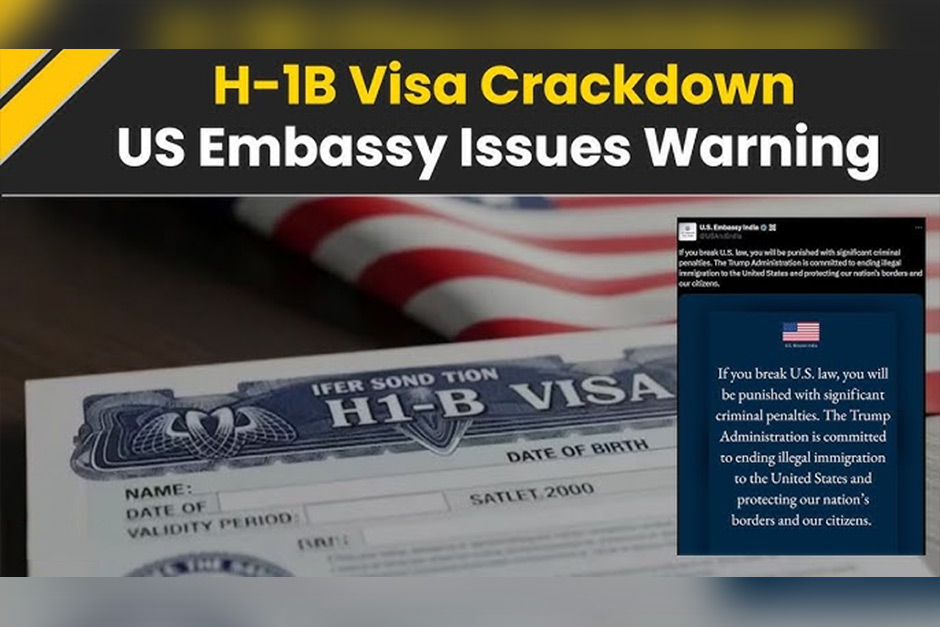
The H-1B visa program, a cornerstone for skilled foreign professionals seeking employment in the United States, has long been a critical pathway for countless Indian tech workers and specialists. Each year, thousands of hopeful applicants from India navigate the complex lottery system, often facing intense competition. Against this backdrop of high stakes and perennial demand, recent overhauls to the H-1B process by the U.S. Citizenship and Immigration Services (USCIS) have introduced a new layer of scrutiny, culminating in a stark warning from the U.S. Embassy in India: “you will be punished with criminal penalties if you lie on your visa application or to a consular officer.” This unequivocal statement underscores a heightened focus on integrity and transparency, significantly impacting the aspirations of many Indian professionals.
Navigating the H-1B Landscape: Reforms and Renewed Scrutiny
The H-1B visa program facilitates the temporary employment of foreign workers in specialty occupations, requiring a bachelor’s degree or its equivalent. For years, the immense demand, particularly from India, has far outstripped the annual cap of 85,000 visas (including 20,000 for those with a U.S. master’s degree or higher). This imbalance often led to a lottery system perceived by some as vulnerable to fraud and abuse.
In response, the USCIS has implemented significant changes, most notably shifting from a random lottery selection based on registrations to a beneficiary-centric approach. Under the new rules, selections are now based on unique passport numbers, aiming to prevent multiple registrations for the same individual by different employers. This reform is designed to enhance fairness, reduce instances of companies submitting numerous applications for the same candidate, and prioritize genuine employment opportunities. Additionally, increased filing fees, while aimed at improving processing efficiency, also signal a more rigorous system. These changes reflect a broader effort by U.S. immigration authorities to streamline the H-1B process, ensure its integrity, and allocate visas to genuinely qualified individuals in specialty occupations, curbing practices that undermine the program’s intent.
The Embassy’s Stern Warning: Understanding the Implications
The recent caution issued by the U.S. Embassy in India serves as a potent reminder of the severe consequences awaiting those who attempt to circumvent immigration laws. The warning explicitly states, “you will be punished with criminal penalties if you lie on your visa application or to a consular officer.” This encompasses a range of deceptive actions, including but not limited to, providing false educational qualifications, fabricating work experience, misrepresenting employment offers, or concealing prior immigration violations. Even seemingly minor misrepresentations can have profound and lasting repercussions.
The penalties for such transgressions are not trivial. Applicants found to have committed fraud or made material misrepresentations face automatic visa denial and a permanent ineligibility to enter the United States. Beyond this, depending on the severity and nature of the deception, individuals could face criminal charges, which might include fines, imprisonment, and deportation if they are already present in the U.S. The U.S. government maintains a sophisticated network for verifying information, and consular officers are trained to detect inconsistencies and suspicious patterns. As Anjali Sharma, a Mumbai-based immigration law expert, notes, “The USCIS and consular officers are more vigilant than ever. Any discrepancy, however minor, can now lead to severe repercussions. It’s imperative for applicants to ensure absolute truthfulness and accuracy in their submissions.” This heightened scrutiny means that every piece of information provided, from academic transcripts to employer letters, must be verifiable and accurate.
Implications for Indian Professionals and the Path Forward
For the vast community of Indian professionals aspiring to work in the U.S., the H-1B visa overhaul coupled with the Embassy’s stern warning necessitates a meticulous and ethical approach. India remains the largest source country for H-1B beneficiaries, and the integrity of these applications is crucial for maintaining the credibility of the entire Indian applicant pool.
The primary takeaway for applicants is the absolute necessity of honesty and diligence. Professionals should:
- Thoroughly vet all information: Ensure every detail on the application, including educational credentials, work experience, and personal details, is accurate and verifiable.
- Work with reputable consultants: Avoid consultants or employers who suggest embellishing facts or providing false information.
- Understand the process: Be fully aware of the requirements and procedures, and be prepared to honestly answer all questions during a visa interview.
While the stricter regulations and warnings might appear daunting, they ultimately aim to preserve the integrity of the H-1B program for legitimate skilled workers. For genuine professionals with verifiable qualifications and sincere intentions, the opportunities in the U.S. remain vibrant. The emphasis is now firmly on quality, authenticity, and compliance, ensuring that the H-1B program continues to attract the best global talent without falling prey to fraudulent practices.
The ongoing changes in the H-1B visa landscape, reinforced by the U.S. Embassy’s firm warning, mark a pivotal moment for Indian professionals. While the road to securing an H-1B visa may now demand even greater scrutiny and honesty, it ultimately reinforces the program’s foundational purpose: to bring truly skilled individuals to the United States. For those who approach the process with integrity, the American dream remains within reach, albeit under a brighter, more discerning spotlight.
*

