


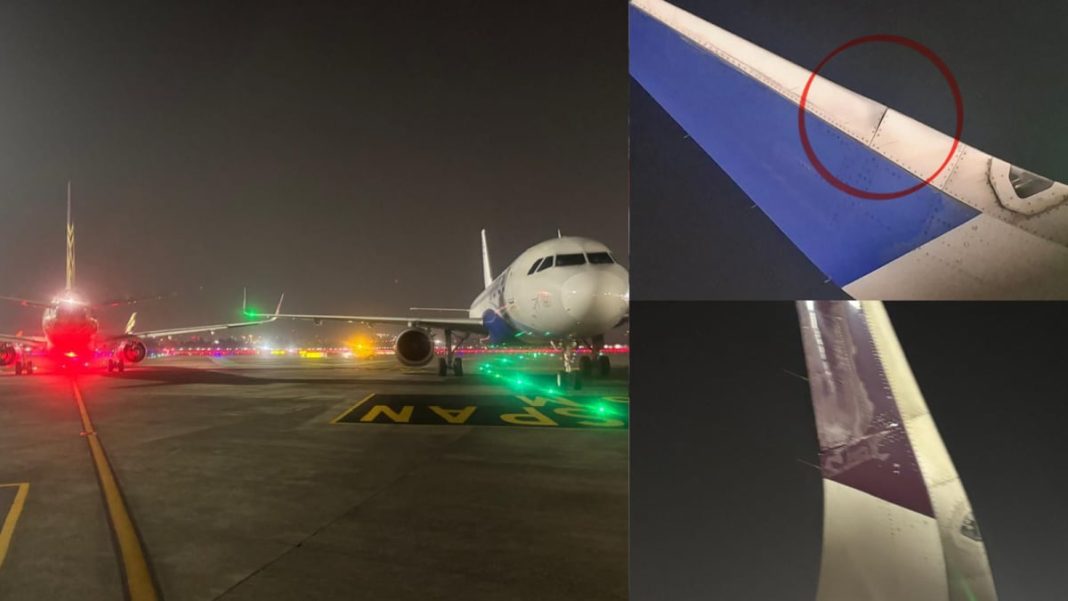
A routine Tuesday at Chhatrapati Shivaji Maharaj International Airport (CSMIA) in Mumbai escalated into a moment of alarm recently when two prominent Indian carriers, Air India and IndiGo, experienced a minor collision on the ground. With passengers already on board both aircraft, the incident, though devoid of injuries, has prompted a swift investigation by aviation authorities, casting a spotlight on ground safety protocols in India’s bustling air hubs.
Incident Unfolds: A Close Call at Mumbai’s Bustling Hub
The incident occurred as an IndiGo Airbus A320neo, operating flight 6E5037 bound for Thiruvananthapuram, was in the process of pushback from its parking bay. Simultaneously, an Air India Boeing 787 Dreamliner, designated flight AI647 en route to Nagpur, was taxing towards its own departure runway. In a moment of unfortunate proximity, the wingtip of the IndiGo aircraft made contact with the wingtip of the Air India plane. Both aircraft had passengers on board and were preparing for their respective journeys, turning a routine pre-flight phase into an unexpected halt.
Eyewitness accounts suggest a sudden jolt was felt by passengers on both flights, followed by immediate announcements from the crew. There were no reports of injuries among passengers or crew on either aircraft, a testament to the low-speed nature of the collision. However, the damage to both wingtips necessitated the grounding of both planes for detailed inspection and repairs. All passengers were subsequently de-planed and arrangements were made for them to be accommodated on alternative flights, albeit with significant delays. This incident highlights the critical importance of precise coordination and situational awareness during ground operations at one of India’s busiest airports.
DGCA Initiates Probe: Unpacking the Layers of Accountability
Following the collision, the Directorate General of Civil Aviation (DGCA), India’s primary aviation regulatory body, immediately launched a comprehensive investigation. Preliminary steps included de-rostering both pilots involved from their respective airlines, pending the outcome of the inquiry. The investigation will meticulously examine various factors, including the communication between the flight crews and Air Traffic Control (ATC), the actions of the ground handling staff responsible for pushback and marshalling, and the operational procedures followed by both airlines.
The DGCA’s probe aims to ascertain whether the incident was a result of pilot error, misjudgment by ground personnel, a breakdown in communication, or a confluence of multiple factors. “Such incidents, while not immediately life-threatening, are a grave concern as they underscore potential vulnerabilities in ground operations,” remarked an aviation safety expert, emphasizing the need for stringent adherence to protocols. The findings of this investigation will be crucial in implementing corrective measures, not just for the airlines involved, but potentially for all ground handling procedures across Indian airports to prevent future occurrences.
Ripple Effect: Passenger Disruption and Industry Ramifications
For the hundreds of passengers caught in the middle, the incident translated into significant travel disruptions. Many faced hours of delays, with some flights being cancelled outright as the grounded aircraft needed extensive repairs. The airlines, Air India and IndiGo, promptly initiated efforts to re-accommodate passengers, providing meals and alternative travel options where possible. However, the experience undoubtedly caused frustration and anxiety, impacting travel plans and potentially eroding passenger confidence.
Beyond the immediate passenger inconvenience, the collision carries substantial financial implications for both carriers. Repairing wingtip damage on modern aircraft like the Boeing 787 Dreamliner and Airbus A320neo is a complex and costly affair, often involving specialized technicians and parts. Additionally, the operational disruption caused by grounding two aircraft means lost revenue from cancelled flights and the cost of accommodating stranded passengers. This incident serves as a stark reminder of the intricate challenges faced by India’s rapidly expanding aviation sector, where maintaining impeccable safety standards during all phases of operation is paramount amidst increasing air traffic and airport congestion.
As the DGCA continues its thorough investigation, the aviation community awaits its findings to identify root causes and reinforce safety protocols. The incident at Mumbai airport underscores that even minor ground collisions, though rare, demand rigorous scrutiny to ensure the continued safety and reliability of air travel in India.

