


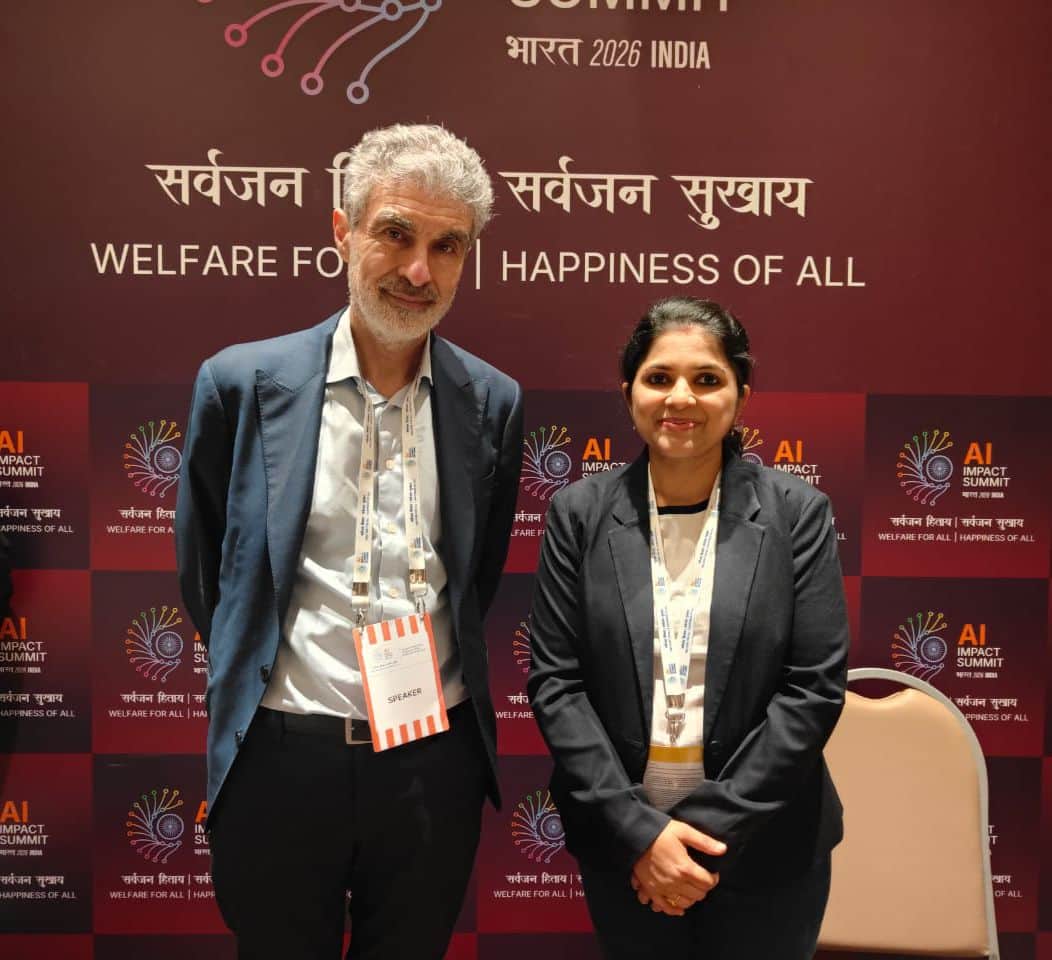
The global discourse around Artificial Intelligence (AI) frequently oscillates between fervent optimism and looming apprehension. While AI promises unprecedented advancements across sectors, a significant shadow persists: its potential impact on employment. This concern took centre stage at a recent AI Summit, where Yoshua Bengio, one of the revered “Godfathers of AI” and a Turing Award laureate, issued a stark warning. Bengio expressed deep concern that governments worldwide are failing to adequately address the impending job losses that AI proliferation will inevitably bring.
For a nation like India, with its vast young workforce and ambitious digital transformation agenda, Bengio’s remarks resonate with particular urgency. The subcontinent stands at a unique crossroads, poised to leverage AI for growth while simultaneously grappling with the societal implications of technological disruption.
The Shadow of Automation: Bengio’s Dire Warning
Bengio, alongside pioneers like Geoffrey Hinton and Yann LeCun, is credited with groundbreaking work in deep learning, the technology underpinning much of today’s AI revolution. His perspective, therefore, carries immense weight. At the summit, he didn’t mince words, highlighting the rapid pace at which AI is evolving beyond mere task automation to capabilities that can mimic and even surpass human cognitive functions in various domains. This isn’t just about factory workers being replaced by robots; it extends to white-collar jobs in finance, customer service, content creation, and even software development itself.
His core argument is that while the economic benefits of AI are being enthusiastically pursued, the crucial discussions and proactive policy measures needed to mitigate its socio-economic fallout are largely absent from governmental agendas. The focus, he suggested, remains predominantly on fostering innovation and competitiveness, often at the expense of preparing for the human cost.
The potential for massive unemployment, exacerbated by a lack of skills alignment and insufficient social safety nets, could lead to widespread inequality and social unrest. Bengio’s concern stems from a belief that the market alone cannot self-correct this monumental shift, necessitating robust governmental intervention.
India’s AI Ambitions Meet a Hard Reality
India’s journey with AI has been marked by strong governmental push and private sector enthusiasm. Initiatives like “AI for All” and significant investments in digital infrastructure aim to position India as a global AI powerhouse. Yet, Bengio’s cautionary tale serves as a critical check on this unbridled enthusiasm, especially in a country where job creation remains a perennial challenge.
India’s large demographic dividend, often cited as its greatest asset, could become a vulnerability if millions of young people find their skills rapidly obsolescent. Sectors like IT services, which have been a backbone of Indian employment, are particularly susceptible to AI-driven automation. Customer support, data entry, and even certain programming tasks are increasingly being handled by intelligent algorithms, potentially leading to significant workforce restructuring.
While the Indian government has launched various skill development programmes, the scale and speed required to re-skill or up-skill a workforce of over 500 million people for an AI-powered economy are staggering. There’s a palpable disconnect, as Bengio pointed out, between the government’s rhetoric of AI-driven prosperity and concrete, far-reaching policies to address displacement.
“Governments are mostly focused on economic growth and innovation, which is important, but they are not doing anything about job loss concerns. We need to think about social safety nets, universal basic income, and massive re-skilling programs,” Yoshua Bengio reportedly stated at the summit.
This statement underscores the critical gap in policymaking: an urgent need to shift from solely promoting AI adoption to actively managing its societal impact.
Charting a Proactive Course: The Imperative for Policy
Addressing AI-induced job loss is not a challenge that can be tackled in isolation; it demands a multi-pronged, collaborative approach. Governments, particularly in emerging economies like India, need to move beyond reactive measures and embrace proactive policymaking. This includes:
- Massive Re-skilling and Up-skilling Initiatives: Investing heavily in future-proof skills, focusing on creativity, critical thinking, complex problem-solving, and socio-emotional intelligence – areas where human capabilities remain superior.
- Rethinking Social Safety Nets: Exploring models like Universal Basic Income (UBI) or other forms of robust social security to provide a safety net for those displaced by automation, ensuring a basic standard of living.
- Fostering New Industries and Job Roles: Actively promoting sectors that complement AI rather than being replaced by it, such as AI ethics, AI auditing, data stewardship, and human-AI collaboration roles.
- Ethical AI Governance: Establishing clear regulatory frameworks that guide the ethical development and deployment of AI, ensuring that its benefits are broadly distributed and its risks are minimized.
- International Cooperation: Collaborating globally to understand best practices, share research, and develop common standards for navigating the AI transition.
Yoshua Bengio’s warning is a clarion call. Ignoring the socio-economic implications of AI is not an option; it risks widening inequalities and creating significant societal instability. For India, the opportunity to lead in AI must be balanced with the responsibility to ensure that this technological revolution uplifts all its citizens, not just a privileged few. Proactive, empathetic, and future-oriented policymaking is not just desirable, but absolutely essential.

