


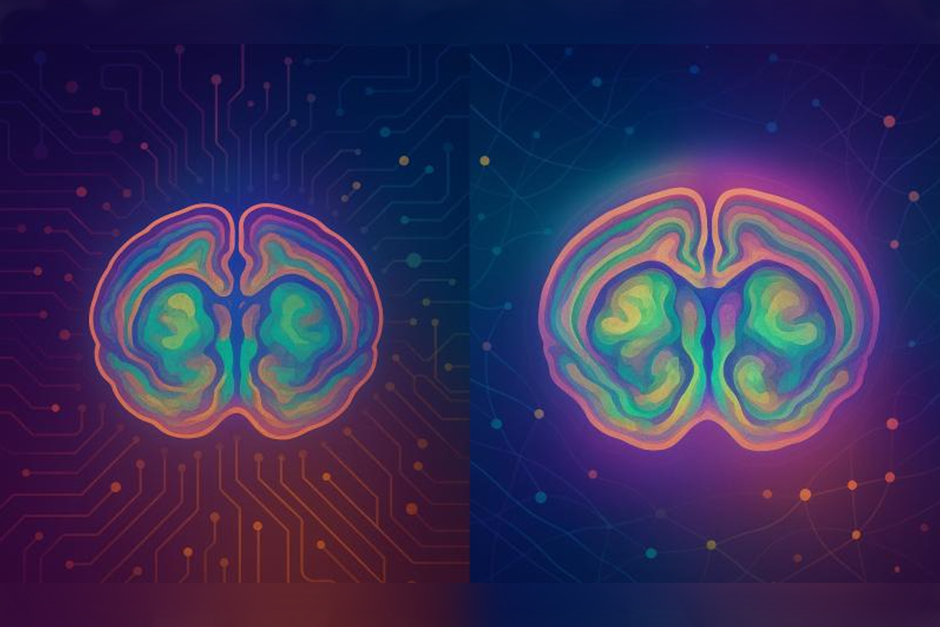
The human brain is, without a doubt, the most complex object in the known universe. For centuries, scientists have painstakingly mapped its intricate pathways and mysterious regions, each discovery peeling back another layer of its profound secrets. But imagine the sheer scale of that endeavor, the countless neurons, the myriad connections, the silent symphony of cellular life dictating thought, emotion, and memory. Now, thanks to the relentless power of artificial intelligence, we’re not just mapping existing territories – we’re discovering entirely new ones, hidden in plain sight.
AI: The Ultimate Cartographer of the Mind
Think about the sheer volume of data involved in studying the brain. Every single cell holds a universe of information about its type, its activity, its neighbors, and its role in the grand network. Traditionally, sifting through this “mountain of cell data” has been an almost insurmountable task for human researchers. Patterns that are crucial for understanding brain function can be incredibly subtle, easily missed amidst the noise of billions of data points.
This is precisely where AI shines. With its unparalleled ability to process massive datasets, recognize intricate patterns, and identify correlations that would take humans lifetimes to find, AI is transforming neuroscience. It’s like upgrading from a hand-drawn map to a satellite imaging system that can zoom in on individual bricks in a skyscraper. AI algorithms can dive deep into cellular data, identifying unique genetic markers, activity profiles, and connectivity patterns that define specific groups of cells.
Unveiling New Brain Neighborhoods
What does it mean to uncover “new brain neighborhoods”? It’s not about finding unexplored physical spaces within the skull, but rather identifying previously unrecognized functional units. These are distinct clusters of cells – populations with shared characteristics, specific roles, and unique connections – that operate together in ways we hadn’t fully appreciated. Before AI, these subtle distinctions were often averaged out or simply too granular to detect with conventional methods.
The implications of this discovery are profound. Understanding these newly defined cellular communities can unlock deeper insights into how the brain processes information, forms memories, and orchestrates complex behaviors. It helps us build a more accurate blueprint of the brain’s internal architecture, showing us not just the main highways, but also the bustling side streets and quiet cul-de-sacs, each with its own vital purpose.
As Dr. Anya Sharma, a computational neuroscientist, recently remarked, “It’s like AI gave us a super-powered microscope, revealing entire continents within what we once thought was a simple landscape. This fundamentally shifts how we approach neurological research, allowing us to ask more precise questions and target our investigations more effectively.” This isn’t just incremental progress; it’s a paradigm shift in how we understand the very fabric of our minds.
The Future: A Healthier, More Informed Brain
The ability to precisely delineate these new brain neighborhoods has monumental implications for medicine. Many neurological and psychiatric disorders – from Alzheimer’s and Parkinson’s to depression and autism – are believed to stem from dysfunctions within specific neural circuits or cell populations. By identifying these distinct neighborhoods, scientists can pinpoint the exact locations and cell types affected by disease with unprecedented accuracy.
This precision opens the door to developing highly targeted therapies. Instead of broad-spectrum treatments, we might soon see interventions designed to specifically modulate the activity of a particular cell neighborhood, correct a genetic anomaly in a distinct population, or prevent the degeneration of a newly identified functional cluster. It moves us closer to personalized medicine for brain health, offering hope for more effective treatments and even cures for conditions that have long baffled us.
The collaboration between human ingenuity and artificial intelligence is pushing the boundaries of what we thought possible in neuroscience. As AI continues to sift through the unimaginable complexity of cell data, we stand on the cusp of unlocking the brain’s deepest secrets, paving the way for a healthier, more enlightened future.

