


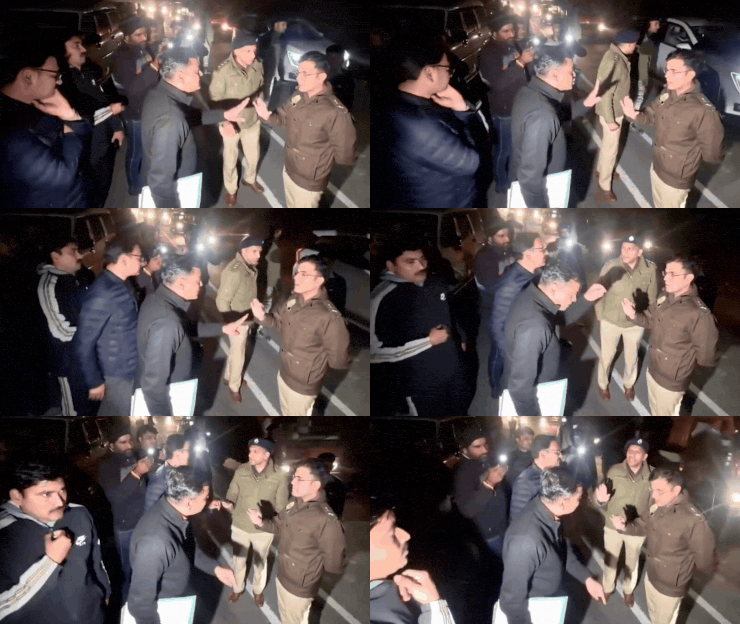
In an unusual and escalating inter-state law enforcement incident, a contingent of 20 Delhi Police personnel found themselves at the centre of a jurisdictional dispute, being detained, released, and then halted once more within Himachal Pradesh. This unprecedented sequence of events unfurled in the aftermath of a Youth Congress protest against ‘AI’ in Delhi, leading to the arrest of several party members and an subsequent pursuit that crossed state lines, sparking a significant procedural and political controversy.
The Initial Delhi Arrests and Himachal Pursuit
The genesis of the current standoff lies in a recent protest organised by the Youth Congress in the national capital, reportedly against a policy or entity referred to as ‘AI’. While the specific nature of the ‘AI’ protest remains subject to detailed clarification, the demonstration led to clashes and subsequent arrests by the Delhi Police. According to sources, several Youth Congress members were apprehended on charges related to public order and disruption. Following these arrests, a team of 20 Delhi Police officers embarked on an operation that led them into the neighbouring state of Himachal Pradesh, allegedly in pursuit of other individuals connected to the protest or to conduct further investigations related to the initial arrests.
Inter-state police operations typically require specific protocols, including prior intimation to the local police force, especially when making arrests or conducting sensitive investigations outside one’s primary jurisdiction. The Delhi Police team’s entry into Himachal Pradesh without apparently fully adhering to these established procedures would soon become the crux of the ensuing conflict.
Detained, Freed, and the Jurisdictional Quagmire
Upon their arrival and commencement of operations in Himachal Pradesh, the Delhi Police team encountered direct intervention from the local law enforcement. Reports indicate that the 20 Delhi Police personnel were detained by the Himachal Pradesh Police, primarily on grounds of alleged jurisdictional breaches and the purported lack of proper procedural compliance. This act of one state’s police force detaining officers from another state is exceptionally rare and underscores the severity of the procedural lapses perceived by the Himachal authorities.
The detention sparked immediate high-level communications between the police establishments of both states. Following intense negotiations and possibly the intervention of senior officials, the Delhi Police team was eventually released. However, the respite was short-lived. The Delhi Police convoy, which was reportedly either transporting the arrested Youth Congress members back to Delhi or was still engaged in related duties within Himachal Pradesh, was halted again by the Himachal Pradesh Police. This second intervention signals a deeper insistence by the Himachal authorities on adherence to legal and procedural formalities.
Speaking on the sensitive nature of inter-state police cooperation, a legal expert, Dr. Rhea Sharma, commented, “Such incidents highlight the critical need for absolute clarity and strict adherence to established protocols governing police action across state borders. A breakdown in these procedures not only creates friction between forces but can also compromise the legal integrity of arrests and investigations.” This underscores the complex legal framework governing such operations and the potential ramifications of perceived non-compliance.
Political Repercussions and the Path Forward
The events have naturally drawn significant attention, both from legal circles and political observers. The Youth Congress, whose members were the initial subjects of arrest, has been quick to condemn the actions of the Delhi Police, accusing them of high-handedness and overreach. Conversely, supporters of the Delhi Police’s actions argue that they were merely fulfilling their duty to maintain law and order and bring alleged offenders to justice, irrespective of state boundaries, provided procedures are eventually met.
The repeated halting of the Delhi Police team by their Himachal Pradesh counterparts suggests a firm stance by the latter on upholding their jurisdiction and ensuring due process. It also points to potential political undertones, given that different political parties govern the respective states, though officials from both sides have largely maintained that the issue is purely procedural.
As the situation currently stands, the status of the detained Youth Congress members and the exact charges they face, along with the fate of the Delhi Police personnel, remain under review. The incident serves as a stark reminder of the delicate balance required in inter-state law enforcement and the imperative for clear communication and adherence to established legal frameworks. Moving forward, both police forces will likely engage in further discussions to resolve the immediate standoff and prevent similar occurrences, reinforcing the mechanisms of cooperative federalism in India’s policing landscape.

