


Quick Summary
A groundbreaking AI system has emerged, capable of autonomously diagnosing cancer from tissue samples with clinical-grade accuracy. This innovation promises to revolutionize pathology.
What Happened
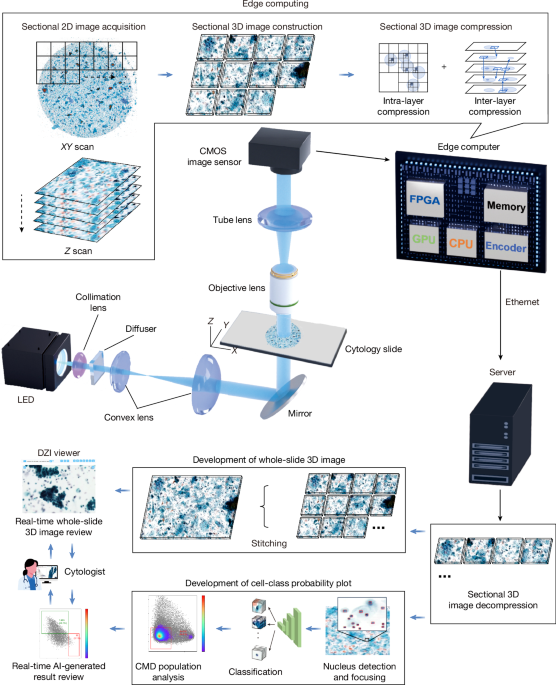
Researchers have unveiled an advanced AI system that leverages “whole-slide edge tomography” to analyze microscopic tissue samples. Unlike traditional methods requiring extensive human review, this autonomous technology can identify cancerous cells and anomalies rapidly and precisely, reaching a standard suitable for clinical use.
Why It Matters
This development holds immense potential for healthcare, particularly in Canada where timely and accurate diagnoses are crucial. It could significantly reduce the workload on pathologists, speed up diagnosis times, and improve access to expert analysis in remote or underserved areas. Early and precise detection means better patient outcomes. “This innovation represents a profound shift in how we approach diagnostic pathology,” noted a leading expert in medical AI.
Bottom Line
The advent of autonomous cytopathology marks a significant leap forward in AI-driven medicine, setting a new benchmark for efficiency and accuracy in cancer detection.

