


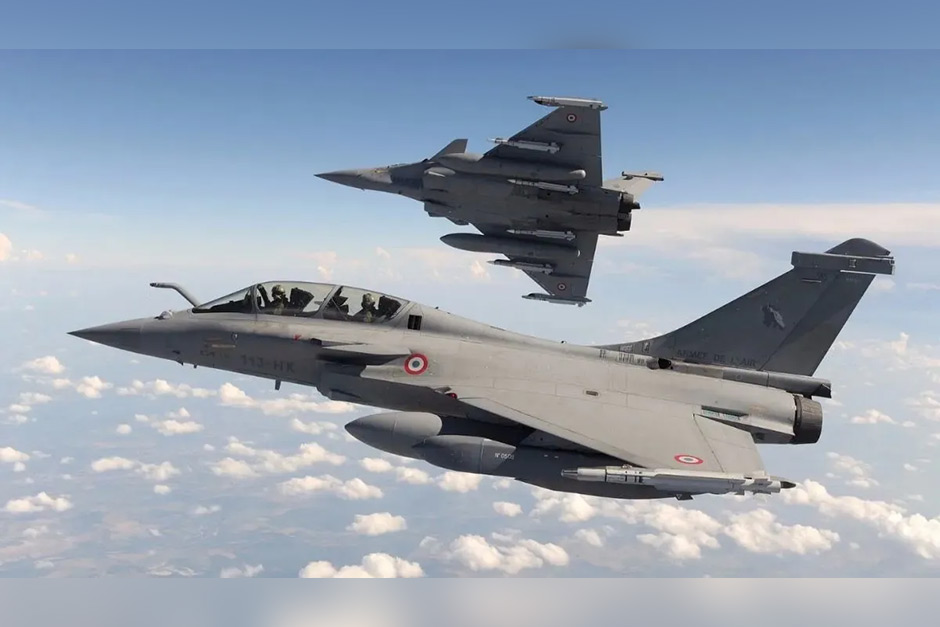
As India prepares to roll out the red carpet for French President Emmanuel Macron, the Chief Guest for the upcoming Republic Day celebrations, diplomatic and strategic circles are abuzz with expectations of significant announcements. Amidst the flurry of high-level engagements, a critical development on the defense front is anticipated: the Defence Acquisition Council (DAC) is reportedly poised to convene next week. This meeting is expected to deliberate and potentially provide Acceptance of Necessity (AoN) for the long-gestating deal to acquire 114 multi-role Rafale fighter jets, a move that could redefine India’s aerial prowess and strengthen its strategic partnership with France.
The Imperative for 114 Rafales: Bolstering India’s Air Power
India’s pursuit of 114 new multi-role fighter aircraft for the Indian Air Force (IAF) is a testament to its urgent need for fleet modernization and enhanced combat capabilities. The current fighter squadrons are aging, and the geo-political landscape, particularly India’s complex borders, necessitates a robust and technologically advanced air defense system. The Rafale, a proven twin-engine, canard-delta wing, multi-role fighter aircraft, has already demonstrated its efficacy in IAF service since the delivery of the initial batch of 36 jets under a 2016 deal.
The proposed acquisition of 114 Rafales is envisioned under the ambitious ‘Make in India’ initiative, a cornerstone of the government’s defense policy. While a small initial batch, possibly 10-15 aircraft, might be procured directly from Dassault Aviation in fly-away condition, the vast majority—around 100-104 jets—are intended to be manufactured domestically. This hybrid approach aims to strike a balance between immediate operational requirements and fostering indigenous defense manufacturing capabilities. Hindustan Aeronautics Limited (HAL) is expected to play a pivotal role as the local production partner, facilitating significant technology transfer (ToT) from France. This ToT is crucial, as it promises to not only boost India’s aerospace manufacturing ecosystem but also reduce long-term dependency on foreign suppliers for maintenance and upgrades. The deal, estimated to be worth upwards of $15-20 billion, represents one of India’s largest defense procurements in recent times, signaling a strong commitment to modernizing the IAF and achieving greater strategic autonomy.
“The potential approval for 114 Rafales ahead of President Macron’s visit underscores the deep strategic trust between India and France. It’s not just about acquiring advanced platforms; it’s about a comprehensive partnership that includes technology transfer and indigenous manufacturing, critical for India’s long-term defense objectives,” stated a senior defense analyst, highlighting the multifaceted nature of the collaboration.
India-France Strategic Ties Soar to New Heights
The anticipated DAC approval is more than just a defense procurement decision; it is a significant marker of the burgeoning strategic partnership between India and France. France has consistently proven to be a reliable and willing partner in India’s defense modernization journey, providing critical technologies and platforms with fewer caveats than some other global powers. Beyond the Rafale, cooperation spans across various domains, including joint naval exercises, space collaboration, and intelligence sharing.
President Macron’s visit as the Republic Day Chief Guest is itself a powerful symbol of the deepening bilateral relationship. It signifies the mutual recognition of each other as crucial strategic partners in a rapidly evolving geopolitical landscape, particularly in the Indo-Pacific region. The discussions during his visit are expected to cover not only defense and security but also nuclear energy, space exploration, trade, and climate change, further broadening the ambit of cooperation. The India-France strategic partnership is characterized by a shared vision for multilateralism, strategic autonomy, and a rules-based international order, making them natural allies in navigating global challenges. The approval of the 114 Rafale deal, if it materializes as expected, will undoubtedly serve as a flagship achievement of this visit, cementing decades of trust and future collaboration.
The Road Ahead: From Approval to Operational Readiness
While the DAC’s ‘Acceptance of Necessity’ is a crucial first step, it is the beginning of a detailed and complex process. Following AoN, the extensive negotiations between the Indian Ministry of Defence and Dassault Aviation, along with the French government, would commence. This would include finalizing intricate details on technology transfer, intellectual property rights, local manufacturing arrangements, offset clauses, and ultimately, the comprehensive contract. Subsequent approval by the Cabinet Committee on Security (CCS) would be required before the final contract signing. Despite these procedural steps, the political impetus provided by President Macron’s visit is expected to significantly accelerate the process.
The induction of 114 additional Rafales would represent a paradigm shift for the Indian Air Force, not only enhancing its strike capabilities and air superiority but also providing a much-needed boost to its squadron strength. More importantly, the ‘Make in India’ component ensures that this acquisition contributes to India’s long-term goal of becoming a self-reliant defense manufacturing hub. The deal, therefore, is not merely about purchasing jets; it’s about building an ecosystem, strengthening a critical strategic partnership, and securing India’s skies for decades to come.

