


Caracas, the capital of Venezuela, is often associated with vast oil reserves and a strong history of state control over its most lucrative resource. For decades, under socialist leaders like Hugo Chávez and his successor Nicolás Maduro, the nation firmly nationalised its oil industry, exemplified by the mighty Petróleos de Venezuela S.A. (PDVSA). However, a dramatic policy pivot is now underway, one that could fundamentally reshape Venezuela’s economy and send ripples across global energy markets, including India.
Following years of crippling US sanctions, economic isolation, and a drastic decline in oil production, Venezuela appears to be pragmatically moving towards opening its long-shuttered oil sector to private and foreign investment. This surprising reversal, largely seen as a response to sustained international pressure that began intensifying under the Trump administration, marks a significant departure from its deeply entrenched socialist ideology, born more out of necessity than choice.
A Pragmatic Reversal: Opening the Floodgates?
For most of the 21st century, Venezuela’s oil sector operated under an iron fist of state control. Chávez’s nationalisation drive saw foreign companies either expelled or forced into minority joint ventures with PDVSA. While initially bolstering state revenues, a combination of mismanagement, underinvestment, and later, severe US sanctions aimed at suffocating the Maduro regime, led to a catastrophic collapse in production. From a peak of over 3 million barrels per day (bpd) in the late 1990s, Venezuela’s output plummeted to barely 700,000 bpd, and at times, even lower.
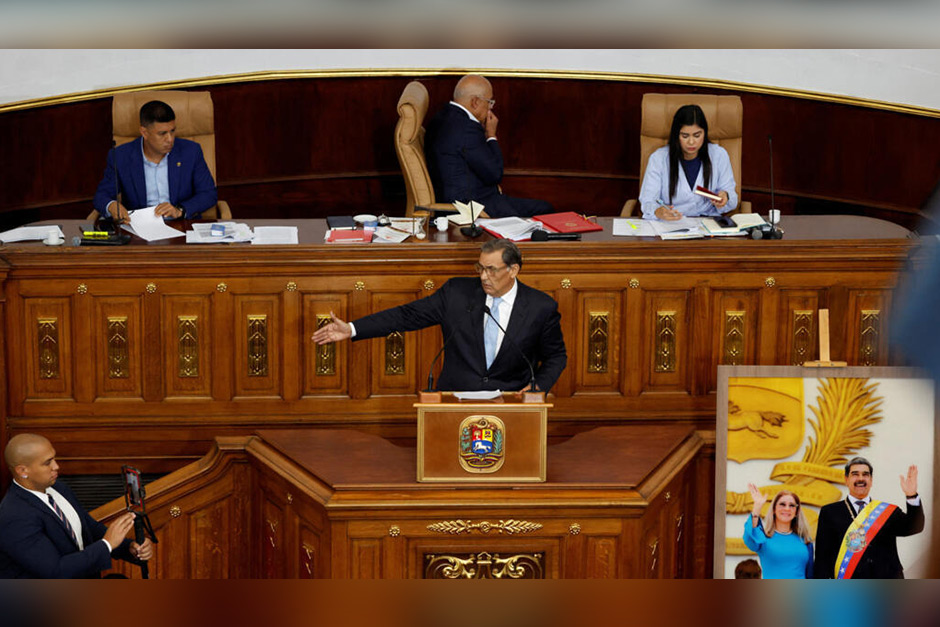
The proposed changes aim to reverse this decline. Reports suggest that the Venezuelan National Assembly, dominated by Maduro’s allies, is deliberating reforms to the country’s Hydrocarbons Law. These reforms would allow private companies, both domestic and international, to take majority stakes in joint ventures with PDVSA, offer greater legal protections, and streamline investment processes. This move is a clear acknowledgment that PDVSA, starved of capital, technology, and expertise due to sanctions and internal issues, cannot revive the industry alone. Venezuela desperately needs foreign currency, investment, and technical know-how to repair its dilapidated infrastructure and ramp up production.
Geopolitical Chessboard and the Trump Push
The narrative of the “Trump push” in this context refers to the relentless pressure exerted by the previous US administration. From 2017 onwards, the Trump White House imposed a barrage of sanctions on PDVSA, the Venezuelan central bank, and key government officials, aiming to cut off the regime’s revenue streams and force Maduro out of power. While direct regime change did not occur, these sanctions undeniably pushed Venezuela to the brink, exacerbating its economic crisis and forcing it to explore unconventional ways to survive.
This policy shift can be interpreted as a long-term, if unintended, consequence of that pressure. Isolated from traditional Western markets and unable to fully rely on allies like Russia and China for the massive investment required, Caracas has been compelled to reconsider its economic doctrines. The Biden administration, while maintaining most sanctions, has also shown some flexibility, engaging in limited dialogues, particularly in the wake of global energy supply concerns triggered by the conflict in Ukraine. This incremental easing of rhetoric, coupled with Venezuela’s dire need, appears to have created a window for this strategic reorientation.
As Dr. Priya Sharma, a geopolitical analyst based in New Delhi, observes, “This move by Caracas is a testament to the brutal efficacy of sanctions, forcing a re-evaluation of long-held economic dogmas. It’s a pragmatic pivot born out of necessity, not ideology, fundamentally altering Venezuela’s strategic calculus.”
Implications for Global Markets and India
The potential return of Venezuelan oil to global markets holds significant implications. If successful, the liberalisation could inject substantial crude volumes, potentially up to 2 million bpd or more in the long term, into the global supply. This would be a welcome development for consumers worldwide, potentially easing price pressures and enhancing energy security, especially at a time of geopolitical volatility.
For India, a major net importer of crude oil, this development is particularly pertinent. India’s energy security strategy relies on diversifying its sources of supply. Before the full impact of US sanctions, Venezuela was a significant, albeit distant, supplier of heavy crude suitable for Indian refineries. A stable, open Venezuelan oil sector could offer India another viable source, reducing dependence on a concentrated few. Lower global oil prices, stimulated by increased supply, would also be a boon for India’s economy, helping to manage inflation and reduce its import bill.
Furthermore, if conditions permit, there could be renewed interest from Indian energy majors like ONGC Videsh, which previously had stakes in Venezuelan oil fields. While the challenges of operating in Venezuela remain significant – including legal certainty, political stability, and the complete lifting of sanctions – the opening of the sector provides a potential pathway for future engagement.
The path ahead for Venezuela is undoubtedly complex, fraught with challenges of attracting hesitant investors, rebuilding trust, and navigating internal political dynamics. However, this move signals a profound shift, acknowledging economic realities over ideological purity. For the global energy landscape, and for India’s energy aspirations, it represents a cautiously optimistic development that warrants close observation.

