


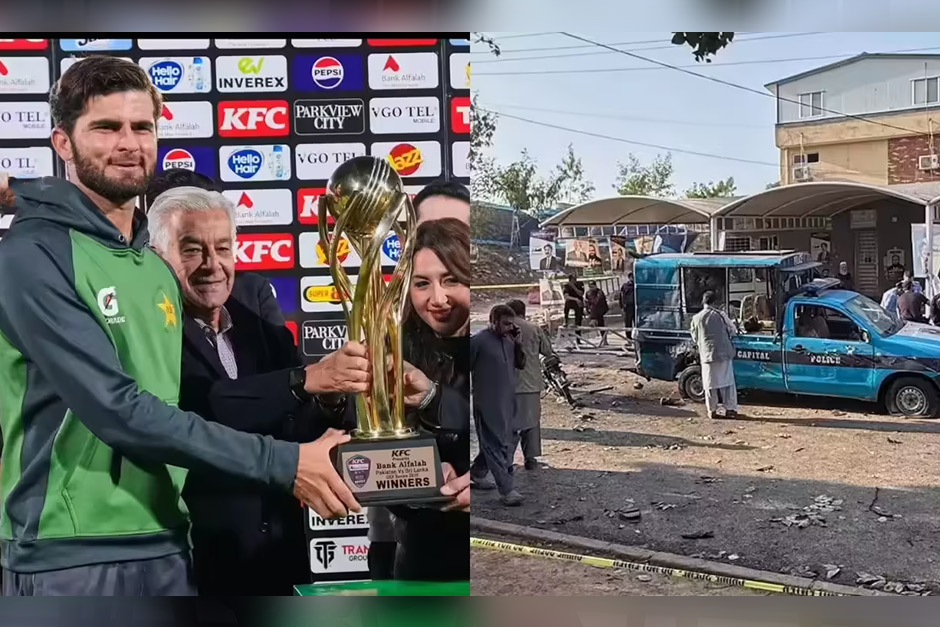
In the aftermath of recent security incidents across Pakistan, including a devastating bomb blast in Peshawar earlier this year, the spotlight has once again fallen on the fragile security landscape for international engagements. While Pakistan’s cricket board has worked tirelessly to re-establish the country as a safe host for international cricket, a prominent figure in Sri Lankan cricket has recently shed light on the intense restrictions and psychological toll faced by visiting teams during tours to the nation, particularly in the years following the horrific 2009 attack on their team bus.
The revelation, attributed to former Sri Lankan captain and current MCC President, Kumar Sangakkara, paints a vivid picture of the stark reality behind the heavily guarded tours, stating, “We were not allowed to…” — a phrase that encapsulates the extraordinary measures taken to ensure player safety, but also the significant cost to the players’ experience and freedom.
The Lingering Shadow of Lahore 2009
For over a decade, the memory of March 3, 2009, loomed large over Pakistani cricket. On that fateful day, a bus carrying the Sri Lankan cricket team to the Gaddafi Stadium in Lahore was ambushed by gunmen. Eight people were killed, and several players and officials sustained injuries. The attack plunged Pakistani cricket into isolation, with international teams refusing to tour the country due to security fears. This incident fundamentally reshaped how security for sporting events in volatile regions was perceived and implemented globally.
For years, Pakistan was forced to host its ‘home’ international matches in the UAE. The painstaking journey to bring cricket back involved immense effort from the Pakistan Cricket Board (PCB), working closely with government agencies to implement unprecedented security protocols. These efforts gradually bore fruit, with sporadic tours by Zimbabwe, and eventually, the full return of top-tier nations like Australia, England, and New Zealand in recent years, albeit under highly fortified conditions.
The Captain’s Stark Revelation: “We Were Not Allowed To…”
Reflecting on the era post-2009, and perhaps prompted by the renewed focus on security following recent blasts, Kumar Sangakkara’s comments resonate deeply. While the exact context of his full statement is being discussed, the core sentiment revolves around the severe curtailment of player freedom. The phrase “We were not allowed to even step outside our hotel without a full security detail, every interaction meticulously planned. It felt less like a tour and more like an operation,” vividly illustrates the environment within which cricket was played.
Such restrictions meant players were effectively confined to their hotel rooms and the cricket ground, moving between the two in bulletproof convoys, surrounded by heavily armed personnel. Simple pleasures like exploring local markets, interacting spontaneously with fans, or even taking a leisurely stroll outside the hotel premises were strictly off-limits. This wasn’t merely about inconvenience; it spoke to a profound sense of isolation and a constant awareness of potential threats, impacting the mental well-being of athletes expected to perform at their peak.
This revelation isn’t a criticism of the security efforts, which were necessary and often life-saving. Rather, it offers a candid insight into the psychological landscape of touring in high-risk environments. It underscores the invisible burden carried by players, transforming what should be an exciting cultural exchange into a tightly controlled mission, where personal freedom is sacrificed for safety.
Balancing Safety with the Spirit of the Game
Pakistan’s current security measures for visiting teams are among the most stringent in the world, often involving presidential-level protection. The PCB has made significant strides in convincing cricket boards of their commitment to player safety, enabling the return of international cricket. Yet, Sangakkara’s comments serve as a poignant reminder that even with successful tours, the experience for players is fundamentally altered.
For Indian cricket enthusiasts, who have long awaited a resumption of bilateral ties with Pakistan, these insights add another layer of complexity. The human element—the psychological impact on players living under constant surveillance and restriction—remains a critical, often unspoken, factor. While the return of international cricket to Pakistan is a testament to resilience, the balance between absolute security and allowing players to experience the spirit and culture of the host nation remains a delicate challenge. The hope is that with continued stability, the need for such extreme measures will gradually diminish, allowing future generations of cricketers to tour with greater freedom and peace of mind.
The quest for security in international sport in conflict-prone regions is an ongoing saga, and Sangakkara’s revelation offers a crucial perspective on the hidden costs borne by those who continue to play the game they love under extraordinary circumstances.

