


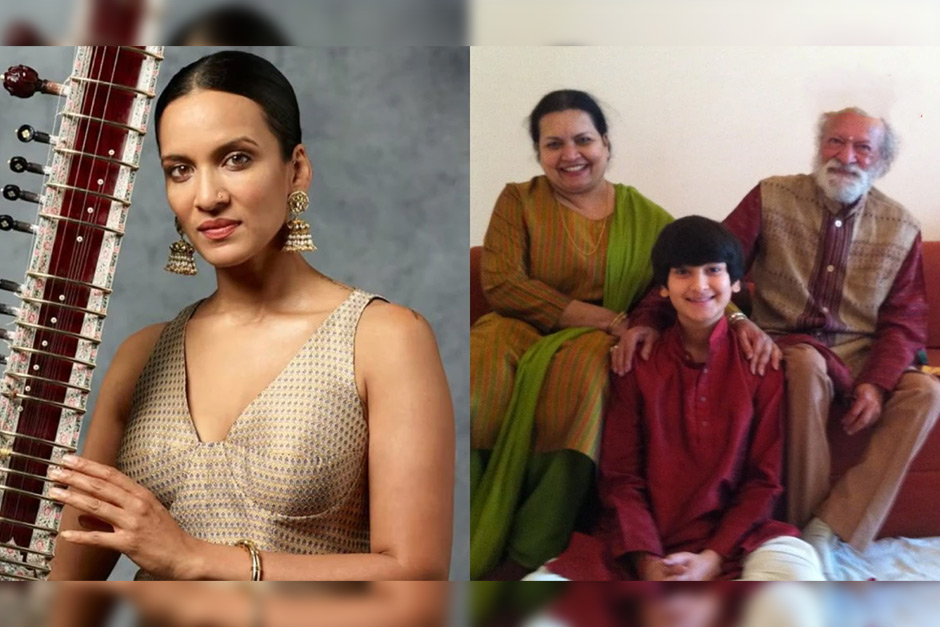
The hallowed halls of Indian classical music are once again reverberating with a debate concerning lineage and legacy. At the heart of this unfolding narrative is Rishab Rikhiram Sharma, the grandson of Pandit Ravi Shankar’s esteemed instrument maker, Rikhi Ram, who recently found himself at the receiving end of a public denial by sitar virtuoso Anoushka Shankar. Sharma had publicly asserted his profound guru-shishya bond with the legendary Pandit Ravi Shankar, a claim that Anoushka Shankar swiftly refuted. Now, in a significant development, Sharma has come forward, presenting what he describes as irrefutable proof of his cherished relationship with the late maestro, stirring fresh conversations within the classical music community.
The Initial Refutation and Its Resonance
The controversy ignited when Anoushka Shankar, daughter and disciple of Pandit Ravi Shankar, issued a public statement clarifying Rishab Rikhiram Sharma’s association with her father. Her denial, widely circulated on social media, stated that Sharma was not a direct disciple of Pandit Ravi Shankar, and while he was part of the extended family of Rikhi Ram (who crafted instruments for the maestro), his claims of direct tutelage were unfounded. For many, Anoushka’s words carried significant weight, given her intimate understanding of her father’s life and his formal teaching lineage. The pronouncement sent ripples through the often-sensitive world of guru-shishya parampara, where the authenticity of a student’s claim to a master’s lineage is paramount, especially when honoring a figure of Pandit Ravi Shankar’s monumental stature. The clarity sought by Anoushka was aimed at preserving the sanctity of her father’s direct teaching tradition.
Rishab Rikhiram Sharma Presents His Evidence
Undeterred by the public denial, Rishab Rikhiram Sharma has now countered with a comprehensive collection of evidence, aiming to validate his deep connection with the Bharat Ratna awardee. Sharma meticulously shared archival photographs capturing intimate moments with Pandit Ravi Shankar, several of which depict him learning directly from the maestro. More compellingly, he has released copies of personal correspondence, including handwritten letters from Pandit Ravi Shankar that not only acknowledge Sharma but also contain specific guidance and blessings related to his musical journey and sitar making. Further adding to his claims, Sharma has presented dated certificates and documents affirming periods of tutelage and mentorship under the Pandit’s guidance.
Sharma, visibly emotional, expressed his heartache over the situation but emphasized his duty to honor the truth of his relationship. He stated, “The bond with a Guru transcends mere titles and formal certificates. It is a spiritual connection, a transfer of knowledge, and an immersion into their philosophy. These documents and memories are not just proof; they are the sacred testament to a relationship that shaped my very being. To deny it is to deny a part of my soul and Guruji’s immense generosity.” His presentation of these materials attempts to paint a picture of a profound and genuine bond, one that may not fit a rigid definition of ‘direct disciple’ in a formal, residential sense, but undeniably signifies a guru-shishya relationship marked by personal instruction and mentorship.
The Nuances of Guru-Shishya and Legacy Preservation
This ongoing discussion brings to light the multifaceted nature of the guru-shishya parampara in contemporary times. While the traditional model often involved residential training (gurukul system), modern contexts have seen various forms of mentorship, guidance, and spiritual connection blossom between master and student. The present controversy highlights the critical challenge of preserving the authenticity of a legend’s legacy, particularly posthumously. Families often bear the responsibility of safeguarding a maestro’s artistic lineage, while students, in turn, are custodians of the knowledge imparted. The differing interpretations of what constitutes a “disciple” versus a “student” or “mentee” can lead to such public disagreements. As the classical music fraternity watches, the exchange between Anoushka Shankar and Rishab Rikhiram Sharma underscores the need for clear documentation and respectful dialogue in honoring the intricate tapestry of relationships that form a master’s enduring legacy.
The classical music world now awaits further commentary, as Rishab Rikhiram Sharma’s evidence has certainly added a new dimension to a discussion that is deeply personal yet carries significant public implications for the preservation of artistic heritage.
*

