


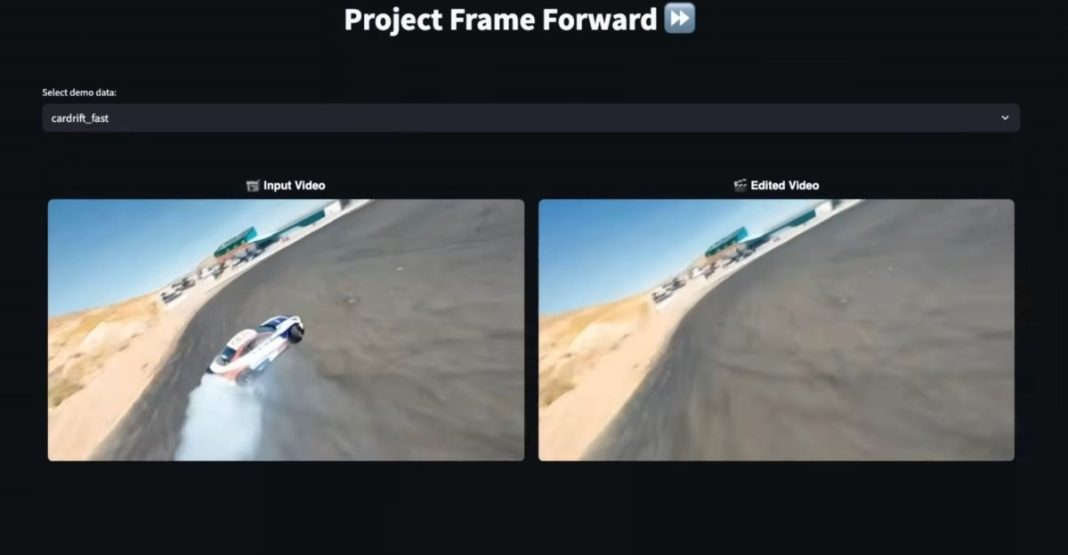
Video editing has long been a domain of meticulous, frame-by-frame adjustments, demanding hours of patience and technical expertise. Color correction, style transfer, object removal – each task a tiny battlefield of clicks and keyframes. But what if that entire war could be won with a single strategic maneuver? Adobe, a vanguard in creative software, is experimenting with a revolutionary AI that promises just that: editing entire videos from the insights of a mere single frame.
The Single Frame Revolution: How It Works
Imagine this: you have a perfectly graded still image from your video, or perhaps you’ve expertly masked an object in one crucial frame. Adobe’s experimental AI takes this singular moment of perfection and, through advanced machine learning, propagates those edits across the entire video sequence. This isn’t just about simple copy-pasting; it’s about a deep understanding of continuity, motion, and context.
The AI analyzes the designated frame, comprehends the desired change – whether it’s a specific color palette, a stylistic filter, or the removal of an unwanted element – and then intelligently applies that transformation consistently throughout the rest of the footage. It’s like teaching the AI a visual rule from one example, and then letting it apply that rule to hundreds or thousands of subsequent frames, adapting for motion, lighting changes, and camera movements. The potential for efficiency is staggering, transforming hours of work into mere minutes or even seconds.
Unleashing Creativity and Democratizing Production
The implications of such a technology extend far beyond mere time-saving. For professional editors, it means less tedious grunt work and more bandwidth for higher-level creative direction. They can iterate on styles and effects with unprecedented speed, experimenting with looks that would have been cost-prohibitive or too time-consuming before. This shift liberates creatives to focus on storytelling, composition, and artistic vision rather than getting bogged down in the minutiae of individual frame adjustments.
But perhaps the most profound impact will be on the democratization of video production. Independent filmmakers, small marketing teams, and content creators can suddenly achieve broadcast-quality results without requiring a huge post-production crew or an extensive skillset. The barrier to entry for sophisticated video editing just plummeted. As one indie filmmaker, Alex Chen, put it, “This isn’t just a time-saver; it’s a dream weaver for anyone without a Hollywood budget. Imagine the stories we can finally tell, unburdened by technical bottlenecks.”
Beyond the Hype: The Future of the Editing Suite
While the technology is still experimental, its promise is clear: a fundamental rethinking of the video editing workflow. We’re moving towards an era where AI acts as a powerful co-pilot, handling the repetitive, labor-intensive tasks with intelligent automation. This doesn’t mean human editors become obsolete; quite the opposite. Their role evolves, becoming more strategic and creatively focused. They become architects of vision, with AI as their tireless artisan.
Of course, challenges remain, such as ensuring perfect consistency over extremely long or complex sequences, and fine-tuning the AI’s understanding of nuanced artistic intent. However, the trajectory is unmistakable. Adobe’s single-frame AI isn’t just an incremental update; it’s a glimpse into a future where the bridge between a creator’s imagination and the final polished video is shorter and smoother than ever before. Get ready for a new era of video content, where creative ambition knows fewer technical limits.

