


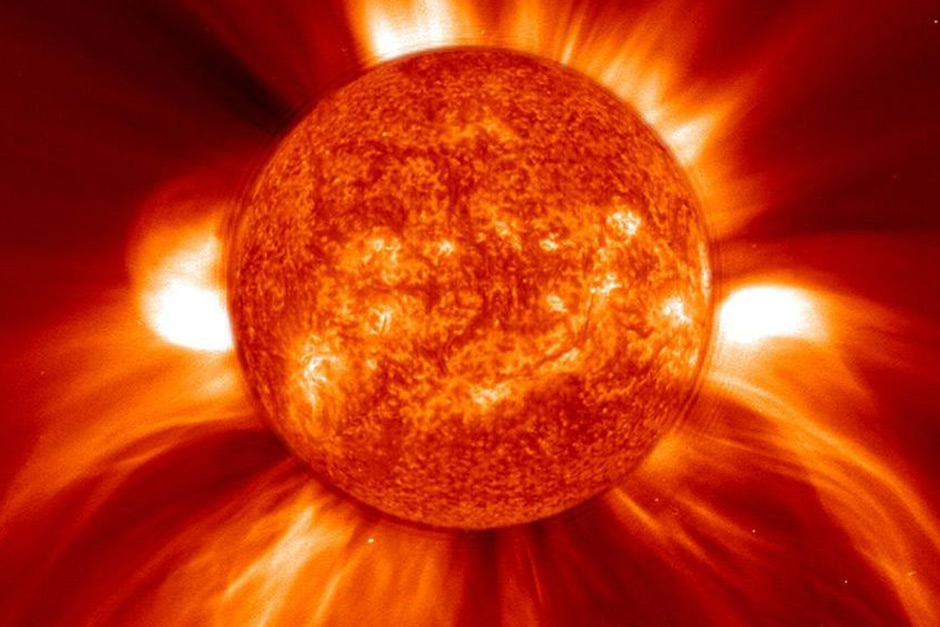
India’s Aditya-L1 mission, already a testament to the nation’s soaring ambitions in space, has successfully settled into its vantage point at the Lagrange Point 1 (L1). While the launch was a moment of immense national pride and global admiration, the true scientific harvest is a longer game. We’re hearing whispers, and strong signals, that 2026 is shaping up to be the year when Aditya-L1 truly begins to redefine our understanding of the Sun.
Beyond the Launch: The Real Work Begins (and Bears Fruit)
For any complex space mission, the journey doesn’t end with a flawless launch or even a perfect insertion into orbit. That’s merely the grand opening act. The real symphony of science begins with the meticulous calibration of instruments, the systematic collection of data, and the painstaking process of analysis. Aditya-L1 carries seven sophisticated payloads designed to observe the Sun’s photosphere, chromosphere, and the outermost layers – the corona – from its unique position.
Imagine two years of continuous, unprecedented data streaming back to Earth. The initial months post-insertion are crucial for ensuring every sensor, every camera, and every spectrometer is working optimally, adjusted for the harsh space environment. This calibration period is vital to ensure the integrity and accuracy of the scientific findings. Scientists aren’t just collecting; they’re sifting, comparing, and connecting dots across various datasets.
By 2026, we anticipate that this initial phase of instrument commissioning will be well behind us, and a substantial, clean dataset will have accumulated. This critical mass of high-quality observations will allow researchers to move beyond preliminary findings and start answering some of the biggest, most complex questions about our star. It’s when the patterns emerge, the anomalies are understood, and the groundbreaking discoveries begin to surface, transforming raw telemetry into profound insights. As Dr. Rohan Sharma, a theoretical astrophysicist, recently mused, “The launch was a magnificent beginning, but 2026 is when we expect the Sun to truly begin whispering its secrets through Aditya-L1’s instruments. It’s about translating raw data into profound understanding.”
Why L1 Matters: Unlocking Solar Secrets
Aditya-L1’s strategic location at L1, approximately 1.5 million kilometers from Earth, offers an unparalleled, uninterrupted view of the Sun. This continuous observation is crucial for studying dynamic solar phenomena that influence “space weather” – events like solar flares, coronal mass ejections (CMEs), and solar wind variations. These events can have significant impacts on Earth, affecting satellite operations, communication systems, power grids, and even astronaut safety.
The mission aims to unravel long-standing mysteries such as the coronal heating problem – why the Sun’s outer atmosphere is millions of degrees hotter than its surface – and the acceleration of solar wind. With two years of continuous data from its comprehensive suite of instruments by 2026, scientists will have a much clearer picture of these intricate processes. This deeper understanding will not only advance fundamental physics but also significantly improve our ability to predict space weather, providing crucial lead times for mitigating its effects on our technology-dependent world.
A Bright Future for Heliophysics
The anticipation for 2026 isn’t just about data; it’s about discovery, global collaboration, and India cementing its position as a major player in space science. The scientific papers, the new models, and the updated theories emerging from Aditya-L1’s findings will likely shape the field of heliophysics for decades to come. It’s a moment when years of planning, engineering brilliance, and scientific dedication will truly blossom into a deeper comprehension of the celestial body that gives us life.
So, while Aditya-L1 is already an orbiting marvel, mark your calendars. 2026 is set to be the year we truly begin to see the Sun, and indeed our place in the cosmos, in an entirely new light, thanks to India’s pioneering mission.

