


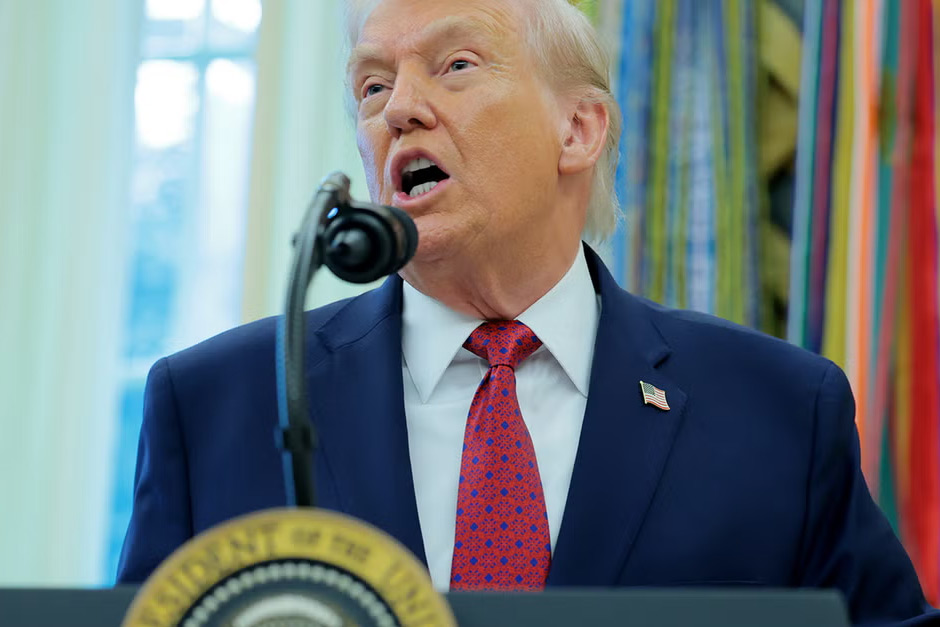
The legal landscape surrounding media accountability and political figures has been dramatically reshaped with the latest salvo fired by former U.S. President Donald Trump. In a move that has sent ripples across global newsrooms and political circles, Trump has initiated a staggering $10 billion defamation lawsuit against the British Broadcasting Corporation (BBC). The core of the accusation? Allegations that the BBC intentionally and maliciously edited a segment of his January 6, 2021 speech, misrepresenting his words and inciting public outrage. This monumental legal challenge not only brings the spotlight back onto the tumultuous events of that day but also ignites critical conversations about journalistic integrity and the power of selective narration, issues closely observed by a media-savvy Indian audience accustomed to scrutinizing both domestic and international reporting.
The Alleged Malice and the Shadow of January 6th
At the heart of Donald Trump’s colossal lawsuit lies a specific claim of editorial misconduct regarding his speech delivered on January 6, 2021, just hours before the U.S. Capitol building was breached. According to the legal filing, the BBC aired an edited clip of Trump’s address which, he contends, deliberately omitted crucial parts where he called for a “peaceful” and “patriotic” demonstration. The lawsuit asserts that by excising these particular phrases, the BBC intentionally misrepresented his message, portraying him as directly inciting violence rather than merely encouraging supporters to march towards the Capitol to voice their concerns about the election results.
The infamous day saw thousands of Trump supporters protest the 2020 election results, culminating in a violent insurrection at the U.S. Capitol. Trump’s legal team argues that the BBC’s allegedly manipulated reporting played a significant role in tarnishing his reputation by linking him directly to this violence through selective portrayal. The legal document explicitly states that the BBC “acted intentionally and maliciously” in its editorial choices, accusing the media giant of a deliberate effort to harm his public image.
A Staggering $10 Billion Claim and Legal Hurdles
The demand for $10 billion in damages is undeniably one of the most striking aspects of this lawsuit, positioning it as one of the largest defamation claims ever filed against a news organization. Such an astronomical figure underscores the perceived gravity of the alleged misrepresentation and the scale of reputational damage Trump claims to have suffered. However, securing such a verdict against a formidable entity like the BBC in a U.S. court presents immense legal challenges.
Defamation lawsuits involving public figures in the United States operate under stringent legal precedents, notably requiring proof of “actual malice” – meaning the defendant published the defamatory statement either knowing it was false or with reckless disregard for its truth or falsity. Trump’s legal team must demonstrate not just that the BBC’s editing was misleading, but that it was undertaken with a deliberate intent to deceive and harm. This threshold is notoriously high, designed to protect freedom of the press and prevent frivolous lawsuits from stifling investigative journalism.
The case will likely delve deep into journalistic ethics, editorial guidelines, and the subjective nature of what constitutes fair reporting versus misrepresentation. In India, similar debates on media accountability and the influence of political narratives are continuous points of contention. The outcome of this transatlantic legal battle will, therefore, be watched closely by media houses and legal experts globally, including in India.
“Proving actual malice is the Everest of defamation law for a public figure. It requires clear and convincing evidence that the publisher knew they were lying or had serious doubts about the truth of what they published. An editing decision, even a contentious one, doesn’t automatically cross that line.”
Global Implications for Media and Political Discourse
Beyond the immediate legal sparring between Donald Trump and the BBC, this lawsuit carries profound implications for the global media landscape and the future of political discourse. For news organizations, it serves as a stark reminder of the intense scrutiny on editorial decisions, particularly when covering influential political figures. The debate over context, selective editing, and potential misinterpretation will undoubtedly intensify, prompting a re-evaluation of how complex political speeches are distilled.
For political leaders, the lawsuit highlights an increasingly aggressive approach to challenging media narratives. In an era often characterized by accusations of “fake news” and media bias, politicians are more frequently resorting to legal avenues to combat what they perceive as unfair or damaging portrayals. This trend, visible across various democracies, including India, where legal battles between politicians and media outlets are not uncommon, underscores a growing mistrust that can fragment public discourse and polarize audiences.
The case could also influence how audiences consume news, encouraging greater skepticism and a demand for more comprehensive, unedited content. Should Trump succeed, it could embolden other public figures to pursue similar high-value defamation claims, potentially chilling journalistic freedom. Conversely, a BBC victory could reinforce press protections. As the legal proceedings unfold, the world will be observing how this monumental claim shapes the delicate relationship between powerful individuals, the media, and the public’s right to accurate information.
As Donald Trump’s audacious $10 billion lawsuit against the BBC commences its long and intricate journey through the courts, it promises to be more than just a legal battle. It is a high-stakes confrontation that will probe the boundaries of journalistic responsibility, the rights of public figures, and the power of media narratives. The verdict, whenever it arrives, will undoubtedly set significant precedents, influencing how news is reported and consumed globally, and reshaping the delicate equilibrium between press freedom and accountability in an increasingly polarized world. For audiences in India and beyond, the outcome will resonate deeply, impacting perceptions of international media and the future of political communication.

