


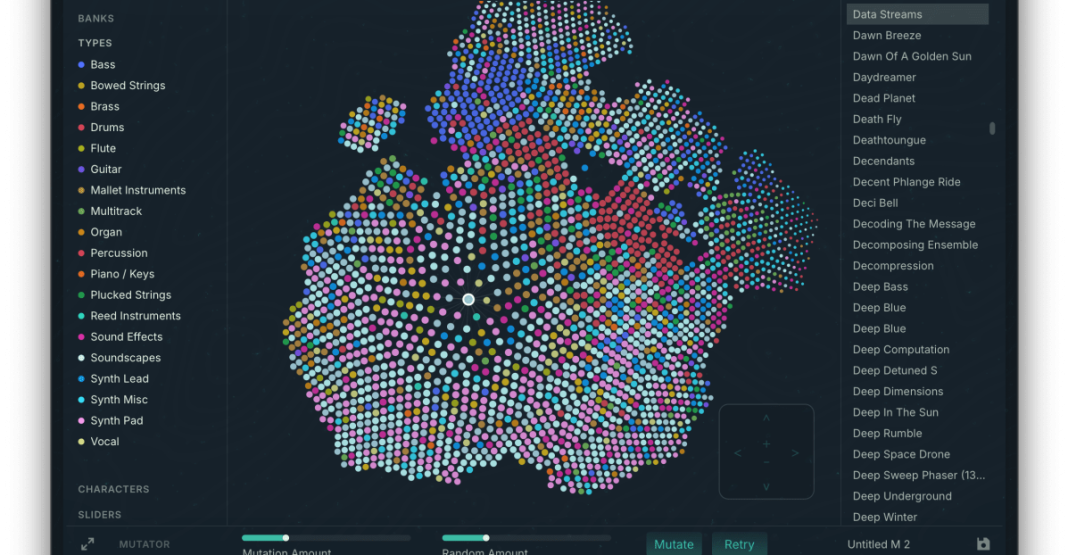
After a silence that felt eternal to many in the electronic music world, a legend has re-emerged from the depths of digital dormancy. Absynth, Native Instruments’ enigmatic software synthesizer, is officially back. And if you thought it was a sonic explorer before, prepare yourselves: it’s returned not just refreshed, but genuinely weirder, more expansive, and more capable of crafting sounds that defy easy categorization than ever before.
The Long Shadow of a Sonic Pioneer
For sixteen long years, the name Absynth conjured a specific kind of yearning among sound designers and experimental musicians. It wasn’t just another synth; it was a universe unto itself. Launched over two decades ago, Absynth quickly carved out a niche as the go-to tool for atmospheric pads, evolving soundscapes, glitchy textures, and sounds that felt like they were plucked from another dimension. Its unique semi-modular architecture, combining subtractive, FM, granular, and wave-morphing synthesis with a powerful modulation system, allowed for an unparalleled level of sonic sculpting.
Its absence left a palpable void. While other powerful synths came and went, none quite captured Absynth’s particular brand of organic, evolving, and often unsettling beauty. The sounds it could generate were often described as living, breathing entities, making it indispensable for film scores, ambient tracks, and electronic music that dared to stray from conventional melodies. The anticipation for its return has been a quiet rumble among a dedicated community, now finally erupting into a crescendo of excitement.
Weirder Than Ever: What’s New in the Sonic Abyss?
So, how does a synth that was already considered avant-garde get “weirder”? Native Instruments seems to have taken its time not just to update Absynth, but to fundamentally reimagine its potential. While details are still emerging, early glimpses suggest a significant overhaul that deepens its core strengths and expands its horizons.
Expect even more intricate modulation possibilities, allowing for sounds that evolve with unprecedented complexity and unpredictability. New oscillator modes and waveform manipulation tools are rumored to push the boundaries of spectral and granular synthesis even further, enabling the creation of textures that are both alien and strangely compelling. The interface, while maintaining its iconic aesthetic, appears to have been streamlined for more intuitive exploration of its deeper capabilities, inviting both seasoned veterans and curious newcomers to dive into its rich sound design potential.
“Absynth always felt like playing with liquid sound, constantly shapeshifting,” remarked Lena Park, a renowned sound designer. “This new version, it’s like they’ve given us control over an entire ocean, with currents and depths we never knew existed. It’s truly a journey into the unknown, and I can’t wait to get lost in it.”
Unleashing Uncharted Sonic Territories
The return of Absynth isn’t just a nostalgic trip; it’s a significant event for the future of electronic music and sound design. Its enhanced capabilities promise to inspire a new wave of creativity, encouraging artists to explore sonic territories previously deemed unattainable. Imagine film scores with even more evocative and unsettling atmospheres, ambient tracks that truly transport listeners to other worlds, and experimental electronic music that challenges the very definition of sound.
Absynth’s re-emergence reminds us that sometimes, true innovation takes time. It’s a testament to the idea that some instruments are so unique, so foundational to a particular style of creation, that they simply cannot be replaced. Its return, “weirder than ever,” is a bold statement: the future of sound is not always about chasing the newest trend, but sometimes about revisiting a masterpiece and letting it show us just how strange and wonderful the sonic universe can truly be.
Prepare to plunge into the weird. Absynth is back, and the soundscape will never be the same.

