


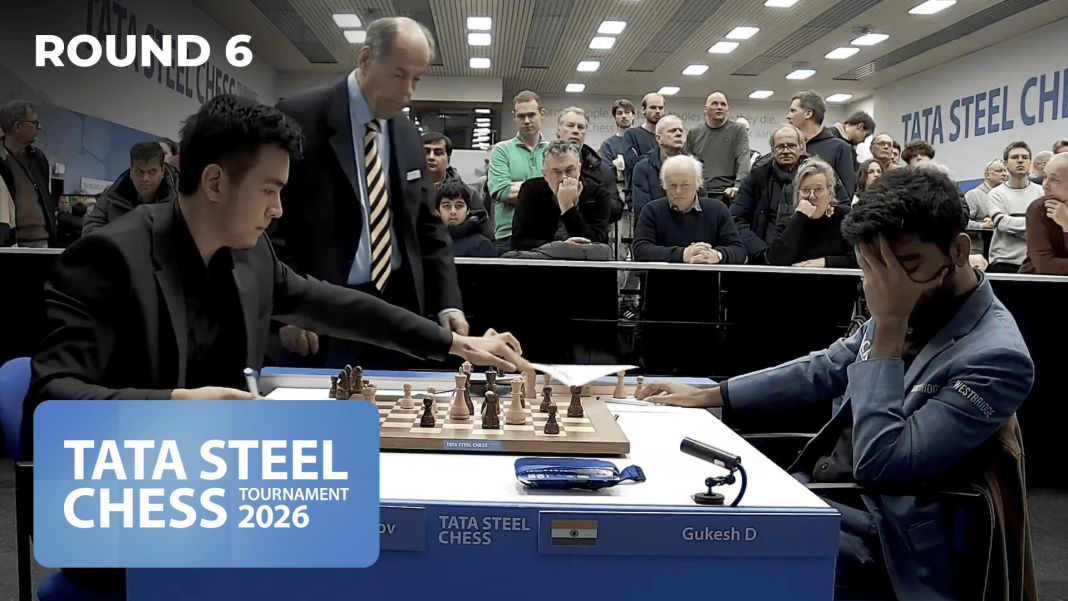
The intricate world of competitive chess often hinges on moments of intense pressure and razor-sharp calculation. In a recent high-stakes encounter at the Global Chess Challenge, Indian chess prodigy D Gukesh found himself on the wrong side of such a moment, committing a critical blunder that allowed Uzbek Grandmaster Nodirbek Abdusattorov to seize a decisive advantage and claim the sole lead in the tournament standings. This pivotal game has sent ripples through the chess community, highlighting the unforgiving nature of the sport at its highest echelons.
The Fateful Encounter and Its Tournament Impact
The match between Gukesh and Abdusattorov, two of the brightest young talents in global chess, was anticipated to be a keenly contested affair. Both players entered the round with strong performances, poised near the top of the leaderboard. Playing with the white pieces, Gukesh initiated a complex positional struggle, characteristic of his aggressive yet precise style. The game evolved into a tense middle-game, with both grandmasters navigating a labyrinth of variations and maintaining approximate equality.
However, under mounting time pressure and the sheer complexity of the position, the 17-year-old Indian prodigy made a crucial miscalculation on move 34, overlooking a tactical sequence that allowed Abdusattorov to gain a significant material advantage. The Uzbek GM, known for his relentless precision and tactical acumen, did not miss the opportunity. He swiftly converted his advantage, forcing Gukesh to resign after a few more moves. This outcome was a harsh blow for the Indian star, who had been enjoying an impressive run throughout the tournament.
The victory propelled Nodirbek Abdusattorov to the top of the leaderboard, establishing him as the sole leader with 6.5 points after nine rounds. This puts him a full half-point ahead of the closest competitors, shifting the dynamics of the tournament significantly. For Gukesh, the loss meant dropping a few places, though he remains firmly within contention for a top finish, albeit now facing a more challenging path in the remaining rounds.
Gukesh’s Journey: A Learning Curve for India’s Young Star
D Gukesh has been a beacon of hope for Indian chess, consistently breaking records and pushing the boundaries for young grandmasters. His meteoric rise, culminating in becoming the youngest Indian to cross the 2750 Elo rating mark, has placed him firmly in the spotlight as a potential future world champion. The expectations from the Indian chess fraternity and sports enthusiasts are immense, reflective of India’s rich history and growing prominence in the global chess landscape.
This particular defeat, while certainly disappointing, is also a crucial part of the learning curve for any young player operating at the elite level. As one seasoned chess commentator observed, “In chess, a single move can change everything. It’s a testament to the unforgiving nature of the game at the highest level, where even the slightest lapse can be severely punished.” Such experiences, though painful in the moment, often serve as valuable lessons, refining a player’s understanding of resilience, risk management, and pressure handling.
For Gukesh, the challenge now lies in his ability to rebound. Top players are defined not just by their wins, but by how they respond to setbacks. The Indian prodigy has consistently shown immense mental fortitude, and his supporters will be keen to see him recover his composure and fighting spirit in the upcoming rounds. His journey is a marathon, not a sprint, and every game, win or loss, contributes to his evolution as a world-class player.
Abdusattorov’s Assertive Lead and the Road Ahead
Nodirbek Abdusattorov’s performance at the Global Chess Challenge has been nothing short of stellar. His clinical exploitation of Gukesh’s blunder underscores his maturity and strategic prowess. The Uzbek Grandmaster, himself a former World Rapid Champion, has consistently demonstrated his ability to perform under pressure and convert advantages, solidifying his status as one of the most dangerous players in the circuit. His sole lead at this crucial juncture places him in a commanding position to contend for the tournament title, provided he maintains his form.
The tournament is far from over, with several strong grandmasters hot on Abdusattorov’s heels. The remaining rounds promise to be fiercely competitive, as contenders battle not only for the top spot but also for crucial rating points and prestige. The current standings indicate a tight race, and any further missteps could prove costly for any player, including the current leader. For Indian chess fans, the focus will remain on Gukesh’s path forward, hoping he can leverage his immense talent to stage a strong comeback in the latter half of the event.
The Global Chess Challenge continues to deliver thrilling action, reminding enthusiasts globally why chess is often called the game of kings, a mental battlefield where precision, foresight, and nerves of steel dictate destiny. The dramatic shift in leadership following the Gukesh-Abdusattorov game serves as a compelling narrative, setting the stage for an electrifying conclusion to the tournament.
*

