


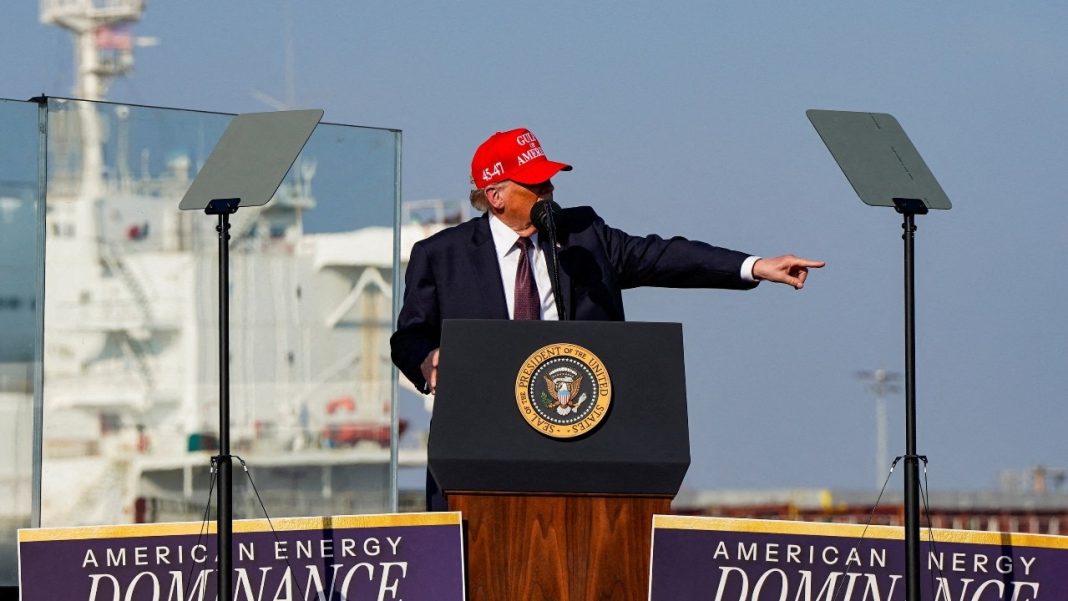
A recent pronouncement from former US President Donald Trump has sent ripples across global media and diplomatic circles, reigniting discussions about geopolitical tensions in the Middle East. Trump’s dramatic claim, asserting the destruction and sinking of nine Iranian warships with a pledge to target the rest, has immediately seized headlines. While the statement lacks immediate corroboration from official US defence channels or independent verification, it underscores the persistent volatility in the Gulf region and carries significant implications for international shipping, oil markets, and regional stability – concerns deeply observed from India.
The Claim: An Unverified Declaration
The core of the matter lies in a stark statement attributed to Donald Trump, who, during a recent public address or interview, declared, “We’ve destroyed and sunk 9 Iranian warships. We’re going after the rest.” This assertion arrived without accompanying evidence, such as satellite imagery, naval intelligence reports, or statements from the Pentagon or US Central Command (CENTCOM), the operational arm responsible for US military activities in the Middle East. Such a significant military engagement would typically be followed by official confirmations, press briefings, and detailed intelligence reports, none of which have emerged publicly to substantiate the former President’s claim.
The immediate lack of official confirmation has led to widespread skepticism among defence analysts and international observers. In an era where information warfare and disinformation campaigns are increasingly common, particularly in sensitive geopolitical arenas, the veracity of such claims becomes paramount. The absence of an Iranian response either confirming losses or vehemently denying the allegations further complicates the picture, leaving the claim largely in the realm of unsubstantiated rhetoric for now.
Geopolitical Tensions and the Strait of Hormuz
Regardless of its factual basis, Trump’s statement inevitably casts a spotlight on the already fraught relationship between the United States and Iran. The two nations have a history of confrontations in the Persian Gulf, ranging from tanker attacks and drone shoot-downs to missile strikes. The Strait of Hormuz, a narrow choke point through which a significant portion of the world’s oil supply passes, remains a critical flashpoint. Any perceived escalation in this waterway, whether real or rhetorical, sends immediate tremors through global energy markets and security establishments.
For India, the stability of the Gulf region is not merely a geopolitical concern; it’s an economic imperative and a matter of national interest. India relies heavily on crude oil imports from the Middle East, with the Strait of Hormuz being a vital conduit. Disruption in this crucial shipping lane, even from unverified claims, can lead to speculative spikes in oil prices, directly impacting India’s economy and inflation. Furthermore, the region hosts a substantial Indian diaspora, whose safety and well-being are a constant priority for New Delhi. Any military confrontation, real or imagined, raises alarms about the potential need for evacuation and protection efforts.
“Such pronouncements, whether substantiated or not, undeniably inject a fresh wave of uncertainty into an already volatile region. For countries like India, deeply invested in Gulf stability, these claims necessitate heightened vigilance and careful diplomatic maneuvering,” stated Dr. Anjali Sharma, a Mumbai-based geopolitical analyst.
India’s Watchful Stance Amidst Regional Instability
India traditionally maintains a balanced diplomatic approach in the Middle East, fostering strong ties with both the US and Iran, as well as other Gulf nations. This policy is driven by a complex web of economic, energy, and strategic interests. India has consistently advocated for de-escalation and dialogue to resolve regional disputes, understanding that stability in the Gulf is inextricably linked to its own prosperity and security. The absence of independent verification for Trump’s claim underscores the need for cautious assessment rather than immediate reaction.
New Delhi’s foreign policy establishment will undoubtedly be monitoring developments closely, seeking clarity through diplomatic channels and intelligence reports. The situation highlights the challenges faced by nations dependent on global supply chains and regional peace, having to navigate a landscape where high-stakes claims can emerge without immediate factual backing, yet still carry considerable weight due to the stature of the individual making them.
In conclusion, while Donald Trump’s assertion about destroying Iranian warships has grabbed international attention, its lack of official corroboration places it firmly in the realm of unverified claims. Nevertheless, the statement serves as a potent reminder of the inherent tensions in the Persian Gulf and the potential for rapid escalation. For India, a nation with significant stakes in the region’s peace and stability, such pronouncements, regardless of their truthfulness, underscore the ongoing need for vigilant diplomacy, strategic foresight, and a steadfast commitment to de-escalation.
The world watches, awaiting official clarification or further developments, as the implications of such claims continue to reverberate across the global geopolitical stage.

