


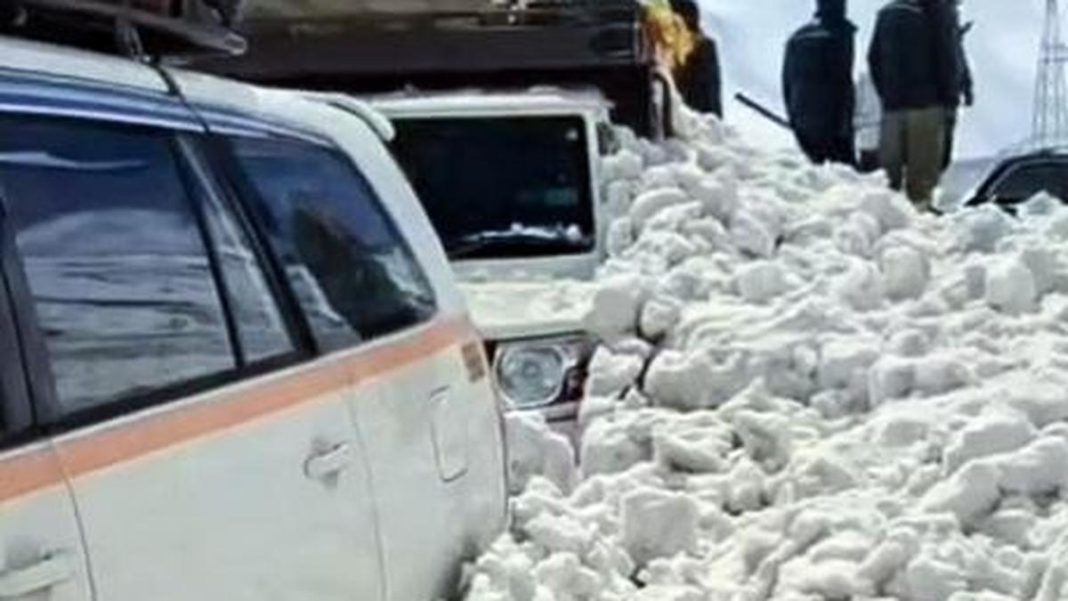
A recent tragedy has cast a somber shadow over the picturesque yet perilous Srinagar-Leh National Highway, a vital artery connecting the Kashmir Valley with the Union Territory of Ladakh. An avalanche, triggered by heavy snowfall and inclement weather, struck a section of the strategically crucial road, claiming the lives of five individuals and highlighting the inherent dangers of traversing this high-altitude route. The incident has once again brought to the fore the immense challenges faced by both travelers and the dedicated personnel working to maintain this lifeline.
Tragedy Strikes on Strategic Route
The deadly avalanche occurred near the Zojila Pass area, a notorious stretch known for its extreme weather conditions and susceptibility to snowslides. Initial reports indicated that the victims, primarily labourers involved in road clearance operations or local commuters, were caught unawares by the sudden descent of a massive snowmass. The incident unfolded rapidly, giving those in its path little to no time to react. The Srinagar-Leh National Highway, often considered an engineering marvel, is a testament to human endeavor in harsh terrains, but it also serves as a stark reminder of nature’s formidable power.
The stretch of highway around Zojila Pass, particularly between Sonamarg and Drass, is a critical link for the region, vital for military logistics, local trade, and tourism. Its closure, a frequent occurrence during winter, severely impacts connectivity. The recent heavy snowfall had led to temporary closures and advisories, yet the unpredictability of mountain weather proved fatal for those caught in the avalanche’s path. The local administration and disaster management authorities were immediately alerted, initiating a massive rescue operation in the challenging conditions.
Intense Rescue and Recovery Operations
Following the alarming reports, multiple agencies, including the Indian Army, the State Disaster Response Force (SDRF), local police, and personnel from the Border Roads Organisation (BRO), swiftly mobilised. Their immediate priority was to locate and retrieve any trapped individuals and provide assistance to survivors. The rescue efforts were severely hampered by continuing snowfall, freezing temperatures, and the risk of further avalanches. Specialized equipment, including snow cutters and earthmovers, were deployed to clear the debris and facilitate access to the affected area.
The valiant teams worked relentlessly against time and the elements. Despite the treacherous conditions, they managed to recover the bodies of the five deceased, bringing a semblance of closure to their grieving families. Efforts continued to ensure no one else was trapped under the snow. An official involved in the operation stated, “The conditions on the ground are extremely challenging, with poor visibility and sub-zero temperatures. Our teams are working tirelessly, braving the elements, because every minute counts in such situations.” The incident underscores the extreme risks faced by those who live and work in these high-altitude regions, particularly during the harsh winter months.
Highway’s Perilous Beauty and Safety Measures
The Srinagar-Leh National Highway is not merely a road; it is a lifeline, a strategic asset, and a route famed for its breathtaking but dangerous beauty. Historically, the Zojila Pass has been a formidable barrier, passable only for a few months a year. Advances in infrastructure, including avalanche control measures and the ongoing construction of the Zojila Tunnel, aim to make the highway an all-weather route. However, until such projects are fully realised, the highway remains vulnerable to the vagaries of nature.
Authorities regularly issue advisories, implement road closures, and use specialized teams to monitor avalanche-prone zones. Yet, the sheer scale and unpredictability of natural events in the Himalayas mean that risks can never be entirely eliminated. Climate change, with its potential to alter weather patterns and increase the frequency of extreme events, adds another layer of complexity to these existing challenges. Ensuring the safety of commuters and workers requires constant vigilance, advanced forecasting, and robust emergency response mechanisms.
The tragic loss of five lives on the Srinagar-Leh National Highway is a stark reminder of the fragile balance between human activity and the raw power of nature in the Himalayas. As the region mourns, it also reinforces the resilience of its people and the dedication of those who strive to keep these vital arteries open. While connectivity is crucial, it must always be balanced with an acute awareness of the dangers that loom large in these majestic yet unforgiving mountains.

